

What size bike is right for a 3 year old
For most 3-year-olds, start with a 12-inch bike, then confirm the fit using the child’s measured height, inseam, reach, brake control and confidence.
Start with height, not the third birthday
XBikes lists a 12-inch bike as the main starting point for ages 3–4 and rider heights of 34–40 inches (86–102 cm). A 14-inch bike overlaps this age range, but its starting range is 37–45 inches (94–114 cm). That means some taller 3-year-olds may compare both sizes, while a child below 37 inches should not be moved to a 14-inch bike based on age alone.
Do not buy an oversized bicycle simply to leave room for growth. A bike that fits later can still be difficult to mount, balance, steer or stop today. Age and height ranges narrow the search; an individual fit check makes the decision.
Measure your child before comparing bikes
- Measure standing height: Have the child stand without shoes, upright against a wall. Measure from the floor to the top of the head.
- Measure inseam: With feet slightly apart, measure from the floor to the crotch. Use the same footwear the child will normally wear while riding if you want to repeat the check at the bike.
- Note current confidence: Consider whether the child already balances, steers and stops independently or is still learning those actions.
Use standing height to choose the wheel sizes worth trying. Use inseam, reach and control to decide whether one of those bikes actually fits. Wheel diameter alone does not reveal frame height or riding position.
Compare 12-inch and 14-inch starting points
| Wheel size | XBikes age starting point | XBikes rider-height starting point | Relevance at age 3 |
|---|---|---|---|
| 12 Inch | Ages 3–4 | 34–40 in / 86–102 cm | The usual first size to try for a 3-year-old within this height range. |
| 14 Inch | Ages 3–6 | 37–45 in / 94–114 cm | A comparison option for a child at least 37 inches tall, subject to a successful fit check. |
| 16 Inch | Ages 4–7 | 40–48 in / 102–122 cm | Not the age-based starting point for a 3-year-old; consider only measured fit and control, without sizing up for growth. |
If the child is 37–40 inches tall, the 12-inch and 14-inch ranges overlap. Try both rather than assuming the larger wheel is preferable. If the child is 34–36 inches tall, start with 12 inches. If the child falls outside the listed ranges, do not force a choice from the table; arrange an in-person fitting.
What a successful fit check looks like
Have the child try the exact bicycle with an adult supporting it. Check that the child can stand over the frame without being pressed against it, get on and off without struggling, and sit in a controlled position. The child should be able to reach the handlebar without stretching or locking the arms.
Ask the child to steer in both directions and operate the bicycle’s braking controls. Their hands must reach and use the controls reliably; being able to touch a control is not the same as being able to operate it. Also watch whether the child appears composed enough to start, steer and stop at their present skill level.
If the saddle, handlebar or controls require adjustment, follow the exact product manual. For assembly, compatibility, maintenance or torque information not stated in that manual, use a qualified bicycle mechanic.
How the supplied XBikes option helps
The catalog option, Pink Girls' 12/14/16" Bike by XJD – Basket & Doll Seat, is relevant because it is offered with 12-inch, 14-inch and 16-inch SKU labels in the Training Wheel Bikes category. Its 12-inch and 14-inch choices let parents compare the two XBikes starting ranges most relevant to a 3-year-old; the labels still do not replace trying the exact bike.
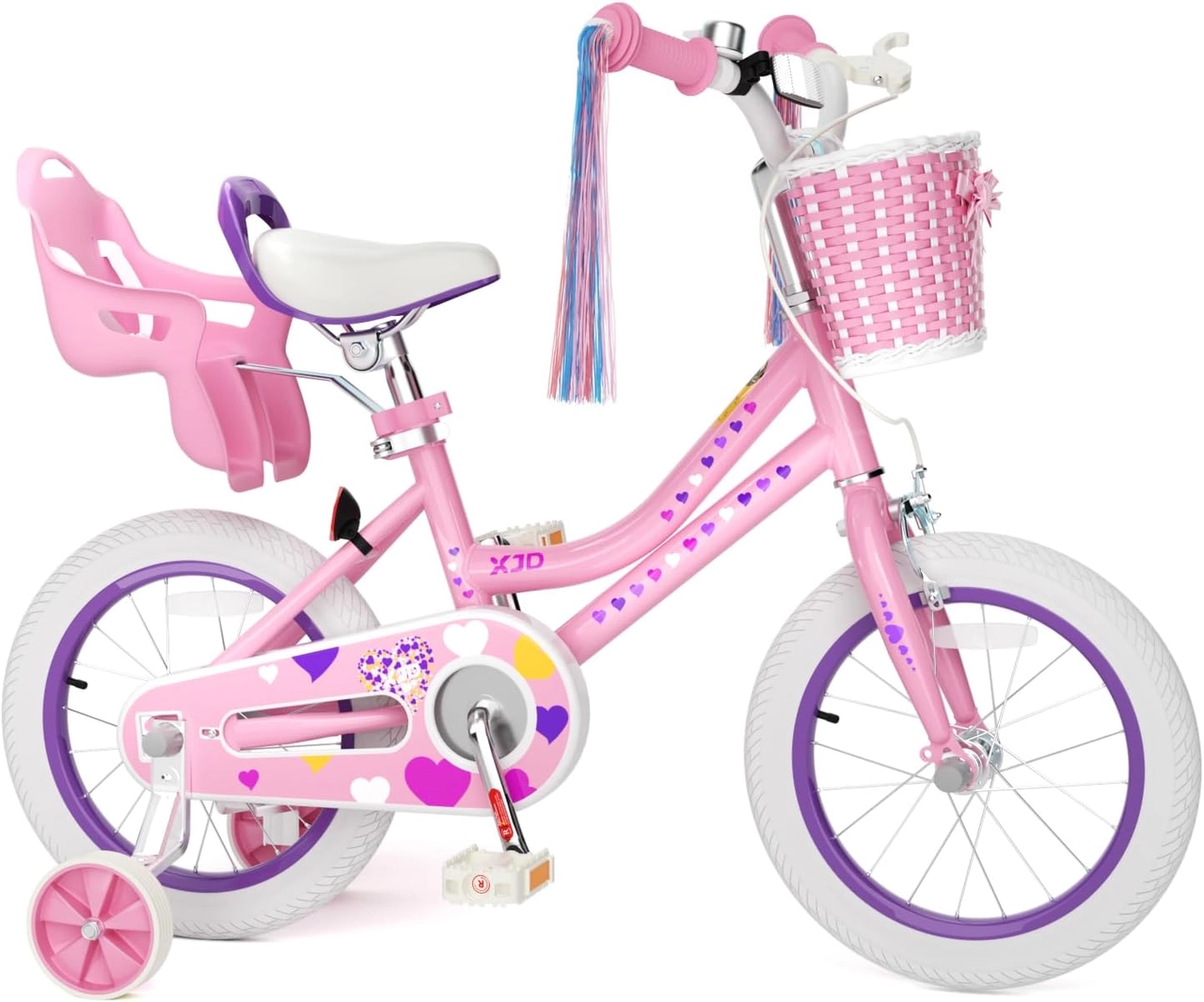
For a child measuring 34–40 inches, the 12-inch version is the first comparison point. For a child measuring 37–45 inches, the 14-inch version can also be tried, with special attention to stand-over room, reach and braking control. The 16-inch version corresponds to the XBikes starting point of ages 4–7 and 40–48 inches, so it should not be selected for a 3-year-old merely to allow growth.
Make the final decision
- Choose 12 inches when the child is within 34–40 inches and controls the exact bike comfortably.
- Compare 12 and 14 inches when height falls in their 37–40-inch overlap; choose according to actual control, not the larger label.
- Reject any bike the child cannot stand over, reach, steer or brake confidently, even if the age chart appears to match.
Before riding, add a properly fitting bicycle helmet. It should sit level and its straps should be used according to the helmet manufacturer’s instructions. The practical next step is simple: measure the child today, shortlist 12 inches first, and let a hands-on fit check—not future growth—settle the size.
Bikes for your next adventure
-

XJD Girls Bike for Kids Ages 3-8, 12/14/16 Inch with Training Wheels – Purple
The XJD Girls Bike in Purple is a training-wheel bicycle for kids ages 3 to 8, f…$149
$169 -

Light Purple XJD Toddler Bike Helmet, Adjustable, Size XS (46–51 cm)
This Light Purple XJD toddler bike helmet is made for the smallest riders — the …$20.39
-

Black XJD Toddler Bike Helmet, Adjustable – Kids' Protective Helmet
The XJD Toddler Bike Helmet in black is an adjustable protective helmet for kids…$20.39