

What size wheels for 3 year old on bike
For most 3-year-olds, start by checking a 12-inch bike; consider 14 inches only if the child measures at least 37 inches (94 cm) and can control it comfortably. Age is only a starting point, so measure height and inseam and arrange a real fit check before choosing.
Choose between 12-inch and 14-inch wheels
XBikes places 12-inch wheels at ages 3–4 and a rider height of 34–40 inches (86–102 cm). It places 14-inch wheels at ages 3–6 and 37–45 inches (94–114 cm). Because those height ranges overlap, a 3-year-old who is 37–40 inches tall may need to try both sizes.
| Wheel size | XBikes starting age | Rider height |
|---|---|---|
| 12 Inch | 3–4 | 34–40 in / 86–102 cm |
| 14 Inch | 3–6 | 37–45 in / 94–114 cm |
| 16 Inch | 4–7 | 40–48 in / 102–122 cm |
A 16-inch bike is generally not the starting choice for a 3-year-old under this standard: its range begins at age 4 and 40 inches (102 cm). Even when a child reaches that height, wheel size should not be decided from the chart alone.
Measure the child before comparing bikes
Measure standing height without shoes, with the child upright against a wall. Then measure inseam from the floor to the crotch while the child stands naturally. Record both measurements rather than relying on clothing size or a recent estimate.
Compare standing height with the chart first. Inseam then helps with the physical stand-over check because frame shapes and saddle positions can differ even when two bikes use the same wheel size. The supplied catalog facts do not include frame dimensions, so inseam cannot be converted into a guaranteed size here.
Perform an individual fit check
Have the child try the exact bicycle. The American Academy of Pediatrics advises against buying an oversized bike merely for future growth. During the check, confirm that the child can:
- stand over the bicycle without being forced onto tiptoes;
- get on and off without struggling;
- reach the handlebars without stretching or becoming cramped;
- steer while remaining balanced and in control;
- reach and operate the bike’s braking controls, where fitted; and
- start, stop and place a foot down with current confidence.
If a 14-inch bike makes any of these actions harder than on a 12-inch bike, choose the properly fitting 12-inch option rather than sizing up for longevity. Training wheels do not correct poor reach, excessive stand-over height or limited brake control.
How the supplied XBikes options compare
The two supplied products are useful because both offer 12-inch and 14-inch variants, allowing a parent to compare the two most relevant starting sizes for a typical 3-year-old. The XJD Girls Bike for Kids Ages 3-8, 12/14/16 Inch with Training Wheels – Purple has 12 Inch, 14 Inch and 16 Inch SKU labels. The Light Pink XJD Girls' Bicycle with Basket & Training Wheels has 12 Inch, 14 Inch, 16 Inch and 20 Inch SKU labels.
The age wording in the first exact product title is a catalog label, not proof that every listed size fits every child in that span. Select the variant only after applying the XBikes height starting points and checking the individual rider on the exact bike.
These particular catalog options help answer the wheel-size question by providing both 12-inch and 14-inch comparison points with training wheels; their larger variants are not equivalent substitutes for a correctly fitting smaller bike.
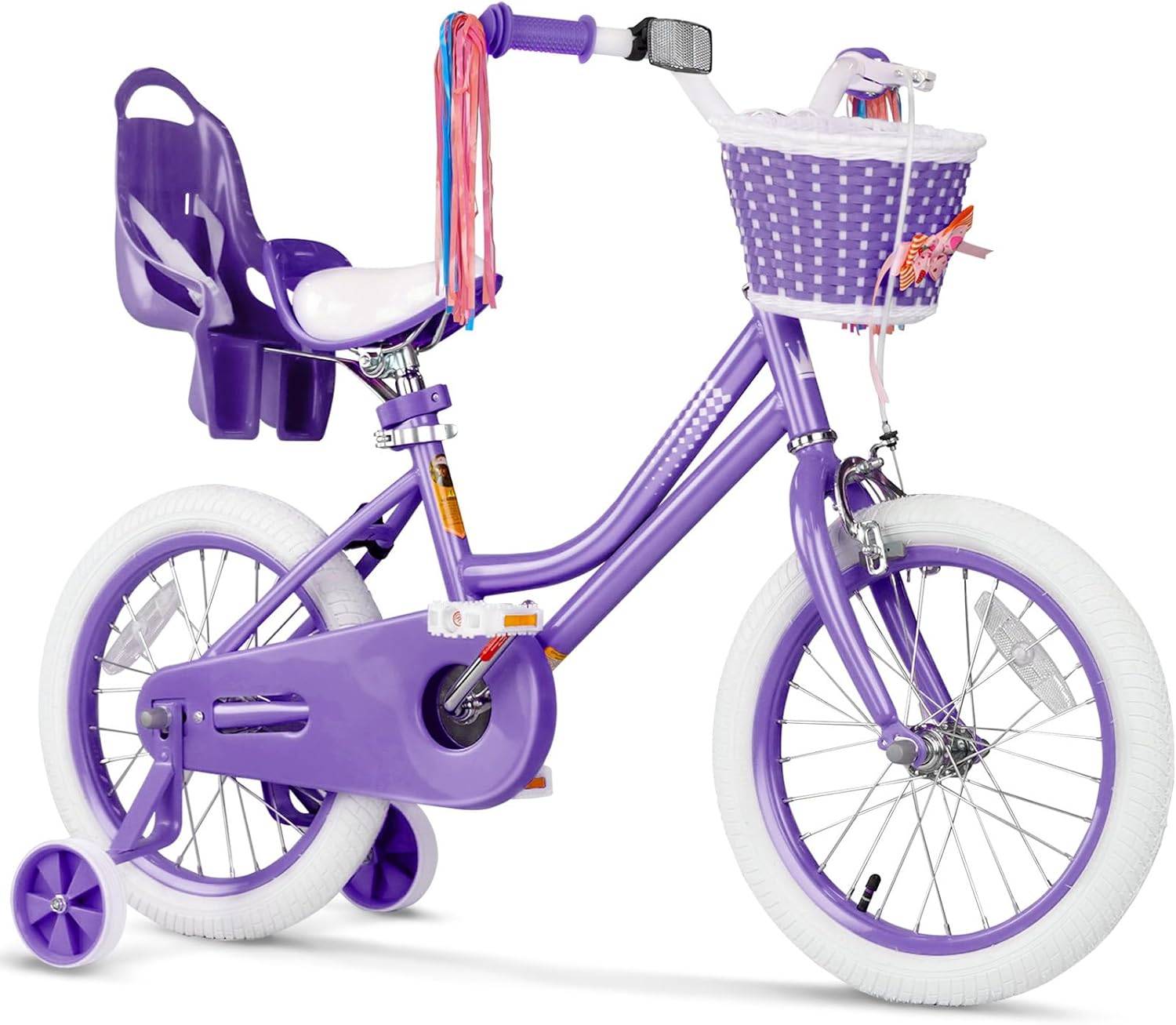 XJD Girls Bike for Kids Ages 3-8, 12/14/16 Inch with Training Wheels – Purple
Offers 12 Inch and 14 Inch variants relevant to the usual comparison for a 3-year-old, plus a 16 Inch variant. The age wording in its title is a catalog label; verify height, reach, stand-over and control.
 Light Pink XJD Girls' Bicycle with Basket & Training Wheels
Offers 12 Inch and 14 Inch variants for direct fit comparison, as well as 16 Inch and 20 Inch labels. For a 3-year-old, use measured height and an individual fit check rather than selecting a larger listed size.
What to check before the first ride
Confirm that the chosen size still feels manageable when the child is seated and moving, not only while standing beside it. If assembly, adjustment, compatibility, load limits, maintenance or torque information is needed, follow the exact product manual or ask a qualified bicycle mechanic; those details are not present in the supplied catalog facts.
Use a properly fitting bicycle helmet on every ride. The U.S. Consumer Product Safety Commission advises that the helmet sit level and that its straps be used according to the helmet manufacturer’s instructions.
Make the size decision
Measure height and inseam now. Begin with 12 inches when the rider is 34–40 inches (86–102 cm); add a 14-inch trial if the rider is at least 37 inches (94 cm). Where the ranges overlap, choose the exact bike on which the child has better stand-over clearance, reach, braking control and confidence—not the larger wheel.
Bikes for your next adventure
-

Pink Girls' 12/14/16" Bike by XJD – Basket & Doll Seat
The XJD Pink Girls' Bike with Basket & Doll Seat is made for riders 71–122 cm ta…$75.99
$99.99 -

XJD Girls Bike for Kids Ages 3-8, 12/14/16 Inch with Training Wheels – Purple
The XJD Girls Bike in Purple is a training-wheel bicycle for kids ages 3 to 8, f…$149
$169 -
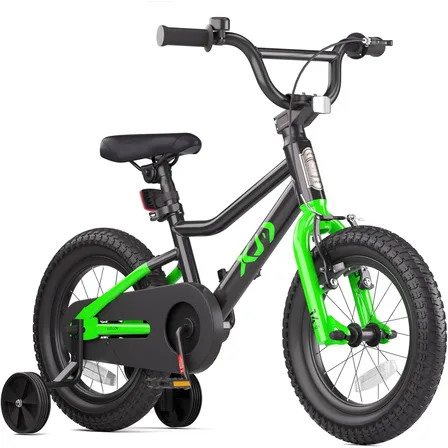
Black XJD Kids' BMX Bicycle with Training Wheels
The XJD Kids' BMX Bicycle with Training Wheels is built for children roughly 3 t…$99.99
$119.99