

What inch bike for 8 year old boy
For most 8-year-old boys, start with an 18-inch or 20-inch bike. Measure his height first: 18-inch suits 43–52 in (109–132 cm), while 20-inch suits 48–60 in (122–152 cm). Then confirm stand-over clearance, reach, braking control and confidence on the actual bicycle.
Choose between 18-inch and 20-inch
Age eight falls within both XBikes starting ranges: ages 5–9 for an 18-inch bike and ages 7–12 for a 20-inch bike. Height gives the more useful first comparison.
| Wheel size | Starting age range | Rider height |
|---|---|---|
| 16 Inch | 4–7 | 40–48 in / 102–122 cm |
| 18 Inch | 5–9 | 43–52 in / 109–132 cm |
| 20 Inch | 7–12 | 48–60 in / 122–152 cm |
| 24 Inch | 10–14 | 54–64 in / 137–163 cm |
An 8-year-old under 48 inches may fit an 18-inch bike better. At 48 inches or taller, compare 20-inch models first. A particularly short rider may still need a 16-inch bike. Although a child 54 inches or taller enters the stated height range for 24-inch wheels, that size starts at ages 10–14 and must not be chosen from height alone. Try the bicycle and judge the complete fit.
Measure the rider before shopping
Measure height without shoes, with the child standing straight against a wall. Also measure inseam from the floor to the crotch while he stands naturally. Wheel-size ranges use total height, but inseam helps reveal whether he can stand over a particular frame comfortably.
Compare those measurements with the size chart, then check the geometry of the exact bicycle. Two bikes with the same wheel diameter can feel different because wheel size does not describe frame shape, saddle adjustment or handlebar position.
Perform an individual fit check
Have the child try the bicycle instead of buying solely from an age label. He should be able to stand over it without the frame pressing into him. Seated in a normal riding position, he should reach the handlebars without an exaggerated stretch or cramped posture.
Ask him to demonstrate that he can steer, start and stop while remaining in control. He must be able to operate the brakes comfortably from the riding position. If he cannot reach or use the controls reliably, reject that bike even when its wheel size matches the chart.
Do not buy an oversized bicycle just to allow room for growth. A bike that is difficult to mount, balance, steer or stop today is not an appropriate current fit. If he is between sizes, compare both in person and favor the one he controls confidently.
How the supplied XBikes options relate
The two supplied catalog options help narrow the decision because one offers several wheel-size labels, while the other is specifically a 20-inch BMX-category bike. They are relevant only after measurement and an individual fit check; their titles, categories and available size labels do not establish fit by themselves.
 Girls' Training Wheel Bike by XJD with Basket – Purple
Available in 14 Inch, 16 Inch and 20 Inch labels. Its 20 Inch option is the main age-eight candidate; consider 16 Inch only for a shorter rider after an individual fit check.
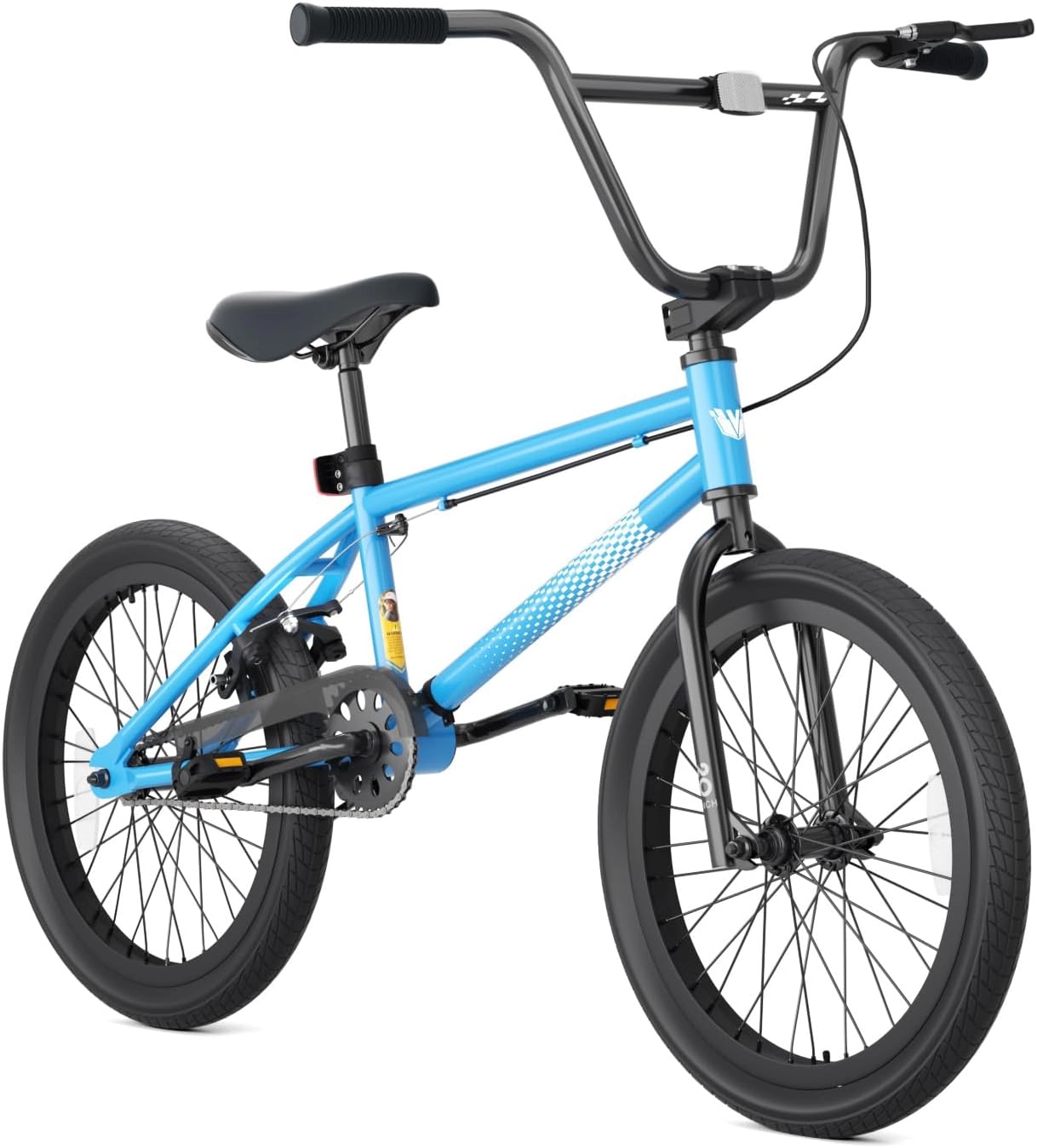 Blue XJD Freestyle BMX Bike, 20-Inch – No Pegs
This 20-inch Kids' BMX Bikes item is relevant for riders measuring 48–60 inches, provided the child can stand over, reach, steer and operate the brakes confidently on the actual bike.
Girls' Training Wheel Bike by XJD with Basket – Purple
This Training Wheel Bikes catalog item offers 14 Inch, 16 Inch and 20 Inch SKU labels. For the usual 8-year-old comparison, only its 20 Inch option aligns with the ages 7–12 and 48–60-inch starting range. The 16 Inch option may be relevant for a shorter rider within 40–48 inches, but its stated age range is 4–7, so trying it is essential.
The word “Girls'” and the purple color describe the catalog listing, not who can fit or ride it. Decide whether its presentation suits the child's preference separately from the fit decision.
Blue XJD Freestyle BMX Bike, 20-Inch – No Pegs
This Kids' BMX Bikes item is explicitly 20-inch, so it is a size candidate when the rider measures 48–60 inches. Its available SKU label is “Default,” not a choice among wheel sizes. “No Pegs” is part of the supplied title. Nothing in the catalog facts establishes its frame dimensions, brake type or suitability for a particular riding skill, so those points must be checked on the actual bicycle and in its exact product information.
Complete the safety and setup checks
- Have the child mount, stand over, steer and stop the exact bike under close adult supervision.
- Check that his hands reach and operate the brake controls comfortably.
- Use a bicycle helmet that fits properly, sits level and has straps adjusted according to the helmet manufacturer's instructions.
- Follow the exact bicycle manual for assembly, adjustments, maintenance, compatibility, load limits and torque values. If anything is uncertain, use a qualified bicycle mechanic.
Make the final size decision
Measure first, then try both likely sizes: choose an 18-inch bike for a rider in the 43–52-inch range when it gives better present control, or compare 20-inch bikes when he is 48–60 inches tall. Buy only the size he can stand over, reach, steer and brake confidently now—not the size you hope he will grow into.
Bikes for your next adventure
-

XJD Girls Bike for Kids Ages 3-8, 12/14/16 Inch with Training Wheels – Purple
The XJD Girls Bike in Purple is a training-wheel bicycle for kids ages 3 to 8, f…$149
$169 -

Pink Girls' 12/14/16" Bike by XJD – Basket & Doll Seat
The XJD Pink Girls' Bike with Basket & Doll Seat is made for riders 71–122 cm ta…$75.99
$99.99 -
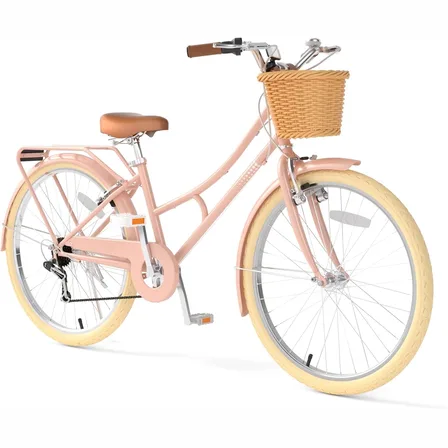
Pink XJD Beach Cruiser Bike, 24"/26", U-Brake
The XJD Pink Beach Cruiser Bike is a single-speed cruiser built for older kids a…$159.99