

What kind of bike is good for boys
A good bike for a boy is one that fits his measured height and inseam now, is easy for him to control, and matches his current riding confidence.
Start with fit, not gender or room to grow
“Boys’ bike” may describe styling, but it does not determine the right bicycle. Measure the rider without shoes: record his standing height and inseam, then use height to identify a starting wheel size. Age is only a rough cross-check.
Do not deliberately buy an oversized bicycle for future growth. HealthyChildren guidance recommends having the child try the bike and checking stand-over clearance, control and brake reach. A bicycle that is too large can make starting, stopping and steering harder.
Use wheel size as a starting point
| Wheel size | Starting age | Rider height |
|---|---|---|
| 12 Inch | 3–4 | 34–40 in / 86–102 cm |
| 14 Inch | 3–6 | 37–45 in / 94–114 cm |
| 16 Inch | 4–7 | 40–48 in / 102–122 cm |
| 18 Inch | 5–9 | 43–52 in / 109–132 cm |
| 20 Inch | 7–12 | 48–60 in / 122–152 cm |
| 24 Inch | 10–14 | 54–64 in / 137–163 cm |
| 26 Inch | Youth and adults | Over 60 in / 153 cm |
Overlapping ranges are intentional: two wheel sizes may be plausible on paper. When that happens, the better choice is the bicycle on which the child can stand over, reach, steer and operate the brakes comfortably. His inseam, reach and confidence should settle the decision—not a birthday or the desire to keep the bike longer.
Check the bike with the rider present
A useful try-on is more revealing than the size label. Have the boy wear his normal riding shoes and check these points:
- Stand-over: he should be able to straddle the bicycle without the frame preventing stable footing.
- Starting and stopping: he should be able to get into position, stop under control and put a foot down without panic or an awkward lean.
- Reach: he should hold the handlebar and steer without stretching, locking his arms or losing a balanced posture.
- Brake control: he must be able to reach and operate the fitted brake controls reliably. Do not assume a control is suitable merely because the wheel size looks right.
- Confidence: ask him to turn, start and stop in a controlled area. Visible hesitation may mean the bicycle or setup is beyond his present ability.
Decide whether training wheels are relevant
Training wheels can be relevant for a beginner who is not yet ready to balance independently. They are not automatically necessary for every boy, and their presence does not correct a poor fit. Compare the child’s current balance, starting and stopping skills before choosing this category.
The catalog option that directly helps with this comparison is the XJD Boys 12/14/16" Training Wheel Bike – Blue. It is categorized as a training-wheel bike and is offered with 12 Inch, 14 Inch and 16 Inch SKU labels, letting parents compare three adjacent starting sizes while considering a training-wheel setup.

This product is relevant only when the rider’s measurements, reach, brake control and confidence support one of those three sizes and training wheels suit his current stage. It does not cover 18, 20, 24 or 26 Inch needs. For a rider whose fit check points to one of those sizes, this catalog item is not an equivalent substitute or a reason to size down.
Compare the final candidates
If two sizes remain possible, compare the exact bicycles rather than choosing from the chart alone. The child should feel composed when mounting, steering and stopping. Reject a candidate if he cannot comfortably manage stand-over, reach or braking, even when his height falls inside its starting range.
Also distinguish fit from features. Wheel-size labels and the training-wheel category do not establish weight, materials, brake type, load limit or compatibility. Use the exact product manual for assembly, adjustment, maintenance and limits; if anything is unclear, have a qualified bicycle mechanic inspect or set up the bicycle.
Complete the decision safely
Choose the smallest suitable candidate only after an individual fit check confirms comfortable control; do not choose solely because it leaves more growing room. Add a properly fitting bicycle helmet that sits level, with its straps adjusted according to the helmet manufacturer’s instructions, as advised by the U.S. Consumer Product Safety Commission.
The practical answer is therefore specific: measure the boy’s height and inseam today, shortlist the matching wheel size, and let his stand-over, reach, brake operation and confidence decide whether the 12, 14 or 16 Inch training-wheel option shown here is relevant—or whether you should continue looking in a different size or bike type.
Bikes for your next adventure
-
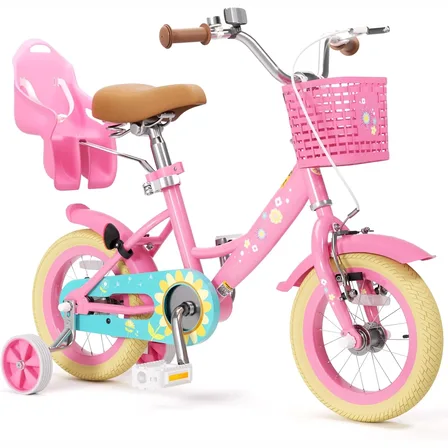
Flower Pink XJD Girls Bike with Doll Seat & Basket
The XJD Flower Pink girls' bike is made for riders 71–122 cm tall (roughly ages …$69.99
-
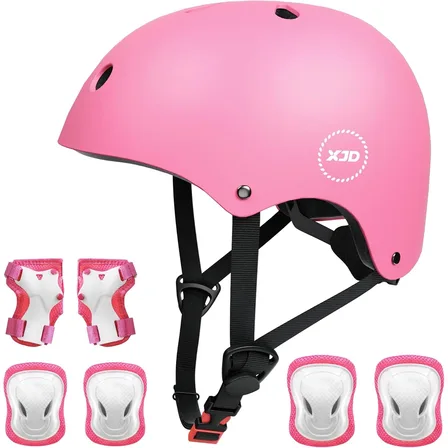
XJD Kids Helmet & Protective Gear Set for Girls, Pink
The XJD Kids Helmet & Protective Gear Set in Pink is a complete safety kit for g…$24.64
-

Kids Bike Helmet by XJD for Boys & Girls – Black, Blue, Green, Pink, Purple
The XJD Kids Bike Helmet covers a wide 2-to-8-year age range thanks to two head-…$59.99