

What size bicycle for a 10 year old boy
A 10-year-old boy should usually compare 20-inch and 24-inch bicycles. Measure his height first: XBikes starts 20-inch bikes at 48–60 in (122–152 cm) and 24-inch bikes at 54–64 in (137–163 cm), then confirms fit on the actual bicycle.
Choose the starting wheel size by measured height
Age points toward a range, but it does not settle the decision. At age 10, a child may fit either a 20-inch or 24-inch bicycle depending on his height, proportions and riding ability. Boys and girls use the same physical fit checks.
| Wheel size | XBikes age starting point | Rider-height starting point | Relevance at age 10 |
|---|---|---|---|
| 20 Inch | Ages 7–12 | 48–60 in / 122–152 cm | Compare when the rider is within this height range. |
| 24 Inch | Ages 10–14 | 54–64 in / 137–163 cm | Compare when the rider is within this height range. |
| 26 Inch | Youth and adults | Over 60 in / 153 cm | Consider only after an individual fit check; height ranges overlap with 24 Inch. |
A rider between 54 and 60 inches (137–152 cm) falls within both the 20-inch and 24-inch starting ranges. In that overlap, do not choose from the chart alone. Compare stand-over clearance, reach, brake control and confidence on both bicycles.
Measure the child before comparing bicycles
- Standing height: Have him stand barefoot against a wall, looking straight ahead. Mark the top of his head and measure from the floor.
- Inseam: With feet slightly apart, place a firm, level book between his legs to represent the saddle area. Measure from the floor to the top edge of the book.
- Current riding confidence: Note whether he starts, stops, turns and brakes independently or still needs reassurance and frequent foot contact.
Use standing height to select the wheel sizes worth trying. Use the inseam to compare the child with the actual bicycle’s stand-over height and adjustment information. Frame shapes differ, so wheel diameter cannot predict clearance by itself.
Perform the fit check on the actual bike
The American Academy of Pediatrics advises having the child try the bicycle and avoiding an oversized model bought merely for future growth. With the bicycle upright, check that he can straddle it without the frame pressing into him. Follow the exact product manual when adjusting the saddle or other components.
Next, seat him in a normal riding position. He should be able to reach the handlebar without an uncomfortable stretch, steer without his knees or arms being crowded, and operate the brake controls reliably. Ask him to start, ride slowly, turn and stop in a controlled test area. A size that makes these tasks hesitant or awkward is not a good present fit, even when age and height appear to match.
How the supplied 24-inch and 26-inch options help
The catalog options below are useful comparison points when the rider’s measured height places him in the 24-inch range or, after passing 60 inches, makes a 26-inch trial reasonable. Neither supplied product offers a 20-inch SKU, so these bikes are not substitutes when the fit check indicates that a 20-inch bicycle is needed.
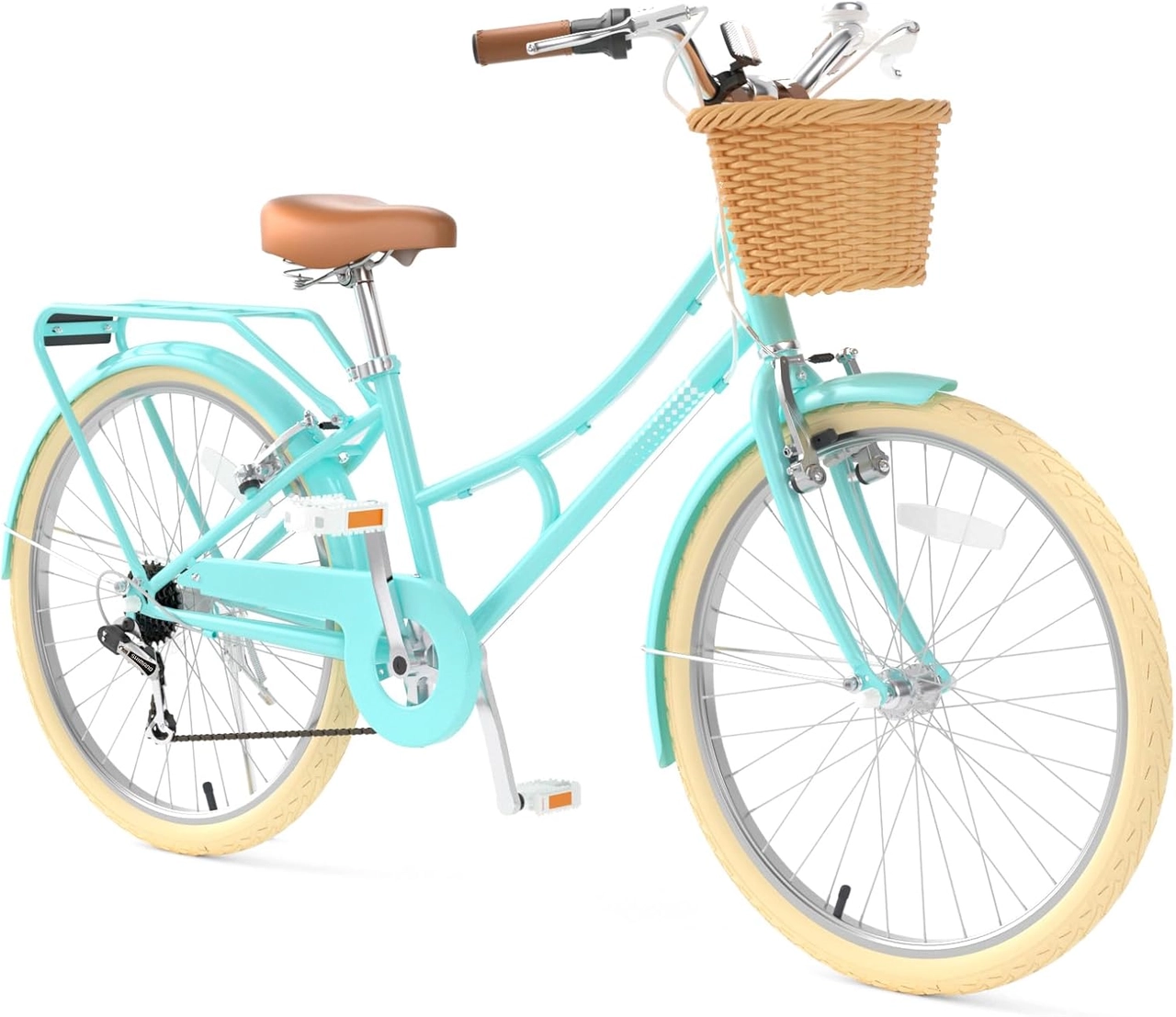 XJD 24-Inch Green Beach Cruiser Bike with U-Brake
A listed 24-inch comparison for riders measuring 54–64 inches, with Green and Pink SKU labels. Its Pink / 26 Inch SKU is relevant only above 60 inches and after a successful individual fit check.
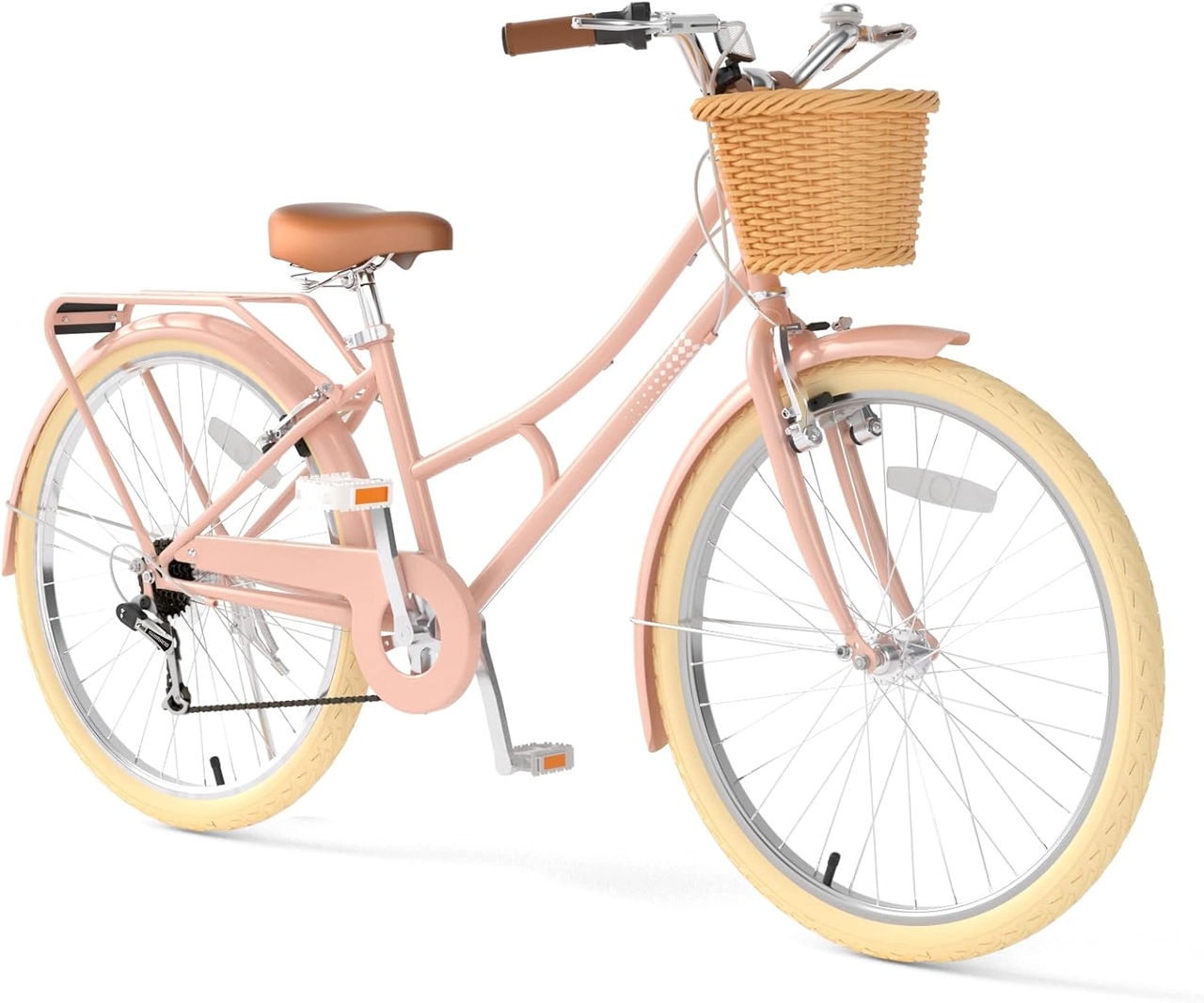 Pink XJD Beach Cruiser Bike, 24"/26", U-Brake
Offers listed 24 Inch and 26 Inch SKU labels for comparing overlapping height ranges. Fit must be confirmed through stand-over clearance, reach, U-brake control and the child’s current confidence.
The XJD 24-Inch Green Beach Cruiser Bike with U-Brake has Green / 24 Inch, Pink / 24 Inch and Pink / 26 Inch SKU labels. This makes its listed 24-inch sizes relevant to the 54–64 inch starting range, while its listed 26-inch option is only a comparison for a rider over 60 inches who can pass the full fit check.
The Pink XJD Beach Cruiser Bike, 24"/26", U-Brake has 24 Inch and 26 Inch SKU labels. Use the same height-led comparison: 24 Inch starts at 54–64 inches, while 26 Inch starts above 60 inches. Color and catalog naming do not establish fit.
Both products are categorized as Beach Cruiser Bikes and list a U-brake. Confirm that the child can comfortably reach and control the brake on the actual bicycle. For assembly, adjustment, maintenance, load limits, compatibility and torque requirements, follow the exact product manual or use a qualified bicycle mechanic.
Do not size up just for growth
An oversized bicycle can make mounting, steering and stopping harder today. If he fits a 20-inch bike confidently but struggles with a 24-inch model, choose the current fit rather than expecting him to grow into the larger bicycle. If both fit, compare which gives him more natural reach, dependable brake operation and controlled starts and stops.
Likewise, being over 60 inches does not automatically make 26 Inch preferable: the XBikes 24-inch range continues to 64 inches. Try both applicable sizes because frame geometry and the rider’s proportions still matter.
Make the final decision
Measure height and inseam, shortlist 20 Inch, 24 Inch or—only above 60 inches—26 Inch, and have the child try the candidates. Choose the bicycle he can straddle, reach, steer and brake confidently now. Finish by fitting a bicycle helmet level on his head and fastening its straps according to the helmet manufacturer’s instructions, consistent with U.S. Consumer Product Safety Commission guidance.
Bikes for your next adventure
-

XJD Girls Bike for Kids Ages 3-8, 12/14/16 Inch with Training Wheels – Purple
The XJD Girls Bike in Purple is a training-wheel bicycle for kids ages 3 to 8, f…$149
$169 -

Light Purple XJD Toddler Bike Helmet, Adjustable, Size XS (46–51 cm)
This Light Purple XJD toddler bike helmet is made for the smallest riders — the …$20.39
-

Black XJD Toddler Bike Helmet, Adjustable – Kids' Protective Helmet
The XJD Toddler Bike Helmet in black is an adjustable protective helmet for kids…$20.39