

What size bike for 5'2 boy
A 5-foot-2 boy is tall enough that a children’s age chart may be misleading. At 62 inches, he may be comparing a larger youth bicycle with a small adult-style frame, but height alone still cannot select the correct model. Inseam, torso length, arm reach and riding experience determine whether the bike feels relaxed or oversized. Treat 5'2" as a measurement to investigate, not as an automatic wheel-size answer.
Measure the rider in two ways
Measure standing height barefoot with the back against a wall, then measure inseam from the floor to the top of the inner leg. A long inseam can make a larger frame possible, while a shorter inseam at the same height may favor a lower step-over design. Also note whether the rider is used to hand brakes and how confidently he starts, turns and stops. A strong rider can manage more equipment, but confidence should not excuse poor reach.
Compare the contact points
When seated, the shoulders should stay relaxed and the elbows should have a slight bend. The grips should not require the rider to lock the arms or slide forward on the saddle. Check that both brake levers can be reached with normal finger pressure. While standing over the frame, leave comfortable clearance and make sure he can step off quickly. The saddle should support efficient pedaling without creating a reach problem; raising it to “make room” is not a substitute for a suitable frame.
When a youth bike is better than a small adult bike
A 24-inch youth bike can suit some riders at this height, particularly when the frame has a generous adjustment range and the ride is mostly neighborhood paths. A 26-inch wheel or small adult frame may be appropriate for a taller inseam and longer rides, but it can add stand-over height, weight and reach. Compare the complete geometry and braking system rather than choosing from the wheel number alone. A test ride at walking speed reveals more than a size label.
Use the planned ride as a filter
For a family cruise, an upright posture, stable steering and easy mounting may be more valuable than aggressive handling. For an active rider, a BMX-style position may be attractive, but the frame must still allow controlled braking and dismounting. Ask where the bike will be used, who will help with transport, and whether the rider will need to lift it onto a rack. Those answers turn a height measurement into a practical choice.
XBikes comparisons for this search
The preserved card is a reminder to distinguish product purpose from body size. The purple 24-inch cruiser is the relevant comparison for relaxed riding and a larger wheel, provided its frame clears the rider comfortably. The blue 20-inch freestyle BMX offers a smaller, more maneuverable alternative for a rider whose priority is active handling rather than long path miles. The green 24-inch cruiser lets the family compare the same broad riding idea in another color and listing. Check each live page for current measurements, brake details and availability; the card is a shortlist, not a promise of fit.
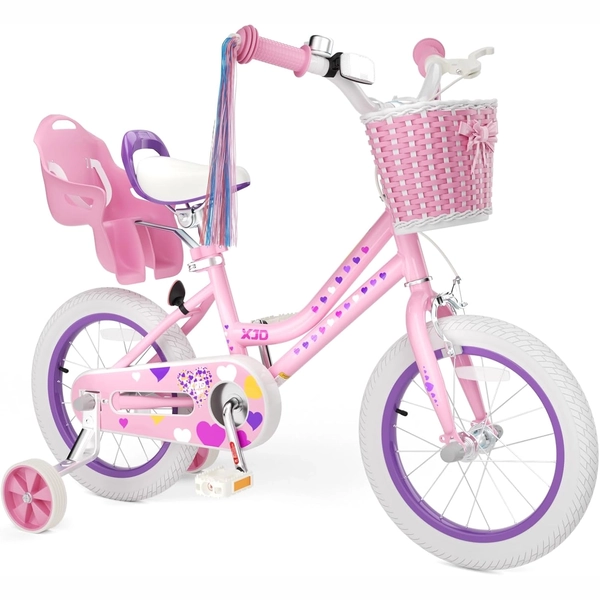 Light Pink XJD Girls' Bicycle with Basket & Training Wheels
Why it fits: Training wheels can support early practice while the rider develops steering and braking confidence; verify the listed wheel size first.
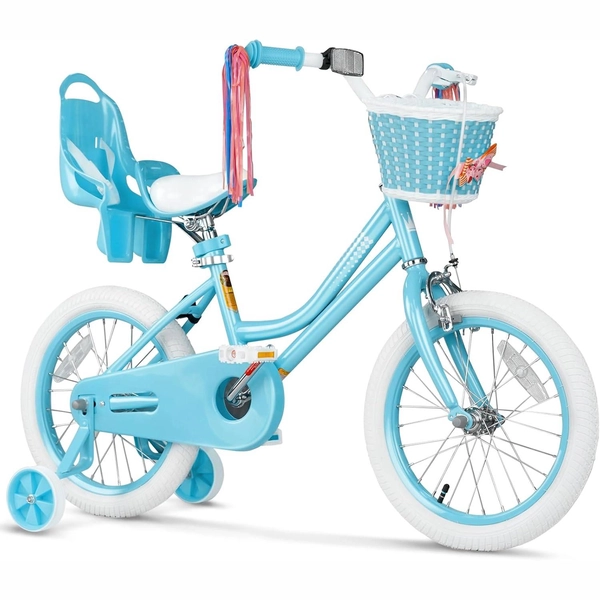 Blue XJD Girls Bike with Training Wheels – 12/14/16 Inch
Why it fits: Training wheels can support early practice while the rider develops steering and braking confidence; verify the listed wheel size first.
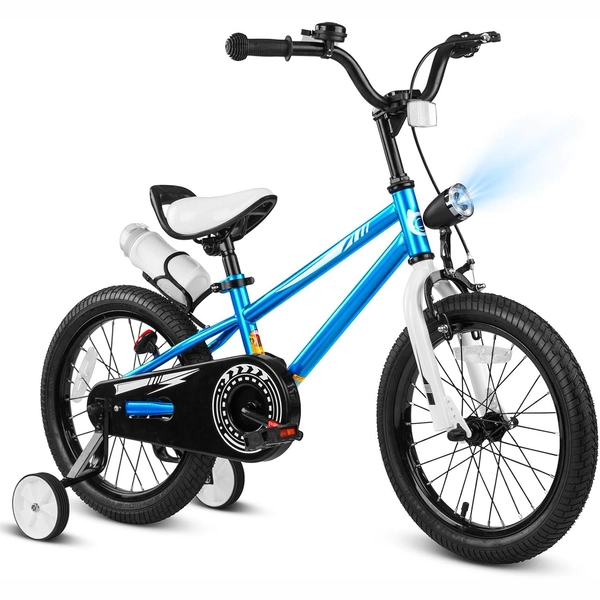 XJD Boys 12/14/16" Training Wheel Bike – Blue
Why it fits: Training wheels can support early practice while the rider develops steering and braking confidence; verify the listed wheel size first.
Do a no-pressure test
- Walk the bike, lift it briefly and judge whether the weight is practical.
- Mount, sit and reach the controls without leaning forward.
- Stand over the frame and step off on both sides.
- Ride slowly, make a wide turn and stop using both brakes.
If he cannot do those actions naturally, do not buy a larger model for growth. A correct fit should leave room for adjustment while preserving control now.
Helmet and road preparation
Use a bicycle helmet that meets the applicable safety standard and fits the rider’s head, not one bought by age. It should sit level, low on the forehead, stay steady and have a snugly fastened chin strap. Before a first street ride, practice looking for traffic, stopping at driveways and riding predictably in a quiet area. Bike fit and road skill work together.
FAQ
Is a 26-inch bike right for a 5'2" boy?
It may be, but inseam, frame reach and brake access are decisive. Test the actual model; do not infer fit from height alone.
Is a 24-inch bike too small?
Not necessarily. A well-fitting 24-inch youth bike may be easier to control and can be the better choice for a shorter inseam or relaxed family riding.
Does gender change the sizing?
No. Body measurements, riding goals and control determine the fit. Product styling can be personal preference.
Source note: Bike-fit checks follow HealthyChildren.org; helmet and riding preparation are cross-checked with NHTSA.
Bikes for your next adventure
-

Blue XJD Kids Bike Helmet for Boys & Girls
The Blue XJD Kids Bike Helmet is a lightweight, adjustable multi-sport helmet fo…$59.99
$99 -

Light Purple XJD Toddler Bike Helmet, Adjustable, Size XS (46–51 cm)
This Light Purple XJD toddler bike helmet is made for the smallest riders — the …$20.39
-

Black XJD Toddler Bike Helmet, Adjustable – Kids' Protective Helmet
The XJD Toddler Bike Helmet in black is an adjustable protective helmet for kids…$20.39