

What size bike for 55 inch boy
A 55-inch boy is around 4 feet 7 inches tall, but the useful bike size still depends on leg length and riding ability. This height often puts a child near the boundary between 20-inch and 24-inch bikes. Rather than choosing from an age label or buying the larger option automatically, compare the actual frame and let the rider demonstrate control.
Why the 20-to-24-inch change needs care
A 20-inch bike can feel approachable for a shorter or less experienced rider. A 24-inch bike may offer smoother rollover and more room for a taller child, but it also changes reach, steering leverage, and braking position. The transition is appropriate only when the child can mount, turn, and stop without treating the bike as something that must be held up by an adult.
Measure the rider and the frame
Record barefoot height and inseam. On the candidate bike, check seated control, comfortable handlebar reach, stand-over clearance, and the adjustment markings on the seatpost. Ask the child to squeeze the brakes repeatedly. If the levers are too far away or require too much force, the frame or brake setup is not a good match yet. Try a slow wide turn, then a controlled stop on a flat surface.
- Use the manufacturer’s range as a starting point rather than a promise.
- Compare frame reach and weight between 20-inch and 24-inch choices.
- Keep enough clearance for safe mounting and dismounting.
- Choose the model the child can manage at the beginning of the season.
What to compare in the XBikes cards
The linked training-wheel products are relevant when the rider still needs pedal and steering support, but their available wheel sizes and configurations must be checked on the live listing. Compare the stated wheel range, saddle position, frame style, weight, and braking equipment. A child who is ready for independent riding may need a different stage from a child who is still practicing starts.
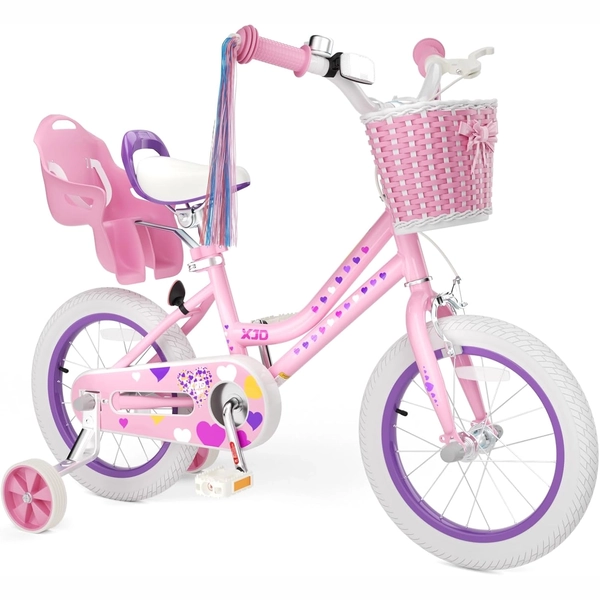 Light Pink XJD Girls' Bicycle with Basket & Training Wheels
Why it fits: Training wheels can support early practice while the rider develops steering and braking confidence; verify the listed wheel size first.
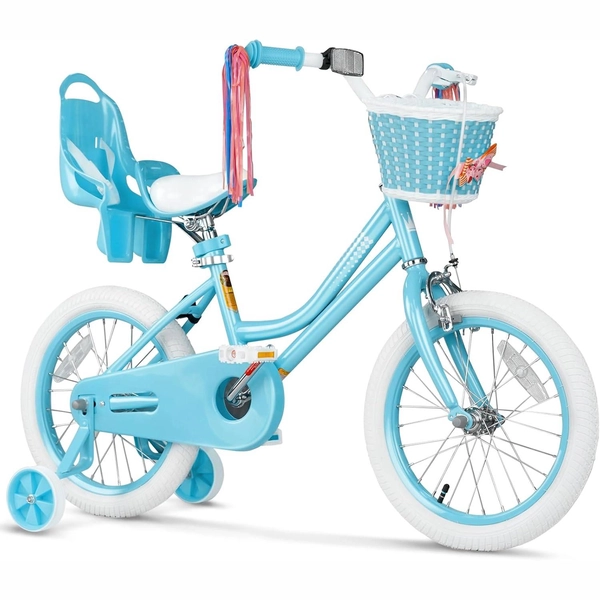 Blue XJD Girls Bike with Training Wheels – 12/14/16 Inch
Why it fits: Training wheels can support early practice while the rider develops steering and braking confidence; verify the listed wheel size first.
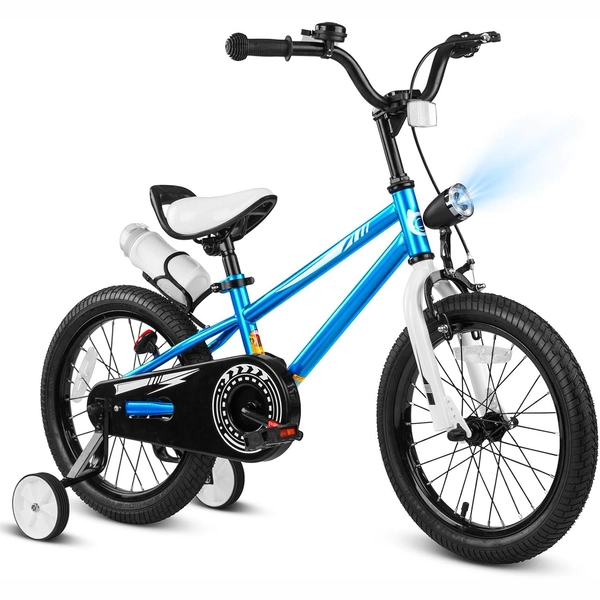 XJD Boys 12/14/16" Training Wheel Bike – Blue
Why it fits: Training wheels can support early practice while the rider develops steering and braking confidence; verify the listed wheel size first.
Do not confuse a higher saddle with a better fit
Raising the saddle can create pedal room, but it cannot shorten an overly long reach or make a heavy bike easier to balance. The rider should look comfortable rather than stretched. Adjustment is valuable when it preserves control, not when it is used to justify a size that is currently too large.
Safety and first-ride preparation
Inspect the wheels, tires, chain, pedals, fasteners, and brakes. Use a CPSC-compliant helmet that sits level and remains stable when the rider moves. Start in an open, low-traffic area, practice braking before hills, and supervise until the child can respond to a stop instruction reliably. Recheck fit as the child's proportions change. Keep the route short enough that the rider can finish with attention and energy still available.
Parent questions
Should a 55-inch child skip straight to 24 inches?
No. Some children fit 24 inches well, while others need the control of a 20-inch bike longer. Test the frame.
Are training wheels a sign the bike is too small?
Not necessarily. They describe a riding stage, but the wheel size and frame still need to match the rider.
Source note: The sizing and helmet checklist follows HealthyChildren.org and CPSC guidance.
Bikes for your next adventure
-

Black XJD Kids Bike for Boys – 12, 14 & 16 Inch Sizes
For a son between roughly 3 and 8 years old, the XJD Kids Bike in Black covers t…$169
$199 -

XJD Boys 12/14/16" Training Wheel Bike – Blue
The XJD Boys Bike in Blue is a training wheel bike for riders 71–122 cm tall—rou…$169
$199 -

XJD Boys & Girls BMX Bike with Training Wheels, 12/14/16" – Blue
The XJD Boys & Girls BMX Bike in Blue is a first pedal bike for kids roughly age…$99.99
$119.99