

What size bike for a 12 boy
For a 12-year-old boy, start with a 20- or 24-inch bike, then choose by measured height and actual fit—not age alone. A 20-inch bike covers 48–60 in (122–152 cm), while a 24-inch bike covers 54–64 in (137–163 cm).
Choose the starting size from his height
Measure the child without shoes, standing straight against a wall. Compare that height with the XBikes starting points below. Because the 20- and 24-inch ranges overlap, height identifies bikes to try; it does not automatically settle the choice.
| Wheel size | XBikes age starting point | Rider height |
|---|---|---|
| 20 Inch | Ages 7–12 | 48–60 in / 122–152 cm |
| 24 Inch | Ages 10–14 | 54–64 in / 137–163 cm |
| 26 Inch | Youth and adults | Over 60 in / 153 cm |
A 12-year-old below 54 inches will usually begin the comparison with a 20-inch bike. From 54 to 60 inches, try both 20- and 24-inch models because proportions, reach and confidence can make one clearly easier to control. From 60 to 64 inches, begin with a 24-inch bike, while a rider over 60 inches may also need to compare an appropriately designed 26-inch model.
Measure inseam as well as total height
For inseam, have him stand in socks with his feet naturally spaced. Place a rigid book between his legs, raise it until it meets the body like a bicycle saddle, and measure vertically from the floor to the top edge of the book. Record the result rather than converting it directly into a wheel size.
Manufacturers can build bicycles with the same wheel size but different frame shapes and stand-over heights. Compare the measured inseam with the exact model’s sizing information, then have the child stand over the real bike. He needs appropriate clearance and must be able to mount and stop without the frame obstructing him. Follow the exact product manual or ask a qualified bicycle mechanic if the model’s adjustment or assembly requirements are unclear.
Use a hands-on fit check
The American Academy of Pediatrics advises having a child try the bicycle and avoiding an oversized bike bought merely for future growth. During the trial, check these points:
- Stand-over: He can straddle the bicycle comfortably rather than balancing against the frame.
- Reach: He can hold the handlebar without locking his elbows, stretching his torso or losing a stable riding position.
- Brake control: His hands can reach and operate the controls reliably from the normal riding position.
- Starting and stopping: He can get moving, steer, turn and stop under control.
- Confidence: The bicycle feels manageable now, rather than intimidating because it is tall, long or heavy-feeling to handle.
If those checks fail, reject that model even when its nominal wheel size matches the height table. A slightly larger option is not an upgrade when the rider cannot control it.
How the supplied catalog bike relates
The supplied XJD Kids' Training Wheel Bike for Boys & Girls, 12/14/16 Inch – White is categorized as a training-wheel bike and has 12-, 14- and 16-inch SKU labels. These choices help show the distinction between a child’s age and a bicycle’s wheel diameter, but they do not include the 20- or 24-inch starting sizes commonly relevant to a 12-year-old.
For comparison, XBikes places 12-inch wheels at 34–40 in (86–102 cm), 14-inch wheels at 37–45 in (94–114 cm), and 16-inch wheels at 40–48 in (102–122 cm). Therefore, this product should be considered only if the rider’s measured height, control needs and individual fit genuinely place him in one of those smaller ranges. Its title is a catalog name, not evidence that it fits a particular child.

If “12” means a 12-inch bike
If the question means “What child fits a 12-inch bicycle?” rather than “What fits a 12-year-old boy?”, the XBikes starting point is ages 3–4 and a rider height of 34–40 in (86–102 cm). The age is only an initial reference: confirm stand-over clearance, reach, brake operation and confidence on the specific bicycle.
Do not treat a 12-inch bike as equivalent to a bike for a 12-year-old. Wheel diameter and rider age are different measurements, and the supplied 12-, 14- and 16-inch product options are not substitutes for a correctly fitting 20-, 24- or 26-inch bicycle.
Complete the decision safely
Once the likely size is identified, arrange an in-person trial and select the bicycle on which he demonstrates the strongest control. Use a properly fitting bicycle helmet that sits level, with its straps adjusted according to the helmet manufacturer’s instructions, as recommended by the U.S. Consumer Product Safety Commission.
For a 12-year-old boy, measure height and inseam now: compare 20 and 24 inches in the overlap range, consider 26 inches only above 60 inches, and buy only after he passes the stand-over, reach, braking and confidence checks.
Bikes for your next adventure
-
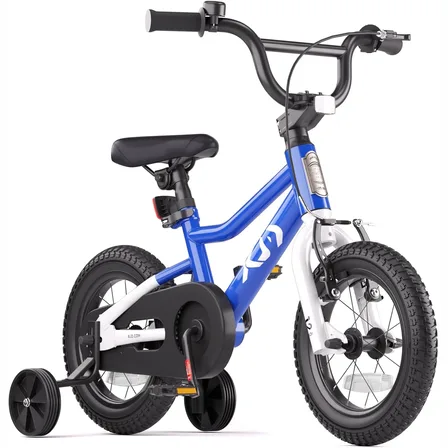
XJD Boys & Girls BMX Bike with Training Wheels, 12/14/16" – Blue
The XJD Boys & Girls BMX Bike in Blue is a first pedal bike for kids roughly age…$99.99
$119.99 -

Black XJD Kids Bike for Boys – 12, 14 & 16 Inch Sizes
For a son between roughly 3 and 8 years old, the XJD Kids Bike in Black covers t…$169
$199 -
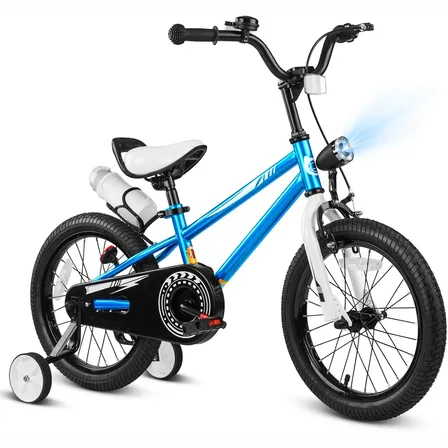
XJD Boys 12/14/16" Training Wheel Bike – Blue
The XJD Boys Bike in Blue is a training wheel bike for riders 71–122 cm tall—rou…$169
$199