

What size bike for a 12 year boy
For most 12-year-old boys, start by comparing 20-inch and 24-inch bikes. Measure his height first: 20-inch suits 48–60 in (122–152 cm), while 24-inch suits 54–64 in (137–163 cm). Then confirm stand-over clearance, reach, brake control and confidence on the actual bike.
Choose by height, not age alone
At age 12, a boy may fall within either of two XBikes starting ranges. A 20-inch bike covers ages 7–12 and heights of 48–60 in (122–152 cm). A 24-inch bike covers ages 10–14 and heights of 54–64 in (137–163 cm). The overlap is intentional: age cannot show whether a rider has the leg length, reach or control needed for a particular bicycle.
If he is over 60 in (153 cm), a 26-inch bike may enter the comparison because the XBikes starting point for that wheel size is youth and adults above that height. Do not move up solely because his birthday is approaching or because a larger bike might last longer.
Measure height and inseam
- Height: Have him stand without shoes against a wall, looking straight ahead. Measure from the floor to the top of his head.
- Inseam: With his feet slightly apart, place a firm, level object between his legs to represent the saddle area. Measure from the floor to its top edge.
- Record both: Use height to select a likely wheel-size range, then use inseam during the physical stand-over and saddle checks.
Wheel diameter does not determine every frame dimension. Two bikes with the same wheel size can still differ in stand-over height and reach, so the measurements narrow the search rather than guarantee a fit.
What to check on the actual bike
Have the child try the bicycle before deciding. While standing over the frame with both feet on the ground, he should not be forced onto tiptoes or pressed against the frame. Seated in a normal riding position, he should reach the handlebar without an uncomfortable stretch or cramped posture.
Ask him to place his hands in their normal riding position and operate the brakes. He needs to reach and control them confidently rather than merely touch them with his fingertips. He should also be able to start, steer, stop and put a foot down without panic or excessive wobbling.
Current confidence matters. A hesitant rider near the overlap between sizes may control the smaller option more comfortably, while a confident rider may fit the larger option if every physical check succeeds. Consistent with American Academy of Pediatrics guidance, do not buy an oversized bicycle simply for future growth.
How the two catalog options compare
The supplied catalog gives one 20-inch option and one model offered with 24-inch and 26-inch SKU labels. They are useful comparison points because those are the wheel sizes most likely to frame the decision for a 12-year-old, but the model name or wheel label cannot replace an individual fit check.
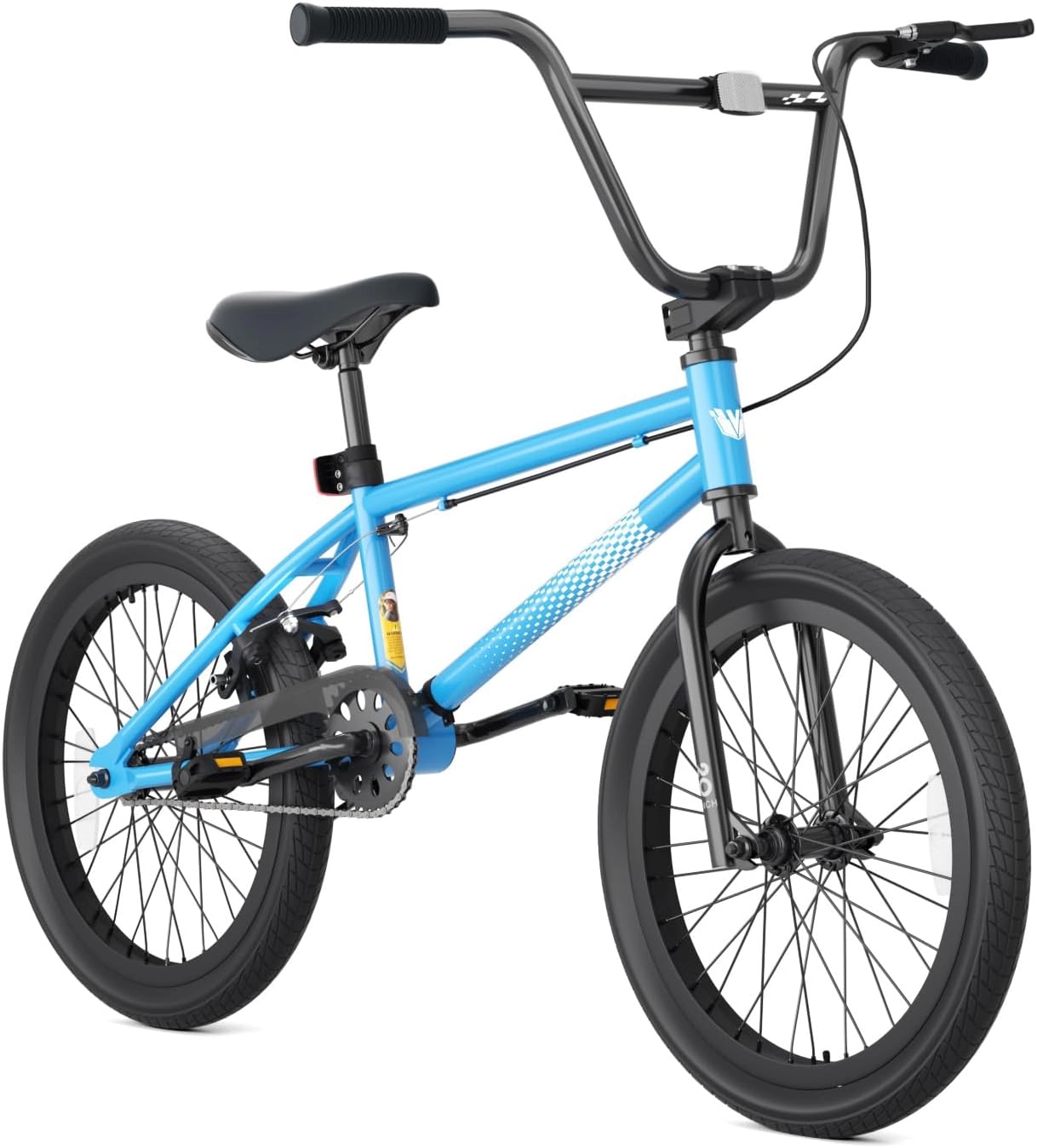 Blue XJD Freestyle BMX Bike, 20-Inch – No Pegs
This kids’ BMX bike provides a 20-inch comparison for riders measuring 48–60 in (122–152 cm). Its no-pegs catalog detail does not determine fit; confirm stand-over, reach, brake control and confidence in person.
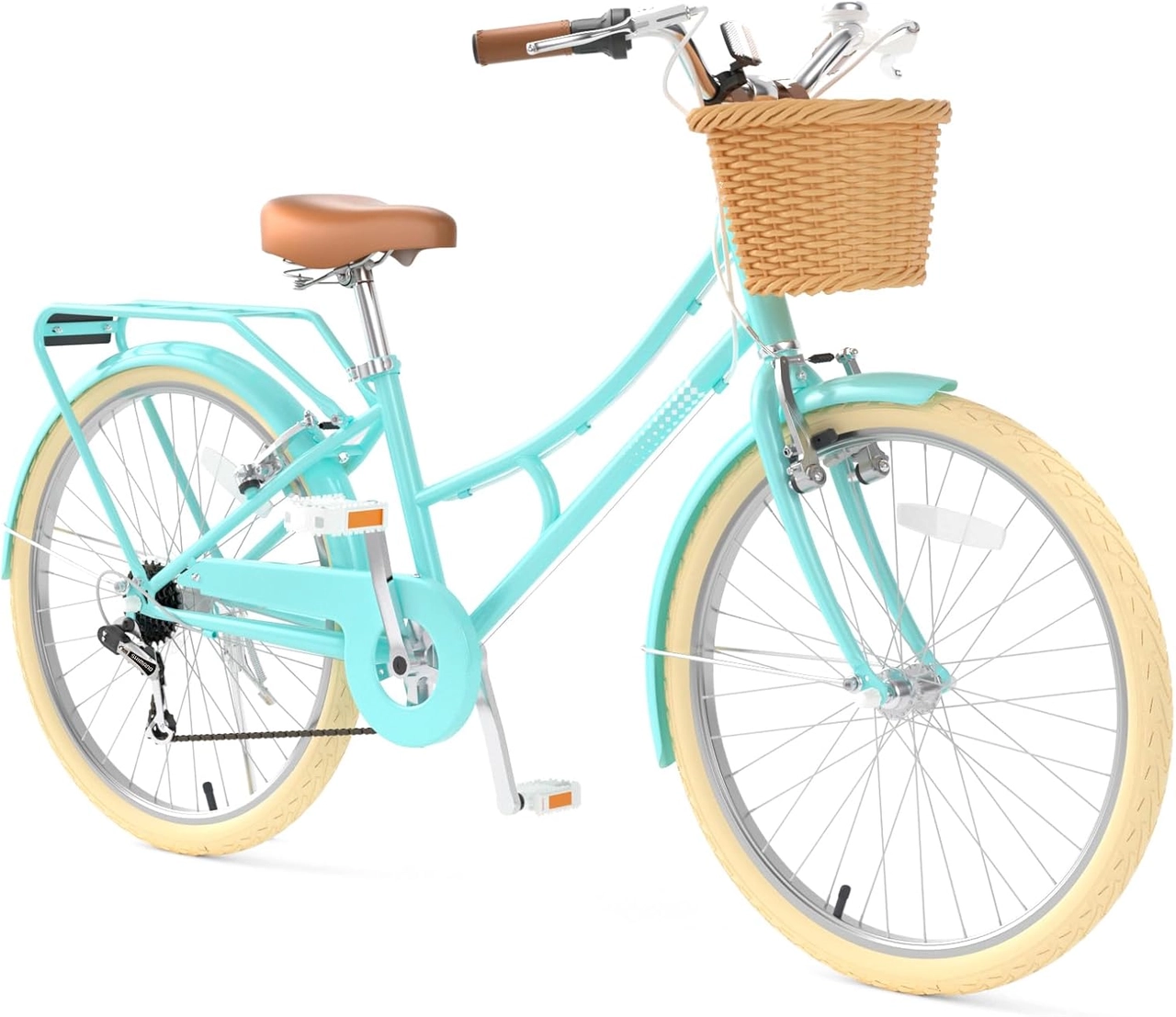 XJD 24-Inch Green Beach Cruiser Bike with U-Brake
This beach cruiser offers 24-inch labels for the 54–64 in (137–163 cm) starting range and a 26-inch label to consider above 60 in (153 cm). Its U-brake still requires an individual reach and control check.
20-inch comparison
The Blue XJD Freestyle BMX Bike, 20-Inch – No Pegs is a kids’ BMX bike with a 20-inch wheel-size label and no pegs. Its wheel size falls within the XBikes 48–60 in (122–152 cm) starting range. It is relevant when the rider measures within that range, especially if a trial confirms manageable stand-over, reach and brake control.
24-inch and 26-inch comparison
The XJD 24-Inch Green Beach Cruiser Bike with U-Brake is a beach cruiser with a U-brake. Its available labels include Green / 24 Inch, Pink / 24 Inch and Pink / 26 Inch. Compare a 24-inch version when the rider is 54–64 in (137–163 cm). Consider the 26-inch label only when he is over 60 in (153 cm), and still require a successful hands-on fit check.
These bicycles also represent different catalog categories—kids’ BMX and beach cruiser—so decide whether the intended riding matches the category as well as the fit. For assembly, adjustment, load limits, compatibility, maintenance and torque requirements, follow the exact product manual or use a qualified bicycle mechanic.
Make the final decision
- If he is under 54 in (137 cm), begin with the 20-inch range rather than assuming a 24-inch bike will fit.
- From 54–60 in (137–152 cm), physically compare 20-inch and 24-inch bikes; choose the one he can stand over, reach, brake and control comfortably.
- From 60–64 in (153–163 cm), begin with a 24-inch comparison and consider 26-inch only when he is over 60 in (153 cm) and can control it fully.
Before riding, add a properly fitted bicycle helmet. U.S. Consumer Product Safety Commission guidance says it should sit level and its straps should be used according to the helmet manufacturer’s instructions. For this 12-year-old, the next step is simple: measure his height and inseam, identify the matching range, and arrange a real fit check before selecting 20, 24 or—if he is over 60 inches—26 inches.
Bikes for your next adventure
-

Light Purple XJD Toddler Bike Helmet, Adjustable, Size XS (46–51 cm)
This Light Purple XJD toddler bike helmet is made for the smallest riders — the …$20.39
-

XJD Girls Bike for Kids Ages 3-8, 12/14/16 Inch with Training Wheels – Purple
The XJD Girls Bike in Purple is a training-wheel bicycle for kids ages 3 to 8, f…$149
$169 -

Pink Girls' 12/14/16" Bike by XJD – Basket & Doll Seat
The XJD Pink Girls' Bike with Basket & Doll Seat is made for riders 71–122 cm ta…$75.99
$99.99