

What size bike for a seven year old boy
For a seven-year-old boy, start with an 18-inch or 20-inch bike: compare his measured height first, then confirm stand-over clearance, reach and brake control in person.
Choose the starting size from his height
Age alone cannot determine the right bike. Measure the child without shoes, standing straight against a wall, and use his current height—not expected growth—to select the first wheel size to try.
| Wheel size | XBikes age starting point | Rider height starting point |
|---|---|---|
| 16 Inch | Ages 4–7 | 40–48 in / 102–122 cm |
| 18 Inch | Ages 5–9 | 43–52 in / 109–132 cm |
| 20 Inch | Ages 7–12 | 48–60 in / 122–152 cm |
A seven-year-old measuring under 48 inches may begin by trying a 16-inch or 18-inch bike. At 48 inches, the ranges overlap: compare 18-inch and 20-inch bikes rather than automatically moving up. Above 52 inches, the 20-inch starting range is the relevant one. These ranges narrow the search, but they do not replace an individual fit check.
Measure height and inseam before shopping
Record his full standing height and inseam. For the inseam, have him stand upright with his feet naturally placed and measure from the floor to the crotch. Use the height table to identify likely wheel sizes, then take both measurements to the bicycle’s own geometry or sizing information.
Wheel size does not reveal frame shape or stand-over height. Two bicycles with the same wheel label can fit differently, so compare his inseam with the specific bike and follow its exact product manual. If the required dimensions are unavailable or unclear, ask a qualified bicycle mechanic to assess the fit.
Perform the in-person fit check
Have the child try the bicycle instead of buying a larger model solely to leave growing room. During the check, look for all of the following:
- Stand-over: He can straddle the bike comfortably rather than being pressed against the frame.
- Starting and stopping: He can get into position and put a foot down without struggling or tipping.
- Reach: He can hold the handlebar while maintaining a comfortable, controlled posture.
- Steering: He can turn the handlebar without stretching, twisting or losing balance.
- Brake control: He can reach and operate the controls reliably with his hands in their normal riding position.
- Confidence: He looks composed at low speed and can control the bicycle without appearing overwhelmed by its size.
If one size technically matches his height but makes any of these tasks difficult, try the smaller overlapping size. If the smaller bike feels cramped or restricts comfortable control, compare the next size up. The correct choice is the bike he can control now.
How the supplied BMX option helps
The XJD Boys & Girls BMX Bike with Training Wheels, 12/14/16" – Blue is listed in Kids' BMX Bikes and has 12 Inch, 14 Inch and 16 Inch SKU labels. For this question, only its 16 Inch option reaches the standard seven-year-old starting range, which covers 40–48 inches / 102–122 cm. It is relevant for a shorter seven-year-old whose measurements and hands-on check support that size.
These catalog options help by providing 12-inch, 14-inch and 16-inch comparison points, but the product does not include an 18-inch or 20-inch SKU in the supplied facts. Its smaller sizes are not substitutes for the 18-inch or 20-inch starting points that many seven-year-olds will need.

Do not infer fit from the product name or the presence of training wheels. Confirm the selected SKU label, check the individual bicycle with the child, and follow the exact product manual for assembly, adjustment, maintenance, compatibility and limits. Use a qualified bicycle mechanic when the manual does not resolve a fit or setup question.
Do not size up just for growth
An oversized bicycle can make mounting, steering, stopping and reaching the brakes harder. A child near an overlap should try both candidate sizes, but the larger wheel is appropriate only when he can meet every control check comfortably. Future growth should not outweigh present control and confidence.
Also provide a properly fitting bicycle helmet. It should sit level and its straps should be adjusted according to the helmet manufacturer’s instructions. Recheck the helmet and bicycle fit as the child grows.
The decision to make today
Measure his height and inseam, choose the matching starting range, and arrange a hands-on comparison. Try 16 Inch at 40–48 inches, compare 18 Inch within 43–52 inches, and consider 20 Inch from 48–60 inches. Where ranges overlap, select the bike on which this seven-year-old can straddle, reach, steer and brake with calm control—not the largest bike he may eventually grow into.
Bikes for your next adventure
-
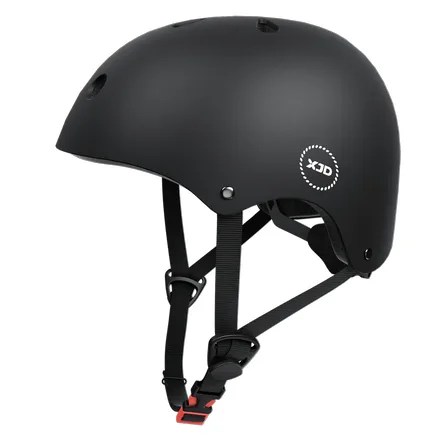
7-in-1 Kids Helmet & Protective Gear Set from XJD – Black or Blue
If you're outfitting one kid (or a couple of siblings) for biking, scootering, o…$59.99
-

Kids Bike Helmet by XJD for Boys & Girls – Black, Blue, Green, Pink, Purple
The XJD Kids Bike Helmet covers a wide 2-to-8-year age range thanks to two head-…$59.99
-

Kids Bike Helmet by XJD for Girls – Pink
The XJD Kids Bike Helmet in Pink is a lightweight multi-sport helmet for girls r…$59.99
$99