

What size bike should a 5 foot boy ride
A 5-foot boy will usually start with a 24-inch bike, but height alone cannot confirm the fit. Measure him, check stand-over clearance, reach and brake control, and compare a 20-inch bike if he needs easier handling. A 26-inch bike is generally a starting point only above 60 inches.
The short answer at exactly 5 feet
Five feet equals 60 inches, placing the rider within the XBikes 24-inch starting range of 54–64 inches. It is also the upper edge of the 20-inch range, which covers 48–60 inches. The 26-inch starting point is for youth and adults over 60 inches, so a rider who measures exactly 60 inches should not automatically move up to it.
That makes 24 inches the most relevant first size to try. A 20-inch model remains worth comparing when the rider has a shorter inseam, limited confidence or difficulty comfortably controlling the larger bike. Age does not settle the decision: actual fit and control take priority.
Measure before comparing bikes
Measure the child without shoes, standing straight against a wall, to confirm his current height. Do not rely on an old measurement or round upward because he is close to the next size.
Next, measure his inseam from the floor to the crotch while he stands upright. There is no universal inseam calculation supplied here that can select a bicycle by itself. Instead, use the measurement when checking the stand-over space and the saddle adjustment range on the exact bicycle.
Bring the height and inseam measurements to the fit check. Frame shapes and riding positions can differ even when two bicycles share the same wheel-size label, so wheel diameter is only a starting point.
What to check during a real fit test
Have him try the bicycle rather than buying an oversized one for future growth. While he stands over the frame, verify that he is not pressed against it and can get on and off without struggling. Follow the exact product manual for the intended stand-over and adjustment requirements.
Then assess the riding position and controls:
- He should reach the handlebar without stretching, locking his arms or leaning excessively forward.
- He should turn the handlebar while remaining balanced and in control.
- His hands should reach and operate the brake controls comfortably.
- He should be able to start, stop and put a foot down with confidence.
- The seat and handlebar must stay within the adjustment limits marked or described by the manufacturer.
If any control feels marginal, do not assume practice or rapid growth will make an oversized bicycle acceptable. Compare the next smaller relevant option or ask a qualified bicycle mechanic to assess the fit.
How 20, 24 and 26 inches compare
| Wheel label | XBikes height starting point | Meaning for a 5-foot rider |
|---|---|---|
| 20 Inch | 48–60 in / 122–152 cm | At the upper edge; compare when easier reach or control may matter. |
| 24 Inch | 54–64 in / 137–163 cm | Within the range and the logical first size to try. |
| 26 Inch | Over 60 in / 153 cm | Not the default at exactly 60 inches; consider only after remeasurement and a successful fit check. |
The age starting points are 7–12 for 20-inch bikes and 10–14 for 24-inch bikes, while 26-inch bicycles are described for youth and adults over 60 inches. These age bands cannot override the rider’s measured dimensions, reach, brake operation or present confidence.
What the supplied XBikes options show
The XJD Kids Beach Cruiser Bicycle, Rear Rack & V-Brakes, Mint Green is offered with 20 Inch, 24 Inch and 26 Inch labels, so it provides all three relevant catalog size choices for comparison. The Pink XJD Beach Cruiser Bike, 24"/26", U-Brake is offered in 24 Inch and 26 Inch, making its 24-inch option relevant and its 26-inch option useful only as a larger-size comparison. Color is a preference, not evidence of fit.
These particular catalog options help answer the question because both include a 24-inch choice, while the first also permits comparison with 20 inches. Their shared wheel labels do not prove identical frame geometry, reach or stand-over dimensions, so each exact bicycle still requires its own fit check.
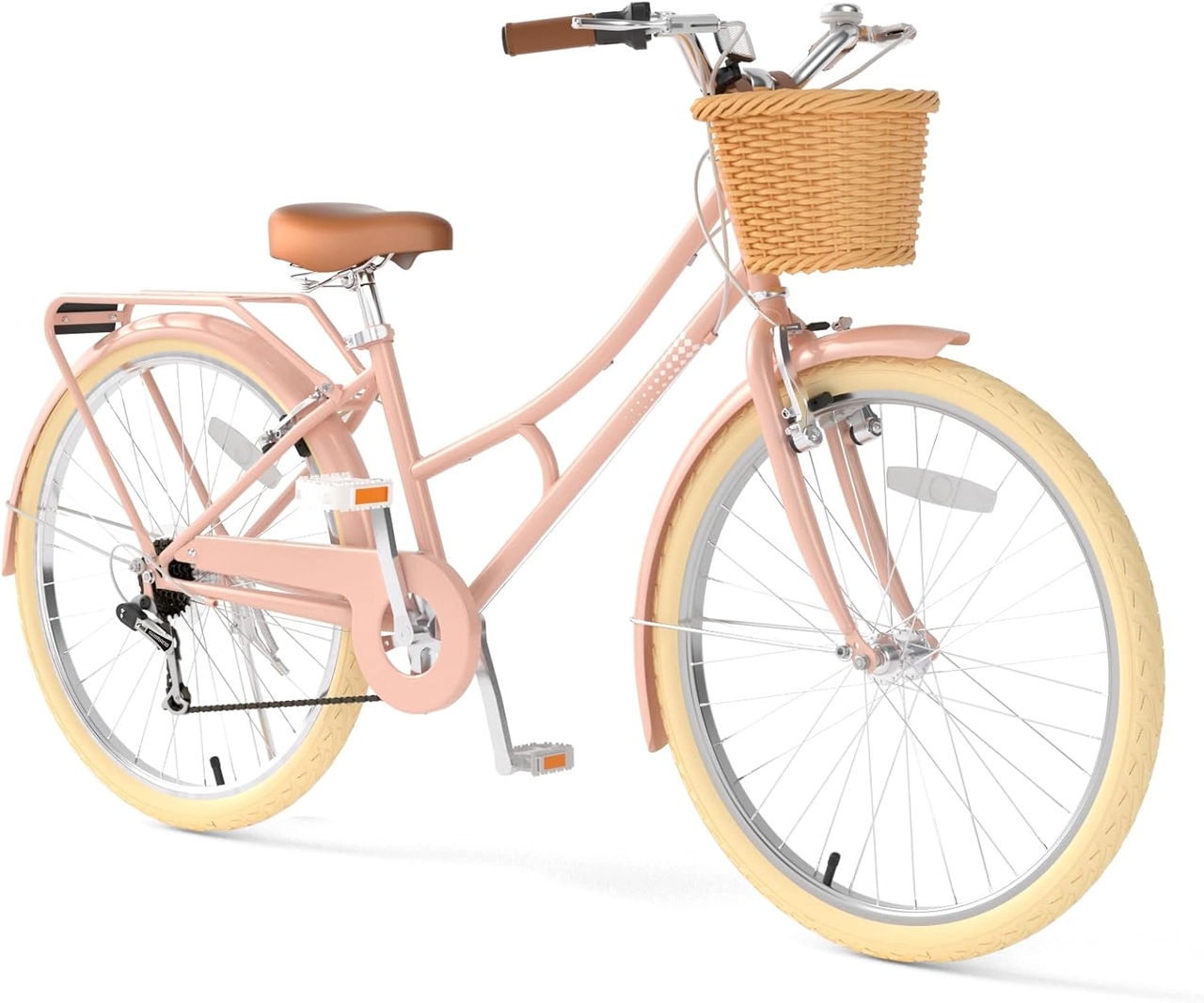 Pink XJD Beach Cruiser Bike, 24"/26", U-Brake
Available in 24 Inch and 26 Inch. Its 24-inch option is relevant to a 5-foot rider’s starting range; the 26-inch option is a larger comparison requiring measurement above 60 inches and an individual fit check.
 XJD Kids Beach Cruiser Bicycle, Rear Rack & V-Brakes, Mint Green
Available in 20 Inch, 24 Inch and 26 Inch, allowing direct comparison around a 5-foot rider’s height. Start by trying 24 Inch, then judge the other labels through stand-over, reach, brake control and confidence.
For assembly, adjustments, compatibility, maintenance, load limits and torque settings, follow the manual for the exact product or use a qualified bicycle mechanic. No procedure or limit should be transferred from one bicycle to another without product-specific instructions.
Make the final decision
- Confirm whether the rider is exactly 60 inches, below it or genuinely above it.
- Try a 24-inch bicycle first.
- Compare a 20-inch bicycle if stand-over, reach, braking or confidence is better on the smaller option.
- Reject a 26-inch bicycle at this stage unless he measures over 60 inches and can pass every individual fit and control check.
Before riding, provide a properly fitting bicycle helmet. It should sit level and its straps should be used according to the helmet manufacturer’s instructions. For a 5-foot boy, choose the bicycle he can control comfortably now—usually the successfully fitted 24-inch option—not one selected mainly for future growth.
Bikes for your next adventure
-

Kids Bike Helmet by XJD for Boys & Girls – Black, Blue, Green, Pink, Purple
The XJD Kids Bike Helmet covers a wide 2-to-8-year age range thanks to two head-…$59.99
-

Kids Bike Helmet by XJD for Girls – Pink
The XJD Kids Bike Helmet in Pink is a lightweight multi-sport helmet for girls r…$59.99
$99 -

XJD Kids Bike for Girls – Pink, 12/14/16/20 Inch with Training Wheels
The XJD Kids Bike for Girls in Pink is a training-wheel bike built to carry your…$139
$159