

A bike for kids
“A bike for kids” can mean a first balance bike, a small pedal model, or a youth bike for longer family rides. The right answer begins by identifying the child’s stage, then narrowing the choices by measurements and control. Children grow at different speeds, so a broad category label cannot replace a fit check.
Identify the riding stage
Ask whether the child is learning to balance, beginning to pedal, or already starting and stopping independently. A beginner benefits from a manageable frame and controls that are easy to reach. A more experienced rider may need a larger wheel or a different riding position, but the bike should still feel natural at low speed. Interest and readiness are as important as age.
Use a simple measurement routine
Measure height and inseam barefoot. Compare them with the exact model’s current range and examine saddle adjustment, stand-over clearance and bar reach. If the child cannot mount, steer and stop calmly, more size will not solve the problem. A little room for growth is reasonable; an oversized bike can turn every start into a struggle.
What the XBikes shortlist shows
The three linked products all serve early riding but are not identical: a light pink basket bike with training wheels, a blue training-wheel bike with 12, 14 and 16 inch choices, and a blue boys’ version in the same general category. Compare wheel selection, frame access, weight, brake setup and the child’s confidence. Use the cards to begin research, then confirm live details on each product page.
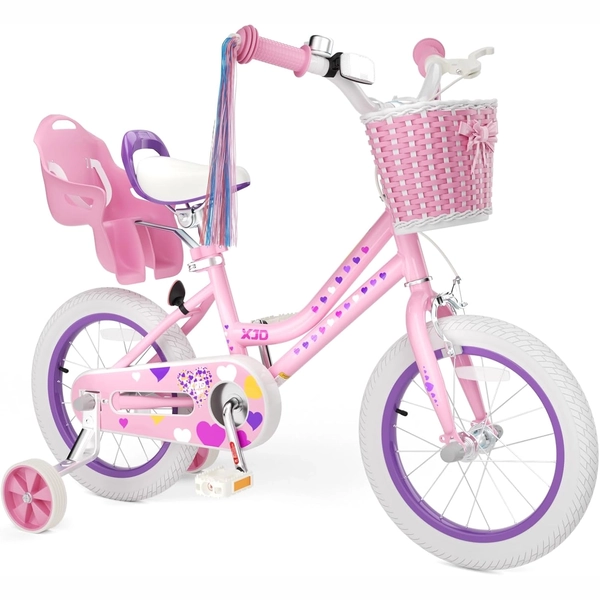 Light Pink XJD Girls' Bicycle with Basket & Training Wheels
Why it fits: Training wheels can support early practice while the rider develops steering and braking confidence; verify the listed wheel size first.
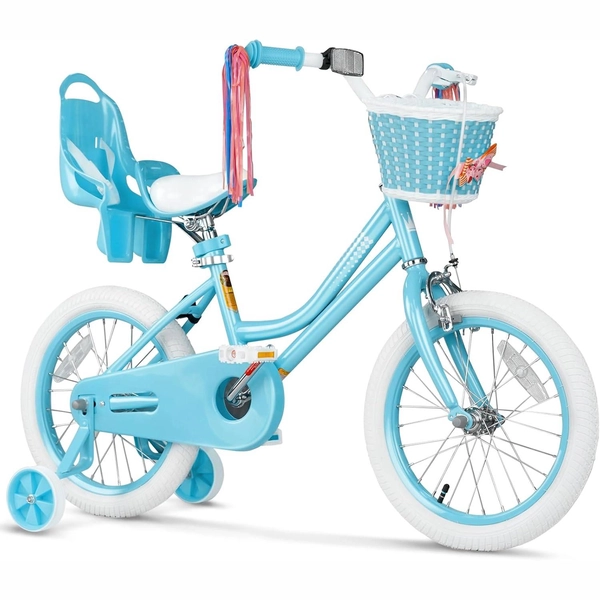 Blue XJD Girls Bike with Training Wheels – 12/14/16 Inch
Why it fits: Training wheels can support early practice while the rider develops steering and braking confidence; verify the listed wheel size first.
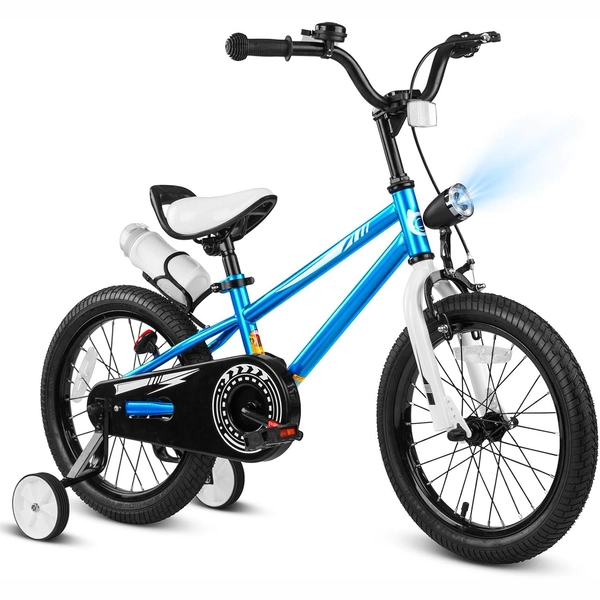 XJD Boys 12/14/16" Training Wheel Bike – Blue
Why it fits: Training wheels can support early practice while the rider develops steering and braking confidence; verify the listed wheel size first.
Build confidence with the setup
- Adjust the saddle and bars before the child rides.
- Practice mounting and dismounting on a flat, quiet surface.
- Teach looking ahead, steering gently and stopping early.
- Supervise every early session and fit the helmet correctly.
Training wheels may support pedal practice, but keep checking that the child is learning to steer and brake rather than leaning on the stabilizers. A balance-focused child may need short, playful sessions before progressing.
FAQ
Should all children start on the same wheel size?
No. Body size, readiness and experience differ. Use measurements and observed control.
Is a heavier bike acceptable if it has more features?
Extra features are not helpful if the child cannot handle the weight. Control and confidence should come first.
Source note: Follow current manufacturer specifications and recognized child-bike and helmet safety recommendations.
A family buying checklist
Before choosing any children’s bike, write down the child’s height, inseam, riding stage and likely route. Then note which controls the child can already use. A first rider may need simple instruction and a low-pressure setting, while an experienced rider may care about handling and distance. Check whether the product includes the accessories shown, and confirm which parts require assembly. Do not assume that a basket, stabilizer or color tells you the bike’s size. Use the live listing for exact information, and keep the receipt and adjustment instructions after delivery. This approach works whether the purchase is a birthday gift or a practical replacement for a bike the child has outgrown.
Bikes for your next adventure
-
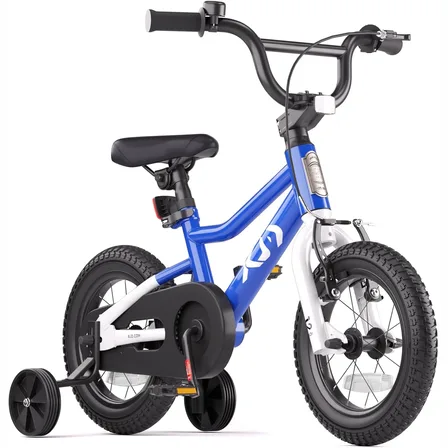
XJD Boys & Girls BMX Bike with Training Wheels, 12/14/16" – Blue
The XJD Boys & Girls BMX Bike in Blue is a first pedal bike for kids roughly age…$99.99
$119.99 -

XJD Girls Bike for Kids Ages 3-8, 12/14/16 Inch with Training Wheels – Purple
The XJD Girls Bike in Purple is a training-wheel bicycle for kids ages 3 to 8, f…$149
$169 -

26-Inch XJD Beach Cruiser Bike for Girls – Purple, V-Brake
This XJD 26-inch purple beach cruiser is sized for big kids and teens — suggeste…$218.49
$229.99