

What size bicycle for 5 year old
When a parent searches for a bicycle for a five-year-old, the wording may change but the decision does not: match the child’s proportions and riding stage to a bike that feels easy to control. A five-year-old may be learning to pedal, transitioning away from stabilizers, or already comfortable on short rides.
Start with two measurements
Height helps narrow the broad category, while inseam helps assess stand-over and saddle position. Measure without shoes and compare the result with the exact product listing. Also consider reach. A child should not have to lean far forward or stretch to the grips, and brake levers must be reachable when the hands are in their normal position.
Choose the stage before the style
For an early pedal learner, training wheels can make starts feel less intimidating. They do not make a poorly sized bike safe, however. A confident rider may be ready for a simpler two-wheel experience and may benefit from a lighter, more responsive setup. Observe whether the child can turn, slow down and stop before deciding that a bigger bicycle is the next step.
Use the product cards intelligently
The linked XBikes choices include a light pink basket model, a blue training-wheel bike with several wheel-size choices, and a blue boys’ training-wheel model. Their shared category does not mean the fit is shared. Compare the selected wheel size, saddle range, frame height and brake details. Open the live pages before purchase because inventory and specifications can change.
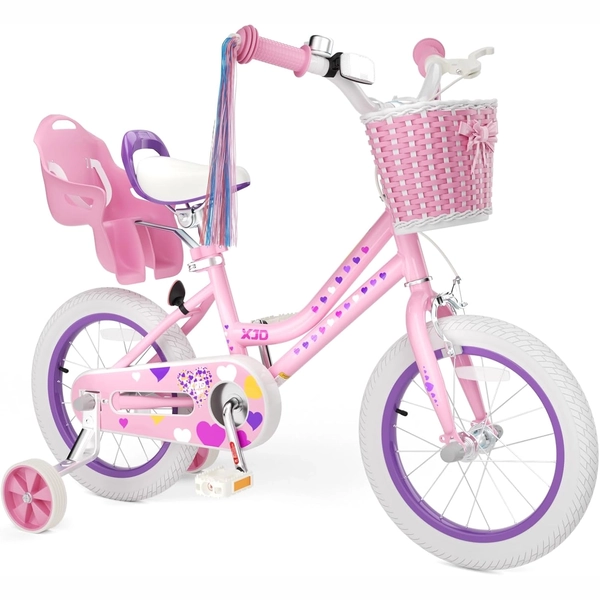 Light Pink XJD Girls' Bicycle with Basket & Training Wheels
Why it fits: Its smaller-wheel or training-wheel configuration is a useful match for early pedal practice, where stable starts and stops matter most.
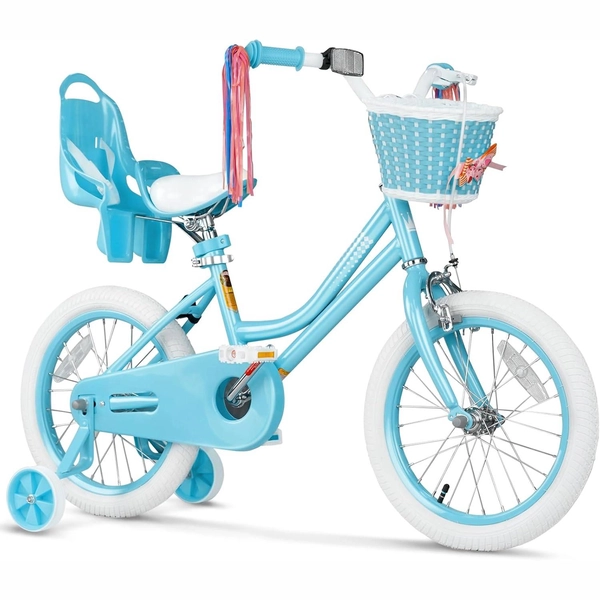 Blue XJD Girls Bike with Training Wheels – 12/14/16 Inch
Why it fits: Its smaller-wheel or training-wheel configuration is a useful match for early pedal practice, where stable starts and stops matter most.
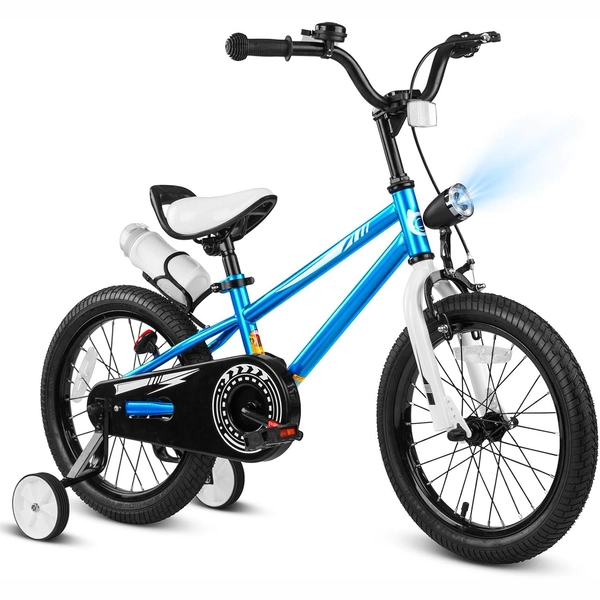 XJD Boys 12/14/16" Training Wheel Bike – Blue
Why it fits: Its smaller-wheel or training-wheel configuration is a useful match for early pedal practice, where stable starts and stops matter most.
Five-year-old setup checklist
- Let the child sit on the assembled bike before a long ride.
- Check both feet can be used confidently during a stop.
- Set the saddle for a natural pedal circle rather than maximum height.
- Use a level, snug helmet and supervised practice area.
Keep the first rides short. A child who is tired may stop looking ahead or squeeze the brakes abruptly. End on a successful skill, then reassess the fit as growth changes the riding position.
FAQ
Is a bicycle with training wheels the only choice at five?
No. Some children are ready for two wheels; others benefit from more supported practice. Readiness should guide the choice.
Can I rely on the age printed in the title?
Use it as a search clue only. The child’s measurements and actual control are more useful.
Source note: Confirm the listing’s current specifications and follow its assembly and helmet instructions.
When to reassess the first choice
After a few rides, watch for recurring signs that the bicycle needs adjustment: knees rising too high, shoulders reaching forward, difficulty stopping, or repeated contact between shoes and stabilizers. These signs do not always mean the model is wrong; the saddle or bars may simply need setting. If adjustment cannot create a comfortable position, return to the measurements and compare another size. Keep the child involved in the process so the bicycle feels like a tool he can understand rather than a mysterious object chosen for him. A calm rider who knows how to stop will usually make faster progress than one placed on a larger frame to gain theoretical longevity.
Bikes for your next adventure
-

XJD Girls Bike for Kids Ages 3-8, 12/14/16 Inch with Training Wheels – Purple
The XJD Girls Bike in Purple is a training-wheel bicycle for kids ages 3 to 8, f…$149
$169 -

Pink Girls' 12/14/16" Bike by XJD – Basket & Doll Seat
The XJD Pink Girls' Bike with Basket & Doll Seat is made for riders 71–122 cm ta…$75.99
$99.99 -

Light Purple XJD Toddler Bike Helmet, Adjustable, Size XS (46–51 cm)
This Light Purple XJD toddler bike helmet is made for the smallest riders — the …$20.39