

Are 16 inch bikes good for beginners
Yes, a 16-inch bike can be good for a beginner who measures about 40–48 in (102–122 cm), provided the bike fits and the child can control it.
When a 16-inch bike makes sense
The XBikes starting point for a 16-inch bike is ages 4–7 and a rider height of 40–48 in (102–122 cm). Height is more useful than age, however. Children of the same age can have different leg lengths, arm lengths and confidence levels.
A 16-inch bike is a sensible beginner option when the child is within that height range and can stand over, mount, steer and stop the actual bicycle comfortably. It is not a good choice merely because the child will eventually grow into it. An oversized bicycle can make starting, stopping and recovering balance harder.
What to measure before choosing
Measure the child without shoes for a consistent height reading. For inseam, have the child stand upright with feet slightly apart, then measure from the floor to the crotch. Wheel size gives you a starting category; the bicycle’s individual frame and setup determine the final fit.
At an in-person fit check, compare these points:
- Stand-over: The child should be able to straddle the bicycle securely rather than being forced onto tiptoes or against the frame.
- Starting position: They should be able to get on, push away and place a foot down without panic or excessive leaning.
- Reach: The handlebars should be reachable without locking the elbows, stretching the torso or losing steering control.
- Brake control: The child must be able to reach and operate the bicycle’s braking system reliably. Check the exact model rather than assuming all 16-inch bikes work alike.
- Confidence: A tense rider who cannot look ahead, steer smoothly or stop on request may need a smaller or differently fitted bicycle.
Compare the nearby wheel sizes
Use these XBikes ranges only to narrow the options before a hands-on fit check. Overlap is normal, so a height near a boundary does not automatically decide the wheel size.
| Wheel size | Starting age | Rider height |
|---|---|---|
| 12 Inch | 3–4 | 34–40 in / 86–102 cm |
| 14 Inch | 3–6 | 37–45 in / 94–114 cm |
| 16 Inch | 4–7 | 40–48 in / 102–122 cm |
| 18 Inch | 5–9 | 43–52 in / 109–132 cm |
For example, a child measuring 42 in falls within the 14-, 16- and 18-inch starting ranges. That overlap means you should compare stand-over clearance, reach, braking and control on the actual bicycles. Do not automatically choose the largest option for extra growing room.
How the supplied catalog option helps
The XJD Boys 12/14/16" Training Wheel Bike – Blue is listed in the Training Wheel Bikes category and has available SKU labels for 12 Inch, 14 Inch and 16 Inch. Those three labeled sizes make it relevant when comparing a requested 16-inch option with smaller starting points, but the labels alone do not establish individual fit.
This particular catalog option helps answer the question because it includes an exact 16 Inch SKU label as well as 12 Inch and 14 Inch labels for size comparison. Select the intended SKU carefully and confirm the child’s fit on that exact configuration.

Training wheels may provide support while a child learns pedaling and steering, but their presence does not make an oversized bicycle suitable. The rider must still reach the controls, manage the bicycle and stop confidently. The supplied facts do not specify component adjustment, assembly, load limits or maintenance procedures, so follow the exact product manual or ask a qualified bicycle mechanic.
Do a short control check before riding
- Confirm that the child’s measured height places 16 Inch within the 40–48 in (102–122 cm) starting range.
- Have the child straddle and mount the exact bicycle while an adult stabilizes it.
- Check that the child can hold the bars naturally, turn them without overreaching and look ahead.
- Verify that the child can use the braking system and put a foot down promptly.
- Practise starting, straight-line steering and controlled stopping in a flat area away from traffic.
A bicycle helmet is essential, but size alone is not enough: it should fit properly, sit level and have its straps adjusted according to the helmet manufacturer’s instructions. Adult supervision and a suitable practice area remain important while the child develops control.
The decision
Choose a 16-inch bike for a beginner only if the child measures within the starting range and passes the stand-over, reach, brake and confidence checks on the actual bicycle. If they stretch, wobble because of the bike’s size or cannot stop reliably, compare a 14-inch option instead; if 16 Inch fits comfortably, proceed with supervised practice rather than sizing up for future growth.
Bikes for your next adventure
-

Light Pink XJD Girls' Bicycle with Basket & Training Wheels
The Light Pink XJD Girls' Bicycle with Basket & Training Wheels is a retro-style…$109.99
$129.99 -

Green XJD Toddler Bike Helmet with Adjustable Fit, XS (46–51 cm)
The XJD toddler bike helmet in Green is built for the youngest riders — the size…$20.39
$23.99 -
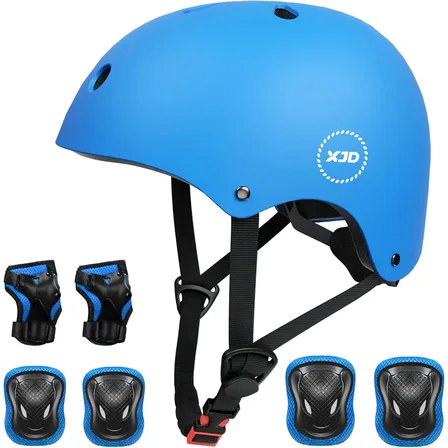
Blue XJD Helmet & Protective Gear Set for Kids, Sizes S/M
The Blue XJD Helmet & Protective Gear Set is made for kids roughly 3 to 8 years …$23.79