

Can a 5 year old ride a 16 inch bike
Yes—many 5-year-olds can ride a 16-inch bike if they are 40–48 in (102–122 cm) tall and can comfortably stand over, reach, steer and brake it.
Start with height, not the fifth birthday
XBikes lists a 16-inch bike as a starting point for ages 4–7 and rider heights of 40–48 in (102–122 cm). That makes it a reasonable size to try for many 5-year-olds, but age alone cannot confirm the fit. Children of the same age can have different leg lengths, arm reach, coordination and riding confidence.
Measure the child’s height without shoes, standing upright against a wall. If the result is within the 16-inch range, arrange an individual fit check before deciding. If it falls outside that range, compare the neighboring wheel-size starting points rather than forcing the child onto a 16-inch bike.
Compare the nearby wheel sizes
| Wheel size | XBikes age starting point | Rider-height starting point |
|---|---|---|
| 14 Inch | Ages 3–6 | 37–45 in / 94–114 cm |
| 16 Inch | Ages 4–7 | 40–48 in / 102–122 cm |
| 18 Inch | Ages 5–9 | 43–52 in / 109–132 cm |
The ranges overlap, so height does not automatically settle the choice. A 5-year-old near an overlap should try the relevant sizes and use the bike on which control is most natural. Do not choose an oversized bicycle merely to leave room for growth.
Measure inseam and check stand-over
Measure inseam with the child standing straight, feet slightly apart and without shoes. Run a rigid book upward between the legs until it rests firmly like a bicycle saddle, then measure from the floor to the top edge of the book. Compare that measurement with the bicycle’s stand-over and saddle-adjustment information in the exact product manual.
During the try-on, have the child straddle the frame with both feet planted securely on the ground. The frame should not prevent a comfortable, controlled stance. Then check the seated position: the child should be able to start, stop and put a foot down without panic or an awkward stretch. Pediatric bicycle guidance recommends trying the actual bike and checking stand-over rather than relying on its wheel label alone.
Test reach, brakes and confidence
Ask the child to sit in a normal riding position and hold the handlebars. Watch for locked elbows, a sharply stretched torso or difficulty turning the bars while remaining balanced. The child should be able to steer in both directions without shifting into an unstable position.
Next, confirm that the child can reach and operate the bicycle’s braking controls. Brake type and adjustment are product-specific, so follow the exact manual or ask a qualified bicycle mechanic for help. A bike is not a suitable fit if the rider cannot control its brakes consistently, even when the height chart suggests 16 inches.
Current confidence matters too. A child who is still learning to balance, steer or start independently may need a different setup from a confident rider of the same height. Make the trial in a quiet, open area with close adult supervision.
How the supplied XBikes option applies
The Girls' Training Wheel Bike by XJD, 12–20 Inch Wheels – Blue is relevant because its available SKU labels include 12 Inch, 14 Inch, 16 Inch and 20 Inch. In particular, its 16 Inch option lets a parent consider the exact wheel size in the title, while the 14 Inch option provides a smaller catalog comparison. The 12 Inch and 20 Inch labels are distinct sizes, not equivalents to 16 inches; use their respective XBikes fit ranges and an individual check.

The catalog facts do not provide frame geometry, saddle range, brake details, assembly instructions, load limits or component compatibility. Confirm those points in the manual for the exact selected SKU, or use a qualified bicycle mechanic. The presence of a 16 Inch SKU label establishes the wheel-size option, not that it will fit every 5-year-old.
Make the final decision
- Measure the child’s standing height and inseam without shoes.
- Use 40–48 in (102–122 cm) only as the starting range for trying a 16-inch bike.
- Check comfortable stand-over, handlebar reach, steering and access to the braking controls on the actual bicycle.
- Choose the size the child can control now, rather than a larger bike intended for future growth.
- Fit a bicycle helmet so it sits level and secure its straps according to the helmet manufacturer’s instructions.
For a 5-year-old, choose the 16-inch bike only when the measurements and hands-on control check agree; otherwise, compare the adjacent size that matches the child’s present height and abilities.
Bikes for your next adventure
-
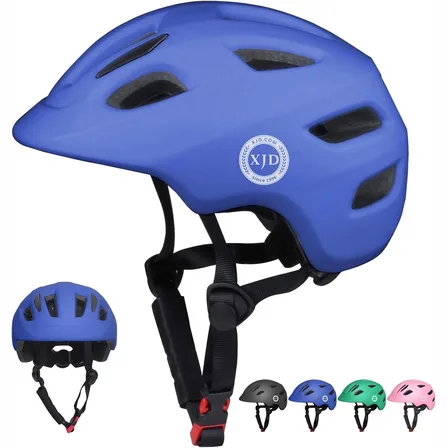
Blue XJD Kids' Bike Helmet, Adjustable Fit – Sizes XS & S
The Blue XJD Kids' Bike Helmet is a lightweight, adjustable helmet for toddlers …$20.39
-

XJD Girls Bike for Kids Ages 3-8, 12/14/16 Inch with Training Wheels – Purple
The XJD Girls Bike in Purple is a training-wheel bicycle for kids ages 3 to 8, f…$149
$169 -

Pink Girls' 12/14/16" Bike by XJD – Basket & Doll Seat
The XJD Pink Girls' Bike with Basket & Doll Seat is made for riders 71–122 cm ta…$75.99
$99.99