

Are bicycle trailer safe for kids
Bicycle trailers can be safe for kids when the child fits the trailer, every restraint and hitch is used correctly, the bicycle is suitable, and the route and riding speed are conservative. Safety depends on the complete setup—not the trailer alone.
What to measure before using a trailer
Measure the child’s seated height and shoulder position, then check whether there is adequate head and helmet clearance inside the trailer. Confirm that the harness lies where the trailer manual shows, without crossing the neck or allowing the child to slip downward. Use the manual’s passenger eligibility requirements rather than age alone.
Next, calculate the complete carried load, including the child, clothing, drinks, bags and other cargo. Compare that total with the exact trailer’s stated limits. Also check its permitted passenger count. If any dimension, seating requirement or load limit is unclear, contact the manufacturer or ask a qualified bicycle mechanic.
What to compare in the complete setup
- Hitch compatibility: Verify that the hitch and any adapter are approved for the exact bicycle, axle and trailer combination.
- Secure connection: Install the hitch, secondary retention device and other fasteners exactly as the product manual directs.
- Child restraint: Compare the child’s position with the manual’s diagrams and instructions each ride.
- Bicycle control: The adult rider must be able to start, steer, brake and stop predictably with the loaded trailer attached.
- Condition: Inspect the bicycle, trailer, tires, wheels, restraint and connection points before departure. Follow the manuals for maintenance and torque specifications.
Do not improvise an adapter, exceed a stated limit or assume that a trailer fitting one bicycle will fit another.
Helmets, visibility and route choice
The adult rider’s bicycle helmet should fit properly, sit level and have its straps adjusted according to the helmet manufacturer’s instructions. For a child passenger, follow the trailer manufacturer’s helmet directions and applicable local rules while also confirming sufficient head clearance.
Choose a low-traffic route with a smooth, predictable surface. Avoid situations where the trailer may be difficult for drivers or other riders to see. Allow extra room for its width and path through turns, and leave more distance for slowing and stopping. If the adult cannot maintain control during a careful unloaded and loaded practice check away from traffic, do not carry the child.
Where the supplied bicycle is relevant
The supplied catalog item is not a bicycle trailer and cannot establish whether a trailer is safe or compatible. It is relevant when comparing a child’s later or separate independent bicycle fit. Its available wheel sizes provide starting points, but the child must still try the bicycle and demonstrate comfortable stand-over clearance, reach, brake control and confidence.
The product shown below helps answer the title only as a child-bicycle fit comparison, not as a trailer recommendation, towing bicycle or substitute for checking a trailer manual.

The Light Pink XJD Girls' Bicycle with Basket & Training Wheels is listed in the Training Wheel Bikes category and is available with 12 Inch, 14 Inch, 16 Inch and 20 Inch wheel-size labels. No supplied fact confirms trailer compatibility, towing suitability, brake type, load capacity or certification, so those points must not be inferred from its listing.
How to check its available bicycle sizes
| Wheel-size label | XBikes starting point |
|---|---|
| 12 Inch | Ages 3–4; height 34–40 in / 86–102 cm |
| 14 Inch | Ages 3–6; height 37–45 in / 94–114 cm |
| 16 Inch | Ages 4–7; height 40–48 in / 102–122 cm |
| 20 Inch | Ages 7–12; height 48–60 in / 122–152 cm |
These ranges are starting points, not proof of fit. Measure the child’s height and inseam, then have the child try the bicycle. Do not choose an oversized bicycle merely to allow room for growth. Check stand-over clearance, comfortable reach, brake operation and present riding confidence before selecting a size.
A practical go-or-no-go decision
Proceed only when the trailer manual permits the passenger and total load, the child fits its seat and restraint with adequate clearance, the hitch is confirmed compatible, and the adult can control the loaded combination on the planned route. Pause and obtain the exact manuals or help from a qualified bicycle mechanic if compatibility, assembly, maintenance, load limits or torque remains uncertain.
If those checks pass, begin with a careful practice ride away from traffic before carrying the child. If even one check fails, do not use the bicycle trailer for that child or setup.
Bikes for your next adventure
-
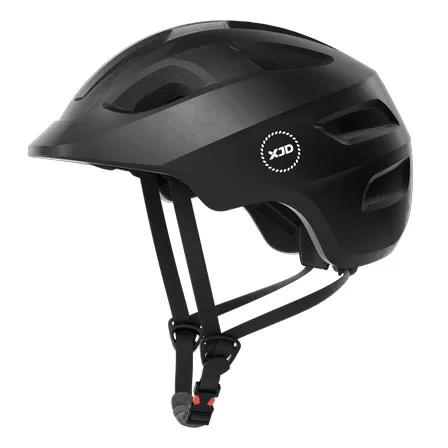
Kids Multi-Sport Bike Helmet by XJD – Black
7 reviews
The XJD Kids Multi-Sport Bike Helmet in Black is a lightweight, adjustable helme…$59.99
$49 -

Kids Bike Helmet by XJD for Girls – Pink
The XJD Kids Bike Helmet in Pink is a lightweight multi-sport helmet for girls r…$59.99
$99 -

Blue XJD Kids Bike Helmet for Boys & Girls
The Blue XJD Kids Bike Helmet is a lightweight, adjustable multi-sport helmet fo…$59.99
$99