

Are there 22 inch bikes
Yes, 22-inch bikes exist, but they are less common than 20- and 24-inch models. XBikes has no supplied 22-inch option here, so measure the child and verify the exact bike’s fit before buying.
What “22 inch” actually tells you
The 22-inch label describes the bicycle’s nominal wheel size. It does not tell you the frame dimensions, stand-over clearance, saddle range, handlebar reach or how easily a particular child can operate the brakes. Two bicycles with the same wheel label can therefore fit differently.
A 22-inch bicycle sits between common 20- and 24-inch categories, but it is not automatically a perfect intermediate fit. The XBikes starting points provide ranges for 20 and 24 inches, not for 22 inches. For a 22-inch model, use its manufacturer’s own fit information and confirm the fit on the actual bicycle.
Measure before comparing sizes
Start with the child’s current height, measured without shoes against a wall. Then measure inseam from the floor to the crotch while the child stands naturally. Compare both measurements with the exact bicycle manufacturer’s chart; do not infer a 22-inch range by averaging the 20- and 24-inch numbers.
The neighboring XBikes wheel-size starting points are:
| Wheel size | Age starting point | Rider-height starting point |
|---|---|---|
| 20 Inch | 7–12 | 48–60 in / 122–152 cm |
| 22 Inch | No XBikes numerical standard supplied | Check the exact manufacturer’s chart |
| 24 Inch | 10–14 | 54–64 in / 137–163 cm |
These ranges are starting points, not permission to skip a fit check. Height matters more than age alone, and overlap between the 20- and 24-inch ranges does not prove that either size—or a 22-inch bike—will fit.
Perform an individual fit check
Have the child try the exact bicycle whenever possible. The American Academy of Pediatrics advises against buying an oversized bicycle merely for future growth. During the check, look at the complete riding position rather than only whether the child can touch the ground.
- Stand-over: The child should be able to straddle the bicycle with suitable clearance and without leaning the bike to make room.
- Reach: The handlebars should be reachable without an extreme stretch, locked elbows or loss of steering control.
- Brake control: If the bicycle has hand brakes, the child must be able to reach and operate them confidently while maintaining control.
- Starting and stopping: Ask the child to demonstrate a controlled start, turn and stop in a safe area.
- Confidence: Hesitation, wobbling or difficulty managing the bicycle is a reason to reassess the size, even when a chart appears to match.
For assembly, adjustments, compatibility, maintenance, load limits and torque, follow the manual for the exact product or ask a qualified bicycle mechanic. A properly fitting bicycle helmet is also essential: it should sit level, fit correctly and have its straps adjusted according to the helmet manufacturer’s instructions.
How the supplied XBikes products relate
Neither supplied product has an available 22-inch SKU. They help only as smaller-wheel comparison points: both offer available 12-, 14- and 16-inch configurations. They are not substitutes for a requested 22-inch bicycle, and a size should never be chosen simply because it appears in a product title.
 XJD Light Purple Girls Bike with Basket, Training Wheels, 12/14/16/20 Inch
Available in supplied 12-, 14- and 16-inch SKUs only. This training-wheel bicycle is a smaller-size comparison point, not a substitute for a 22-inch bike, despite “20 Inch” appearing in its catalog title.
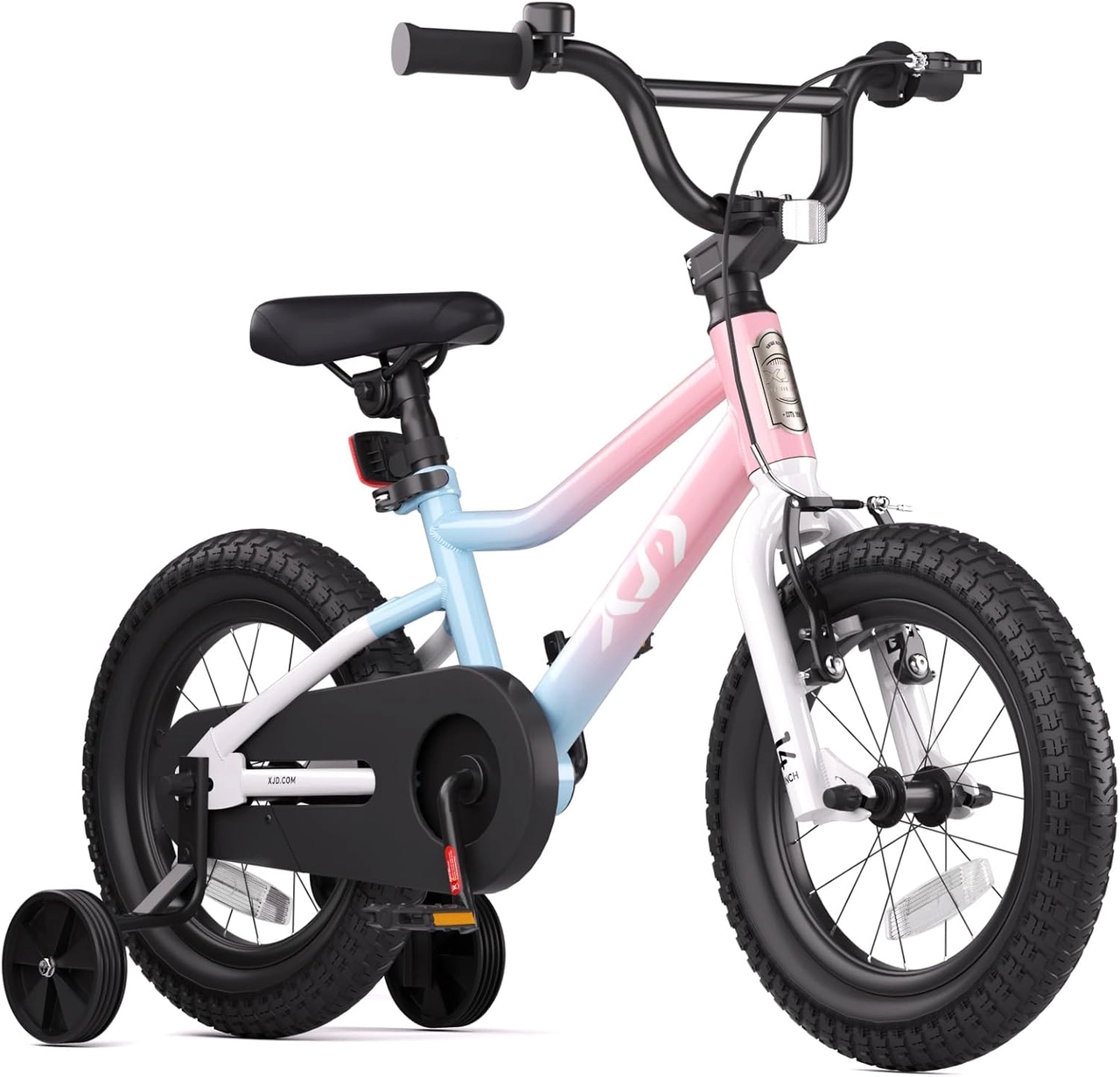 XJD Girls BMX Bike 12/14/16 Inch with Training Wheels – Pink Blue
This kids’ BMX bicycle with training wheels has supplied 12-, 14- and 16-inch SKU labels. It is relevant only when measurements support a smaller wheel size and is not equivalent to a 22-inch bicycle.
XJD Light Purple Girls Bike with Basket, Training Wheels, 12/14/16/20 Inch
This Training Wheel Bikes model has supplied available SKU labels of 12 Inch, 14 Inch and 16 Inch. Although “20 Inch” appears in its exact catalog title, a 20-inch available SKU is not included in the supplied facts. It therefore cannot be treated as a current 20- or 22-inch option here.
XJD Girls BMX Bike 12/14/16 Inch with Training Wheels – Pink Blue
This Kids’ BMX Bikes model also has supplied available SKU labels of 12 Inch, 14 Inch and 16 Inch. Those sizes can be considered only if the child’s measurements and individual fit check point to a smaller bicycle; none is equivalent to a 22-inch wheel size.
What to do next
- Record the child’s height and inseam now rather than relying on age or clothing size.
- Find the fit chart and adjustment limits for the exact 22-inch bicycle under consideration.
- Compare that information with stand-over, reach and brake access on the assembled bicycle.
- Have the child demonstrate comfortable control instead of buying extra size for growth.
- If the 22-inch model cannot be tried or its fit data is unclear, ask its manufacturer or a qualified bicycle mechanic before ordering.
Choose a 22-inch bike only when the exact model fits the measured rider and the child can control it confidently. Otherwise, compare properly fitted alternatives without assuming that 20, 22 and 24 inches are interchangeable.
Bikes for your next adventure
-
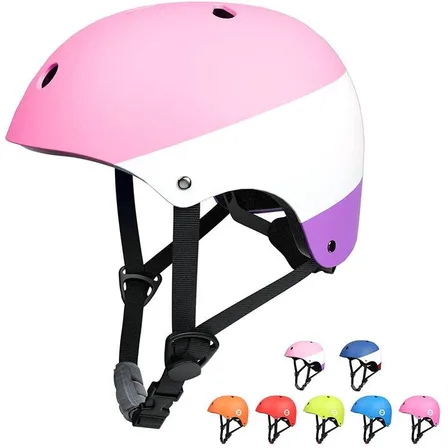
XJD Kids Bike Helmet for Boys & Girls, B White / Pink White
The XJD Kids Bike Helmet covers a wide age range — suggested for ages 2 through …$59.99
-

Green XJD Toddler Bike Helmet with Adjustable Fit, XS (46–51 cm)
The XJD toddler bike helmet in Green is built for the youngest riders — the size…$20.39
$23.99 -

Kids Bike Helmet by XJD for Boys & Girls – Black, Blue, Green, Pink, Purple
The XJD Kids Bike Helmet covers a wide 2-to-8-year age range thanks to two head-…$59.99