

What does 20 inch bike mean
A 20 inch bike means the bicycle is built around 20-inch wheels; it does not describe the frame height or guarantee that the bike fits a child.
What “20 inch” actually tells you
The label identifies the wheel-size class. It is useful for narrowing the search, but two 20-inch bicycles can still feel different because fit also depends on the bicycle’s geometry and the rider’s proportions.
Under the XBikes starting points, a 20 Inch bike generally corresponds to ages 7–12 and rider heights of 48–60 in (122–152 cm). Treat those figures as an initial comparison, not a substitute for putting the child on the bicycle. Measured height is more useful than age alone.
Measure the rider before comparing bikes
First, measure the child’s standing height without shoes. Then measure inseam: have the child stand straight with feet slightly apart, place a firm book between the legs as though it were a saddle, and measure from the floor to the top edge of the book.
Use standing height to locate a likely wheel-size range. Use inseam during the actual fit check to judge stand-over clearance and whether the child can start, stop and dismount without struggling. Do not choose an oversized bike simply to allow room for growth.
Compare the XBikes wheel-size starting points
| Wheel size | Starting age | Starting rider height |
|---|---|---|
| 12 Inch | 3–4 | 34–40 in / 86–102 cm |
| 14 Inch | 3–6 | 37–45 in / 94–114 cm |
| 16 Inch | 4–7 | 40–48 in / 102–122 cm |
| 18 Inch | 5–9 | 43–52 in / 109–132 cm |
| 20 Inch | 7–12 | 48–60 in / 122–152 cm |
| 24 Inch | 10–14 | 54–64 in / 137–163 cm |
| 26 Inch | Youth and adults | Over 60 in / 153 cm |
The ranges overlap because children with the same height may have different inseams, arm lengths and confidence. If the rider falls near a boundary, compare both neighboring sizes in person instead of assuming the larger option will be more useful for longer.
Check whether a 20-inch bike fits now
Have the child try the assembled bicycle in a controlled setting. A suitable candidate should let the rider stand over it without being trapped against the frame, reach the handlebar without an uncomfortable stretch, and steer while remaining balanced.
Ask the child to operate each brake control from a normal riding grip. The rider should be able to reach and use the controls reliably, start without excessive wobbling, stop under control and put a foot down when needed. Current confidence matters: a technically possible reach is not enough if the bicycle feels intimidating or difficult to manage.
If assembly, adjustment, compatibility or maintenance instructions are unclear, follow the manual for that exact product or use a qualified bicycle mechanic. Do not improvise settings or torque values.
How the supplied 20-inch options are relevant
The supplied catalog includes three bicycles with a 20 Inch SKU label, so they are directly relevant size options rather than nearest-size substitutes. They also show why the wheel label alone cannot make the decision: their categories, listed features and additional size choices differ.
XJD Kids Beach Cruiser Bicycle, Rear Rack & V-Brakes, Mint Green is categorized as a Beach Cruiser Bike and has 20 Inch, 24 Inch and 26 Inch SKU labels. XJD Pink Beach Cruiser for Girls – Rear Rack & V-Brake is also a Beach Cruiser Bike with those same three size labels. Girls' Training Wheel Bike by XJD with Basket – Purple is categorized as a Training Wheel Bike and is offered with 14 Inch, 16 Inch and 20 Inch SKU labels.
These particular options help compare an exact 20 Inch label across two catalog categories and show whether the same model listing provides smaller or larger labeled choices. Their names and categories do not establish fit; the child still needs the height, stand-over, reach, brake-control and confidence checks above.
 XJD Kids Beach Cruiser Bicycle, Rear Rack & V-Brakes, Mint Green
A Beach Cruiser Bike with 20 Inch, 24 Inch and 26 Inch SKU labels. Its 20 Inch option is relevant for an individual fit comparison; the listed rear rack and V-brakes do not replace checks of reach and control.
 XJD Pink Beach Cruiser for Girls – Rear Rack & V-Brake
This Beach Cruiser Bike has 20 Inch, 24 Inch and 26 Inch SKU labels. Compare its 20 Inch option using the rider’s measured height, inseam, stand-over position, reach, brake control and current confidence.
 Girls' Training Wheel Bike by XJD with Basket – Purple
A Training Wheel Bike offered with 14 Inch, 16 Inch and 20 Inch SKU labels. Its range can help compare neighboring child-oriented sizes, but the 20 Inch label alone does not prove an individual fit.
What to do next
- Record the rider’s standing height and inseam.
- Confirm whether 48–60 in (122–152 cm) places the rider in the 20 Inch starting range.
- If the rider is near an overlap, compare the neighboring wheel size as well.
- Have the child try the bicycle and check stand-over, reach, steering, starting, stopping and brake operation.
- Choose only the size the child can control now, not a larger one intended mainly for future growth.
Before riding, provide a bicycle helmet that fits properly, sits level and has its straps used according to the helmet manufacturer’s instructions. The final 20-inch decision should rest on measured fit and present control—not the age printed on a chart or the wheel label by itself.
Bikes for your next adventure
-
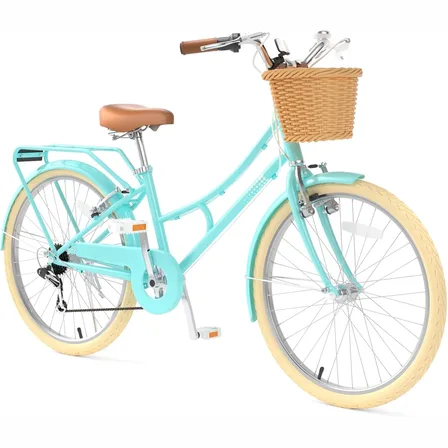
XJD 24-Inch Green Beach Cruiser Bike with U-Brake
This XJD 24-inch beach cruiser in green is made for riders about 4'8" to 5'4" ta…$159.99
$199.99 -

Kids Bike Helmet by XJD for Girls – Pink
The XJD Kids Bike Helmet in Pink is a lightweight multi-sport helmet for girls r…$59.99
$99 -
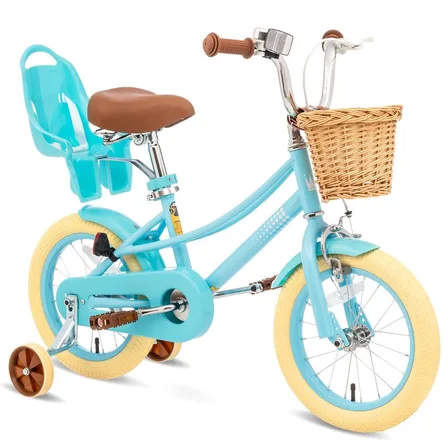
Girls' Training Wheel Bike by XJD, 12–20 Inch Wheels – Blue
This XJD girls' training wheel bike in Blue covers one of the widest fit ranges …$139
$159