

BMX U-Brake Test: What to Check Before Riding
A BMX U-brake test should happen before every session because a brake can look complete while a loose cable, worn pad or poor contact reduces stopping. Parents can perform a simple stationary function check, but adjustment has model-specific routing and torque requirements. Keep the bicycle parked when braking is weak, uneven or unfamiliar.
Inspect the system while stationary
Look at the lever, cable, housing, brake arms, pads and mounting hardware. Stop for frayed wire, cracked housing, missing hardware, fluid contamination or a visibly bent part. Confirm the cable follows its intended path and cannot catch on the tire or frame. Do not pull exposed strands with bare fingers.

Check lever travel and pad contact
Squeeze the lever firmly. It should not bottom out against the handlebar, and both pads should contact their approved braking surface rather than the tire. Release the lever and verify the wheel turns freely. Persistent rubbing, one-sided movement or a lever that does not return needs service.
Perform a walking-speed stop
After an adult confirms the stationary test, use a flat, traffic-free area. Have the rider roll slowly and apply the brake progressively to stop before a line. The child should reach and squeeze the lever without changing grip dangerously. Do not use a hill or trick area as the first brake test.
Respond to any change promptly
A new squeal, longer stopping distance or different lever feel deserves another inspection. Wet rims and debris can change performance, while impacts may shift parts. Follow the exact manual for cleaning and adjustment or use a qualified bicycle mechanic. Never disable a brake for easier bar rotation.
How the current product examples fit
The current 20-inch blue XJD freestyle BMX lists front and rear U-brakes and a high-tensile steel frame. The live configuration makes brake reach and both systems part of the pre-ride check. See Blue XJD Freestyle BMX Bike, 20-Inch – No Pegs for the exact current options and specifications.
Quick checklist
- Inspect cable and housing.
- Keep pads off the tire.
- Confirm the lever does not bottom out.
- Test a progressive stop at walking speed.
- Use qualified service for uncertain adjustment.
Common questions
Can a child ride if one BMX brake works?
Use every brake supplied by the manufacturer. A missing or failed system requires service before riding.
Does brake squeal always mean failure?
Not always, but any new noise should trigger inspection of pad contact, contamination and hardware before the next session.
Explore related guides
Use the kids-BMX collection and kids-bike collection to compare other suitable configurations without assuming every model has the same features.
Bottom line
A reliable U-brake shows sound parts, controlled lever travel, correct pad contact and a predictable low-speed stop. If one check fails, postpone the ride.
Bikes for your next adventure
-
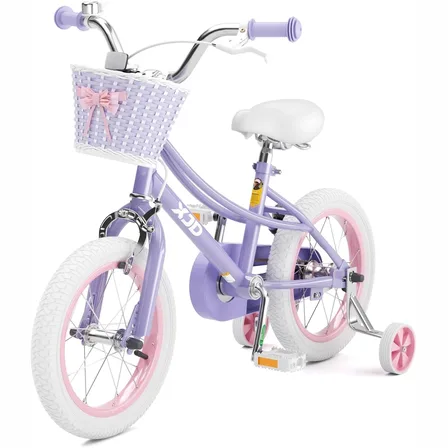
Girls' Training Wheel Bike by XJD with Basket – Purple
If you're shopping for a first bike for a girl roughly 3 to 12 years old (91–152…$75.99
-

XJD Pink Beach Cruiser for Girls – Rear Rack & V-Brake
The XJD Pink Beach Cruiser for girls is the step-up bike for riders who've outgr…$179.99
$209.99 -

Green XJD Toddler Bike Helmet with Adjustable Fit, XS (46–51 cm)
The XJD toddler bike helmet in Green is built for the youngest riders — the size…$20.39
$23.99