

Can 10 year olds drive 24 inch bike
Yes—a 10-year-old may be able to ride a 24-inch bike, but age alone does not establish fit. Measure the child and confirm stand-over clearance, reach, braking control and confidence before choosing it.
Start with height, then test the individual bike
XBikes lists a 24-inch bike as a starting point for ages 10–14 and rider heights of 54–64 inches (137–163 cm). That puts many 10-year-olds within the expected range, but it does not mean every child of that age will fit.
Measure the child’s height without shoes, standing straight against a wall. Then measure inseam from the floor to the crotch, using a firmly held book to represent the saddle area. Height lets you compare the rider with the XBikes starting range; inseam helps you evaluate clearance on the actual frame. A bicycle’s wheel size does not reveal its complete frame geometry, so there is no universal inseam number that guarantees a fit.
Compare 20, 24 and 26-inch starting points
| Wheel size | XBikes age starting point | XBikes rider-height starting point |
|---|---|---|
| 20 Inch | Ages 7–12 | 48–60 in / 122–152 cm |
| 24 Inch | Ages 10–14 | 54–64 in / 137–163 cm |
| 26 Inch | Youth and adults over 60 in / 153 cm |
If the child is shorter than 54 inches (137 cm), do not move to a 24-inch bike merely because they have turned 10. A 20-inch model may deserve comparison. If the rider is within an overlapping height range, test both relevant sizes and favor the one they can control comfortably. A 26-inch option is not automatically appropriate at 60 inches; it still requires the same individual checks.
Perform a practical fit check
Have the child try the fully assembled bicycle in a safe, level area with adult supervision. The American Academy of Pediatrics advises trying the bicycle rather than buying an oversized model for future growth. Check these points:
- Stand-over: The child should be able to straddle the frame with usable clearance rather than being pressed against it.
- Starting and stopping: They should mount, begin riding and come to a controlled stop without struggling against the bicycle’s size.
- Reach: They should hold the handlebars and steer without stretching excessively or losing a stable riding position.
- Brake access: Their hands must reach and operate the brake controls reliably while maintaining their grip.
- Low-speed control: They should turn, look around and keep balance without the bike feeling cumbersome.
- Confidence: Hesitation caused by height, reach or weight distribution is a reason to compare a smaller option.
Do not treat tiptoeing, overreaching or difficulty squeezing the brakes as problems the child will simply grow into. Those signs mean the current setup or size needs reassessment.
How the supplied bicycle helps with the comparison
The XJD Kids Beach Cruiser Bicycle, Rear Rack & V-Brakes, Mint Green is offered with 20 Inch, 24 Inch and 26 Inch SKU labels. Because the same catalog listing includes the requested 24 Inch option plus adjacent sizes, it provides relevant size choices to compare. Its rear rack, V-brakes and mint-green finish are catalog features, but they do not prove that a particular child fits the bicycle.

Select the 24 Inch SKU only after confirming that exact bicycle’s frame clearance, cockpit reach and brake access with the child. The 20 Inch and 26 Inch SKUs are different wheel sizes, not equivalent substitutes. For assembly, adjustments, load limits and maintenance procedures, follow the exact product manual or ask a qualified bicycle mechanic.
Do not overlook the helmet
A properly fitting bicycle does not replace protective equipment. The U.S. Consumer Product Safety Commission advises using a bicycle helmet that fits properly, sits level and has its straps positioned according to the helmet manufacturer’s instructions. Check the fit each time the child rides and replace or adjust equipment as directed by its manufacturer.
The decision for a 10-year-old
Choose a 24-inch bike when the 10-year-old is within the 54–64 inch (137–163 cm) starting range and can comfortably straddle, reach, steer, start, stop and operate the brakes on the exact bicycle. If any of those checks fail, compare the 20-inch option instead of buying room to grow. Measure first, arrange a real fit check, and approve the 24-inch size only when the child demonstrates calm, reliable control.
Bikes for your next adventure
-
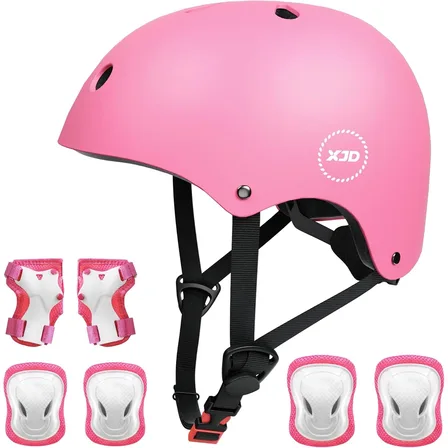
XJD Kids Helmet & Protective Gear Set for Girls, Pink
The XJD Kids Helmet & Protective Gear Set in Pink is a complete safety kit for g…$24.64
-

Kids Bike Helmet by XJD for Boys & Girls – Black, Blue, Green, Pink, Purple
The XJD Kids Bike Helmet covers a wide 2-to-8-year age range thanks to two head-…$59.99
-

Kids Bike Helmet by XJD for Girls – Pink
The XJD Kids Bike Helmet in Pink is a lightweight multi-sport helmet for girls r…$59.99
$99