

Can a 5-year old ride a 20 inch bike
Most 5-year-olds should not ride a 20-inch bike. XBikes lists 20-inch bikes for riders 48–60 in (122–152 cm), typically ages 7–12, and fit matters more than age.
When could a 20-inch bike fit?
A 20-inch bike may be suitable for a tall 5-year-old who is already at least 48 in (122 cm), can stand over the bicycle comfortably, reaches the controls without stretching, operates the brakes reliably and handles the bike with confidence. Meeting the height starting point alone does not prove that the bike fits.
If the child is shorter than 48 in (122 cm), start by considering a smaller wheel size. Do not buy a 20-inch bicycle merely to leave room for growth: an oversized bike can make starting, stopping, steering and dismounting harder.
Measure before comparing sizes
- Measure standing height: Have the child stand barefoot against a wall, looking straight ahead. Measure from the floor to the top of the head.
- Measure inseam: With feet slightly apart, measure from the floor to the crotch. This helps assess whether the child can straddle the actual bicycle without being crowded by its frame.
- Record the measurements: Compare them with XBikes’ starting points, then confirm the fit on the assembled bicycle. Wheel size does not determine frame geometry or reach by itself.
| Wheel size | XBikes age starting point | Rider-height starting point |
|---|---|---|
| 14 Inch | Ages 3–6 | 37–45 in / 94–114 cm |
| 16 Inch | Ages 4–7 | 40–48 in / 102–122 cm |
| 18 Inch | Ages 5–9 | 43–52 in / 109–132 cm |
| 20 Inch | Ages 7–12 | 48–60 in / 122–152 cm |
These ranges overlap because children with the same height can have different inseams, arm lengths and skill levels. They are starting points, not a substitute for trying the bicycle.
Perform the fit check
Have the child try the exact bicycle with adult supervision. First check stand-over: the child should be able to straddle the frame comfortably and stay balanced. Then check reach. Seated in a normal riding position, the child should hold the handlebar without leaning or stretching excessively.
Ask the child to demonstrate that they can steer smoothly and operate every brake control reliably. They should also be able to start, stop and dismount without the bicycle pulling them off balance. Hesitation caused by unfamiliarity may improve with practice, but an inability to reach the ground or controls indicates a fit problem rather than something to “grow into.”
If the fit remains uncertain, use the exact product manual for adjustment and assembly instructions or ask a qualified bicycle mechanic to inspect the bicycle and observe the child’s fit.
How the supplied 20-inch options are relevant
Both supplied catalog products offer a 20 Inch SKU as well as smaller 12, 14 and 16 Inch SKUs, so they help parents compare the requested wheel size with smaller choices from the same listed size range. Both are categorized as Training Wheel Bikes; that feature does not make an oversized frame fit correctly.
 XJD Girls' Bike with Training Wheels, 12/14/16/20 Inch – Purple
Available in 12, 14, 16 and 20 Inch SKUs. Its 20 Inch option is relevant only when the child meets the height starting point and passes an individual fit and control check.
 XJD Kids Bike for Girls – Pink, 12/14/16/20 Inch with Training Wheels
This training-wheel bike is listed in 12, 14, 16 and 20 Inch sizes, allowing comparison between the requested 20 Inch option and smaller catalog options using the child’s measurements.
XJD Girls' Bike with Training Wheels, 12/14/16/20 Inch – Purple is available in 12 Inch, 14 Inch, 16 Inch and 20 Inch catalog options. Its 20 Inch option is relevant only if the child reaches the 20-inch height starting point and passes the individual fit and control checks.
XJD Kids Bike for Girls – Pink, 12/14/16/20 Inch with Training Wheels has the same supplied wheel-size selection: 12 Inch, 14 Inch, 16 Inch and 20 Inch. Compare its listed sizes against the child’s measurements; the title and training-wheel category are not evidence that a particular size fits.
Neither supplied product offers an 18 Inch SKU in the provided catalog facts. If the child’s measurements point toward 18 inches, do not treat a 16- or 20-inch option as equivalent. Assess an actual 18-inch bicycle separately.
Do not overlook helmet fit
Use a bicycle helmet that fits the child properly. It should sit level on the head, and its straps should be adjusted according to the helmet manufacturer’s instructions. A correctly fitted helmet remains necessary whether the bicycle has training wheels or the child rides independently.
Make the decision
Choose a 20-inch bike for a 5-year-old only when the child measures at least 48 in (122 cm) and comfortably passes stand-over, reach, braking and control checks on the exact bicycle. Otherwise, compare the measured height with the 14-, 16- or 18-inch starting points and select a bicycle the child can control now—not one intended for future growth.
Bikes for your next adventure
-
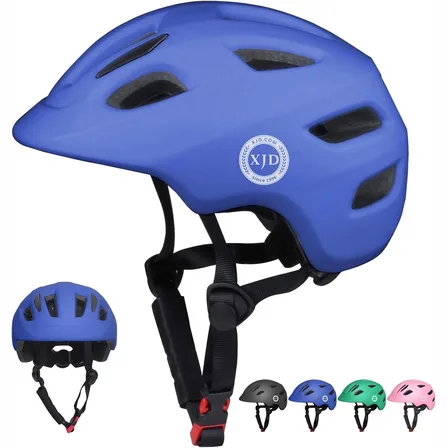
Blue XJD Kids' Bike Helmet, Adjustable Fit – Sizes XS & S
The Blue XJD Kids' Bike Helmet is a lightweight, adjustable helmet for toddlers …$20.39
-
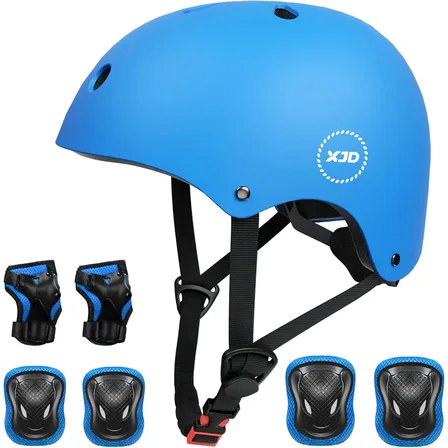
Blue XJD Helmet & Protective Gear Set for Kids, Sizes S/M
The Blue XJD Helmet & Protective Gear Set is made for kids roughly 3 to 8 years …$23.79
-
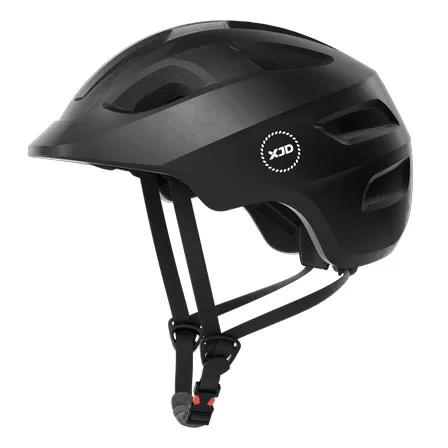
Kids Multi-Sport Bike Helmet by XJD – Black
7 reviews
The XJD Kids Multi-Sport Bike Helmet in Black is a lightweight, adjustable helme…$59.99
$49