

Can a 7 year old ride a 20 inch bike
Yes, a 7-year-old may ride a 20-inch bike if they measure about 48–60 in (122–152 cm) and can comfortably control that specific bicycle.
Start with height, not the seventh birthday
The XBikes starting point for a 20-inch bicycle is ages 7–12 and a rider height of 48–60 in (122–152 cm). That puts age seven at the beginning of the range, so the answer depends heavily on the child’s actual measurements, coordination and confidence.
A seven-year-old shorter than 48 in (122 cm) may fit an 18-inch or 16-inch starting point more closely. A child within the 20-inch height range still needs to try the exact bike because wheel diameter alone does not determine stand-over clearance, reach or ease of control.
| Wheel size | XBikes age starting point | Rider height starting point |
|---|---|---|
| 16 Inch | Ages 4–7 | 40–48 in / 102–122 cm |
| 18 Inch | Ages 5–9 | 43–52 in / 109–132 cm |
| 20 Inch | Ages 7–12 | 48–60 in / 122–152 cm |
Measure the child before comparing bikes
Measure height without shoes, with the child standing straight against a wall. Then measure inseam from the floor to the crotch while the child stands naturally. Keep both measurements available when checking the bicycle or its manual.
Do not convert the inseam into a wheel size using an invented formula. Frame shapes and saddle adjustment ranges vary. Instead, use height to identify a likely wheel-size range, then use inseam during an in-person fit check to judge clearance and starting or stopping comfort.
Check the fit on the exact 20-inch bicycle
Have the child try the assembled bicycle in a controlled, traffic-free place with adult supervision. The American Academy of Pediatrics advises against buying an oversized bicycle merely for future growth. A suitable bike should let the child manage these checks without stretching, wobbling or relying on an adult to hold it upright:
- Stand-over: The child can straddle the frame with practical clearance rather than being pressed against it.
- Starting and stopping: The child can get underway and stop predictably while remaining balanced.
- Reach: The handlebars are reachable without locking the elbows or leaning excessively forward.
- Brake control: The child can reach and operate the brake controls confidently with their normal hand position.
- Steering: The child can turn and look around while maintaining control.
If any check fails, do not assume practice will correct a physically oversized fit. Compare the child with another appropriate size and frame, then repeat the same checks.
How the supplied 20-inch options are relevant
Both supplied catalog bicycles include a 20 Inch SKU label, so they are directly relevant options to compare for this question. The XJD Kids Beach Cruiser Bicycle, Rear Rack & V-Brakes, Mint Green and the XJD Pink Beach Cruiser for Girls – Rear Rack & V-Brake also have 24 Inch and 26 Inch SKU labels, but those larger labels must not be treated as equivalent fits for a seven-year-old. Select the 20 Inch variant for a 20-inch evaluation and verify its exact label before ordering.
These particular catalog options help answer the title because each provides the requested 20 Inch comparison point while allowing the parent to focus on individual stand-over, reach and brake control rather than age alone.
 XJD Kids Beach Cruiser Bicycle, Rear Rack & V-Brakes, Mint Green
Its available 20 Inch SKU makes this beach cruiser a direct comparison option. Check the child’s measured height, stand-over, reach and ability to operate its V-brakes on the exact bicycle.
 XJD Pink Beach Cruiser for Girls – Rear Rack & V-Brake
This beach cruiser has an available 20 Inch SKU, so it is relevant to the requested size. Its title and color do not establish fit; verify stand-over, reach, control and V-brake operation individually.
The supplied facts identify both as beach cruiser bicycles with rear racks and V-brakes. They do not establish dimensions beyond wheel-size labels, so they cannot confirm that either frame will fit a particular child. Follow the exact product manual for assembly, adjustment, maintenance, compatibility and load limits; use a qualified bicycle mechanic when the manual does not resolve a fit or setup concern.
Do a short control check before regular riding
Once the fit appears suitable, ask the child to demonstrate a controlled start, straight-line ride, gentle turn and predictable stop. Check that the child can operate the brakes without changing to an awkward grip. Hesitation, difficulty reaching the controls or repeated loss of balance means the setup or bicycle should be reassessed.
Confidence matters alongside dimensions. A child who falls within the stated height range but is still learning basic balance may need a more manageable setup or additional practice in a protected area. Do not move up in size simply because another child of the same age uses a larger bicycle.
Make the final decision
Use a properly fitting bicycle helmet for every ride. The U.S. Consumer Product Safety Commission says the helmet should fit properly, sit level and have its straps used according to the helmet manufacturer’s instructions.
For a seven-year-old, proceed with a 20-inch bike only when the child is approximately 48–60 in (122–152 cm), passes the stand-over, reach, braking and control checks on that exact bicycle, and rides with current confidence. If the child is below the range or cannot complete those checks comfortably, compare a smaller appropriate size instead of buying the 20-inch bike for growth.
Bikes for your next adventure
-
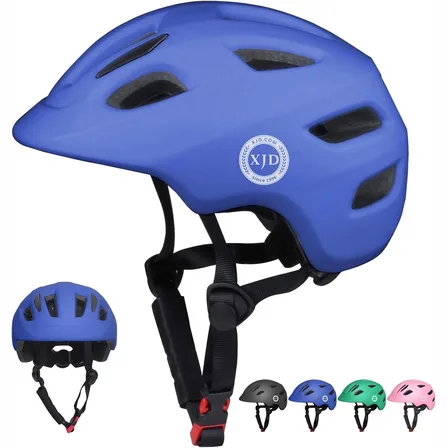
Blue XJD Kids' Bike Helmet, Adjustable Fit – Sizes XS & S
The Blue XJD Kids' Bike Helmet is a lightweight, adjustable helmet for toddlers …$20.39
-
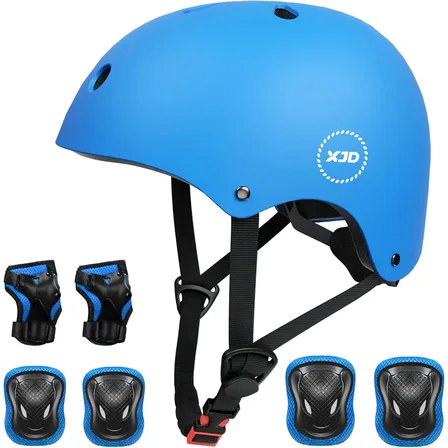
Blue XJD Helmet & Protective Gear Set for Kids, Sizes S/M
The Blue XJD Helmet & Protective Gear Set is made for kids roughly 3 to 8 years …$23.79
-
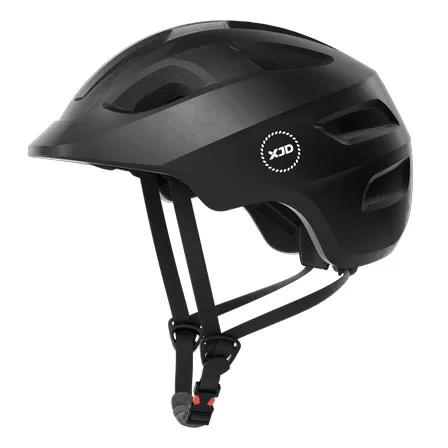
Kids Multi-Sport Bike Helmet by XJD – Black
7 reviews
The XJD Kids Multi-Sport Bike Helmet in Black is a lightweight, adjustable helme…$59.99
$49