

Can i ride my bike with a baby carrier
Yes, you may be able to ride a bike with a baby carrier, but only if the carrier is made for bicycle passengers and is compatible with your exact bike.
First identify what “baby carrier” means
A bicycle child seat or child trailer may be suitable when its manufacturer approves the combination of passenger, carrier and bicycle. A wearable front carrier, sling, backpack carrier, doll seat or basket is not a substitute for a purpose-built bicycle passenger carrier.
Before riding, read both manuals. Confirm the carrier’s passenger requirements and load limit, then check whether your bicycle’s frame, rack, wheels and other mounting points are approved for that carrier. If either manual does not confirm compatibility, contact the manufacturer or ask a qualified bicycle mechanic to inspect the setup.
Measure and compare before installation
Write down the baby’s current weight and any other measurements required by the carrier manual. Compare them with its stated minimums and maximums; do not estimate or rely on age alone. The child must also meet every developmental requirement stated by the carrier manufacturer. If you are uncertain whether your baby is ready, ask the child’s pediatrician before riding.
For the bicycle and adult rider, check these points:
- Mounting compatibility: Verify the precise frame, rack or axle requirements in the carrier manual.
- Total load: Include the child, carrier and anything else carried on the bike when checking every applicable load limit.
- Rider fit: Confirm comfortable stand-over clearance, reach, steering and brake control with the carrier fitted.
- Clearance: Make sure the carrier and its restraints cannot contact a wheel, brakes, pedals or other moving parts.
- Stability: Load and unload the child only as directed by the manual, with the bicycle properly supported.
Do a controlled check before the first trip
Have the carrier assembled and mounted exactly as its instructions require. Use the specified hardware and follow the manufacturer’s maintenance, compatibility and torque directions. Where those details are unavailable or unclear, use a qualified bicycle mechanic rather than improvising.
- Inspect the bicycle and carrier for loose, damaged or incorrectly fitted parts.
- Check that the child restraint is adjusted according to the carrier instructions.
- Practice mounting, stopping, turning and dismounting without the child, using an equivalent permitted test load only if the manual allows it.
- Begin with a brief ride in a controlled area away from traffic, steep slopes and rough surfaces.
- Stop if handling, braking, clearance or stability feels uncertain.
A bicycle helmet for every rider who is required to wear one must fit properly, sit level and have its straps adjusted according to the helmet manufacturer’s instructions. A helmet does not make an incompatible carrier safe.
Why the listed kids’ bikes are comparison points
The supplied XBikes products are children’s bicycles, not verified baby-passenger carriers. Their 12 Inch, 14 Inch and 16 Inch choices can help families compare a growing child’s future independent-riding fit, but the catalog facts do not establish that any can carry a baby. In particular, a catalog “doll seat” must never be treated as a child passenger seat.
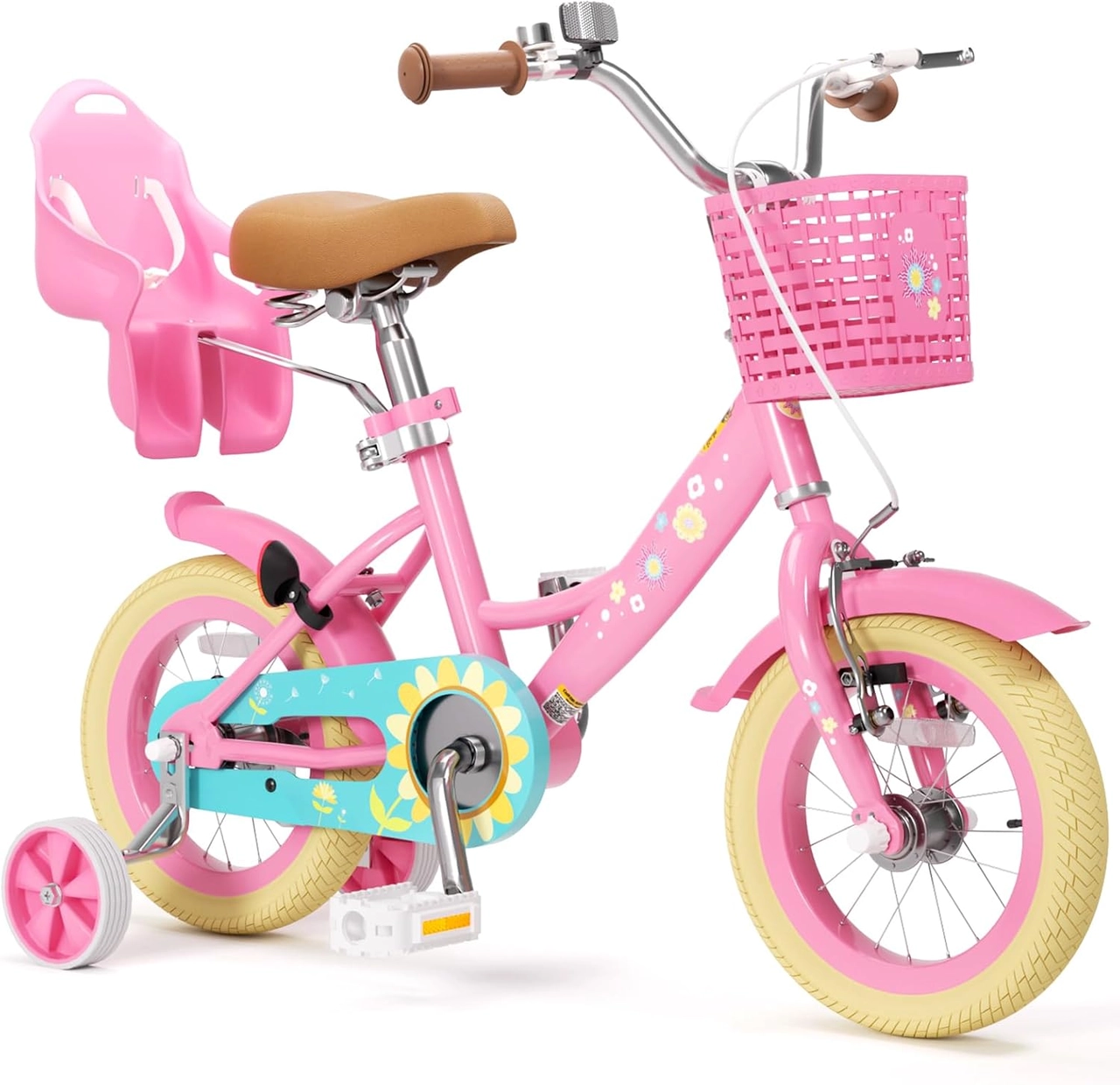 Flower Pink XJD Girls Bike with Doll Seat & Basket
A Training Wheel Bike offered in 12 Inch, 14 Inch and 16 Inch labels. Its doll seat and basket do not establish baby-passenger capacity or carrier compatibility.
 Purple XJD Girls' Bike with Doll Seat & Basket
This Training Wheel Bike comes in 12 Inch, 14 Inch and 16 Inch labels. The supplied doll seat is not evidence that the bicycle can transport a baby.
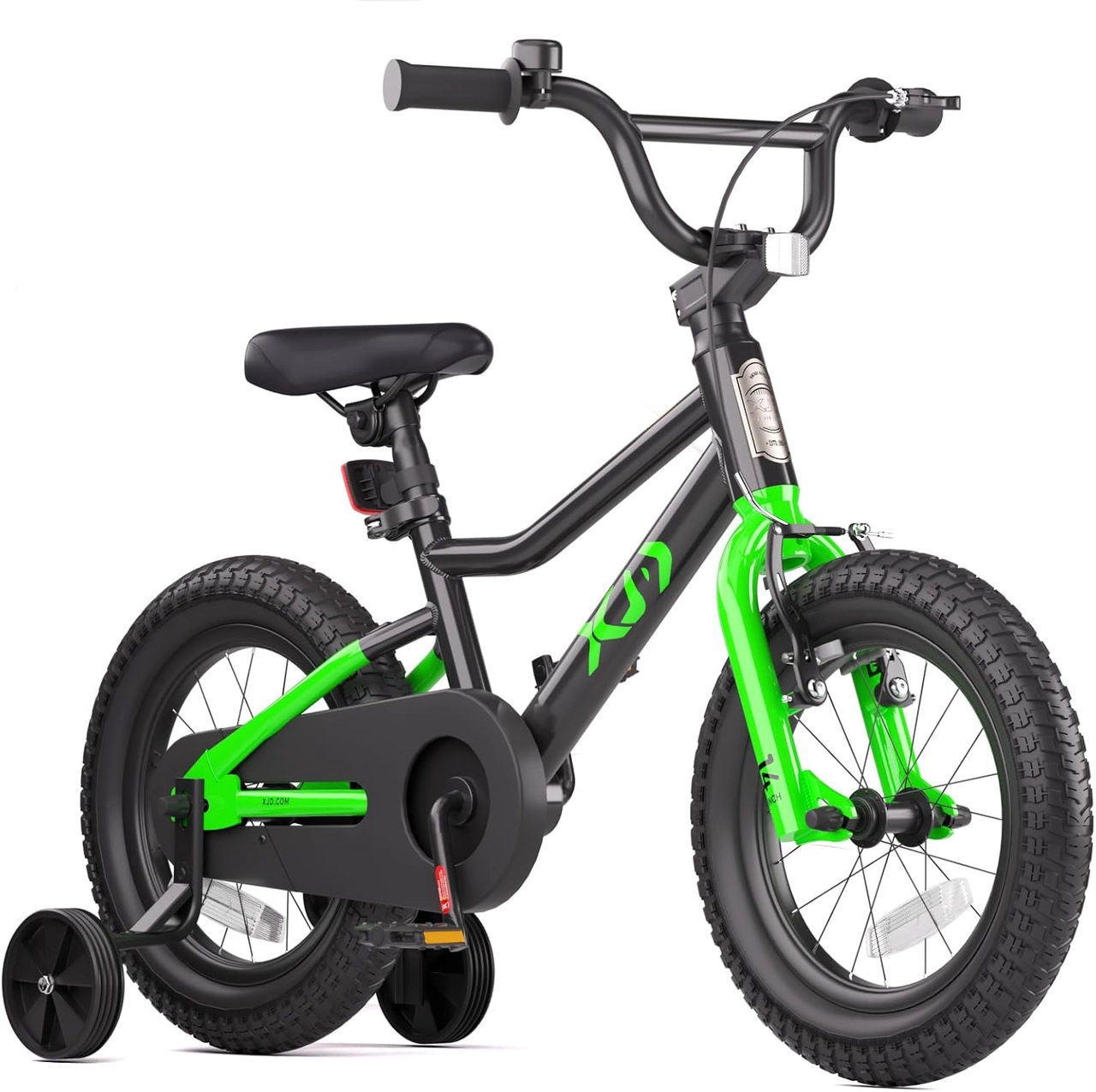 Black XJD Kids' BMX Bicycle with Training Wheels
A Kids' BMX Bike with training wheels, offered in 12 Inch, 14 Inch and 16 Inch labels. Supplied facts do not confirm compatibility with a baby carrier.
The Flower Pink XJD Girls Bike with Doll Seat & Basket and Purple XJD Girls' Bike with Doll Seat & Basket are Training Wheel Bikes offered in 12 Inch, 14 Inch and 16 Inch labels. Their doll seats and baskets are not evidence of passenger capacity. The Black XJD Kids' BMX Bicycle with Training Wheels is a Kids' BMX Bike offered in the same three wheel-size labels; its catalog facts likewise provide no baby-carrier compatibility.
If choosing a bike for the older child instead
Use wheel size only as a starting point. XBikes places 12 Inch at ages 3–4 and 34–40 in (86–102 cm), 14 Inch at ages 3–6 and 37–45 in (94–114 cm), and 16 Inch at ages 4–7 and 40–48 in (102–122 cm).
Measure the child’s height and inseam, then have the child try the bicycle. Check stand-over clearance, reach, brake control and present confidence. Do not buy an oversized bicycle merely for growth, and prioritize the individual fit over the overlapping age guidance.
Make the ride-or-wait decision
Ride with the baby only when the carrier is purpose-built for bicycle passengers, the child meets its stated requirements, both manuals approve the complete setup, all limits and clearances are satisfied, and you retain confident steering and brake control. Otherwise, wait and obtain manufacturer guidance or a mechanic’s compatibility check. Choose one of the listed kids’ bikes only for a correctly fitted older child riding independently—not as a way to transport a baby.
Bikes for your next adventure
-
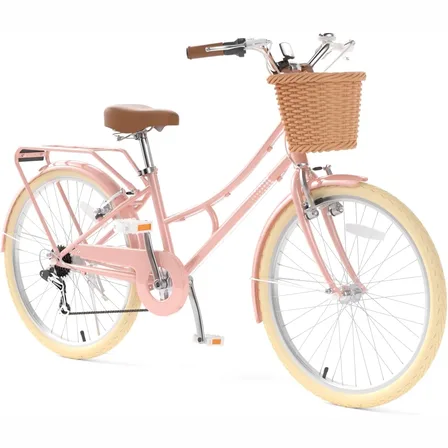
XJD Pink Beach Cruiser for Girls – Rear Rack & V-Brake
The XJD Pink Beach Cruiser for girls is the step-up bike for riders who've outgr…$179.99
$209.99 -
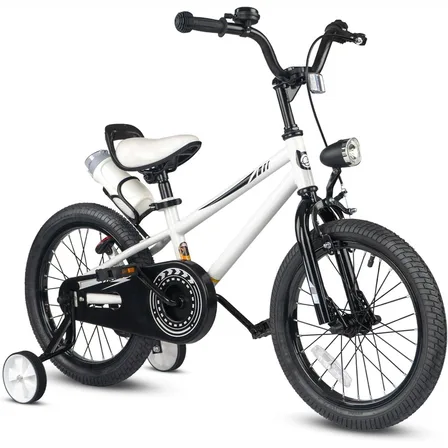
XJD Kids' Training Wheel Bike for Boys & Girls, 12/14/16 Inch – White
The XJD kids' training wheel bike in White is made for riders ages 3–8 (roughly …$169
$199 -

Kids Bike Helmet by XJD for Boys & Girls – Black, Blue, Green, Pink, Purple
The XJD Kids Bike Helmet covers a wide 2-to-8-year age range thanks to two head-…$59.99