

Can kids bikes go on shuttle rack on bus
Kids’ bikes can go on a bus shuttle rack only when the bike fits the rack and the bus operator permits it. Check wheel size, wheelbase, tire fit, weight, and any training wheels or accessories before travel.
What must match before you board
A child-sized bicycle is not automatically compatible with a bus rack. Find the rack manufacturer’s instructions or ask the transit or shuttle operator for its accepted bicycle dimensions and restrictions. Then compare those requirements with the actual bike.
- Wheel size: Read the size marked on the tire and confirm that the rack accepts it. Small wheels may not sit correctly in trays designed around adult bicycles.
- Wheelbase: Measure from the center of the front axle to the center of the rear axle. Both wheels must land in the rack’s intended supports.
- Tire width: Measure or read the tire marking, then compare it with the permitted tray or slot width.
- Total bike weight: Use an accurate product specification or weigh the complete bike as transported. Stay within the rack’s per-bike limit.
- Retention point: Confirm that the rack’s arm, hook, or clamp can engage exactly where its instructions require, without relying on a loose accessory.
Do not guess when a rack has no visible label. The driver may not be able to approve an uncertain fit at boarding time, so contact the operator before the trip.
Why training wheels often change the answer
Training wheels can make a kids’ bike wider and may prevent its rear wheel from settling into a narrow tray. They can also contact the rack, the bus, or another bicycle. A rack accepting the main wheel size does not prove that it accepts the bike with training wheels installed.
Never remove, fold, loosen, or reposition training wheels merely to board unless the exact bicycle manual permits that procedure and they can be restored correctly. Follow the product manual for assembly and adjustment, or ask a qualified bicycle mechanic. The bus operator must still allow the resulting configuration.
Compare the bike and rack in this order
- Identify the exact rack model if possible and obtain its compatibility and loading instructions.
- Confirm the operator’s rules for children’s bikes, minimum wheel size, training wheels, loading responsibility, and busy-service restrictions.
- Measure the bike’s wheel size, axle-to-axle wheelbase, tire width, widest point with accessories, and complete transported weight.
- Remove only accessories that their manufacturers describe as removable. Secure anything that could swing or fall; do not leave a helmet loosely attached.
- Before boarding day, compare every measurement with the rack limits. If one value is outside the range or unknown, arrange another way to carry the bike.
How the supplied bike options help
The catalog option relevant to this question is the XJD Kids' Training Wheel Bike for Boys & Girls, 12/14/16 Inch – White, offered under the supplied facts in 12 Inch, 14 Inch, and 16 Inch SKU labels. Those three wheel-size choices give you precise starting points to compare with a bus rack’s stated wheel-size range. Because it is categorized as a training wheel bike, its complete configured width and rack contact points need separate confirmation. The catalog facts do not provide its weight, tire width, wheelbase, or rack compatibility, so the title and size label alone cannot establish that it will fit.

Choose size for the child, not for the rack
If you are selecting among those sizes, use the rider’s measured fit first. XBikes lists these starting points: 12 Inch for height 34–40 in / 86–102 cm and ages 3–4; 14 Inch for 37–45 in / 94–114 cm and ages 3–6; and 16 Inch for 40–48 in / 102–122 cm and ages 4–7.
Age is only a starting point. Have the child try the bicycle and check stand-over clearance, inseam fit, reach, brake control, and current confidence. Do not select an oversized bike for growth or choose a different wheel size simply because it fits a particular bus rack. A properly fitting child’s bike may still require another transport plan.
Loading day: when to stop
Follow the posted loading sequence and the driver’s directions. An adult should handle the bike if the child cannot lift, place, and secure it exactly as required. Keep the child away from traffic while loading. A properly fitted bicycle helmet should sit level, with its straps used according to the helmet manufacturer’s instructions; remove it from the child while riding inside the bus.
Do not board with the bike on the rack if either wheel fails to sit in its intended support, the retaining arm cannot engage correctly, training wheels or accessories interfere, the bike exceeds a stated limit, or the operator refuses it. Your next step is simple: obtain the bus rack limits, measure the complete bike in its travel configuration, and use another transport method unless every requirement matches.
Bikes for your next adventure
-
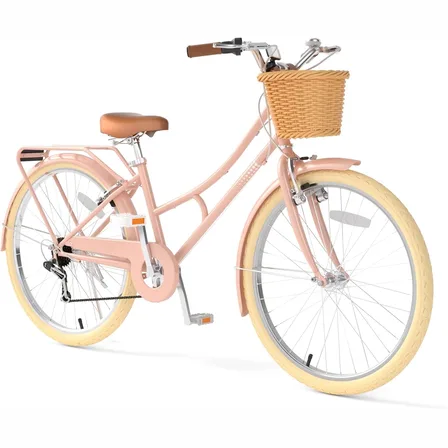
Pink XJD Beach Cruiser Bike, 24"/26", U-Brake
The XJD Pink Beach Cruiser Bike is a single-speed cruiser built for older kids a…$159.99
-

Flower Pink XJD Girls Bike with Doll Seat & Basket
The XJD Flower Pink girls' bike is made for riders 71–122 cm tall (roughly ages …$69.99
-
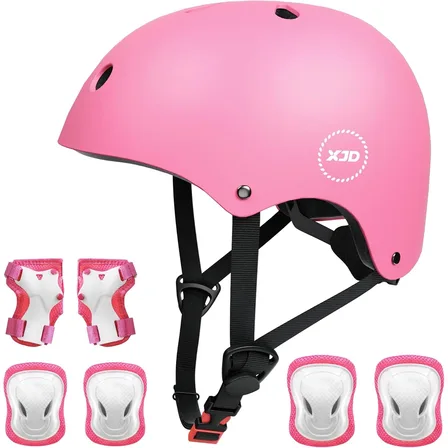
XJD Kids Helmet & Protective Gear Set for Girls, Pink
The XJD Kids Helmet & Protective Gear Set in Pink is a complete safety kit for g…$24.64