

Do kids need.training.wheels.to learn to ride.a.bike
No, kids do not need training wheels to learn to ride a bike. They can begin with balance-first practice or use training wheels temporarily for support.
What training wheels help with—and what they do not
Training wheels can reduce the immediate need to balance, giving a child time to become comfortable sitting on the bike, steering, pedaling and stopping. They may be relevant when a child is nervous about tipping or needs a more gradual introduction.
They are not required, however, and they do not teach two-wheel balance by themselves. A child who practices coasting with feet near the ground can learn how steering and body position keep a bicycle upright. The right approach is the one that lets the child practice calmly while still progressing toward independent balance.
Measure fit before choosing the learning method
Measure the child's standing height and inseam without shoes. Then have the child try the bicycle. Check that the child can stand over it comfortably, reach the handlebar without stretching, turn it under control and operate the brakes confidently. Do not choose an oversized bicycle merely to allow room for growth.
Use the XBikes ranges below only as starting points. Where ranges overlap, compare the actual bicycles rather than deciding from age alone.
| Wheel size | Starting age | Rider height |
|---|---|---|
| 12 Inch | 3–4 | 34–40 in / 86–102 cm |
| 14 Inch | 3–6 | 37–45 in / 94–114 cm |
| 16 Inch | 4–7 | 40–48 in / 102–122 cm |
| 18 Inch | 5–9 | 43–52 in / 109–132 cm |
| 20 Inch | 7–12 | 48–60 in / 122–152 cm |
| 24 Inch | 10–14 | 54–64 in / 137–163 cm |
| 26 Inch | Youth and adults | Over 60 in / 153 cm |
Measured height, inseam, reach, brake control and present confidence take priority over the age column. If the child cannot control the correctly sized bicycle while stationary and moving slowly, change the fit or seek help from a qualified bicycle mechanic before practice continues.
Choose between balance-first practice and training wheels
A balance-first approach is appropriate when the child can sit securely, place feet down as needed and is willing to coast. Use a flat, open area away from traffic and obstacles. Let the child take short steps, then brief coasts, while looking ahead. Add pedaling only after coasting and steering feel controlled.
Training wheels may be useful when fear prevents meaningful practice or when the child first needs to learn the bike's controls. Treat them as a temporary stage rather than proof that the child has learned balance. Follow the exact product manual for assembly, adjustment, compatibility and removal; if anything is unclear, use a qualified bicycle mechanic.
How the supplied training-wheel bikes compare
These catalog options help answer the question because each is explicitly a training-wheel bicycle and offers several wheel-size choices. They let a parent compare a supported-learning option only after measurements indicate which size deserves an in-person fit check.
 XJD Girls' Bike with Training Wheels, 12/14/16/20 Inch – Purple
A training-wheel comparison option offered in 12, 14, 16 and 20 Inch SKU labels. Use the rider's measurements and an individual control check to choose among those sizes.
 XJD Kids Bike for Girls – Pink, 12/14/16/20 Inch with Training Wheels
This pink training-wheel bicycle lists 12, 14, 16 and 20 Inch choices. Its relevance depends on measured height, inseam, reach, brake control and confidence rather than title wording alone.
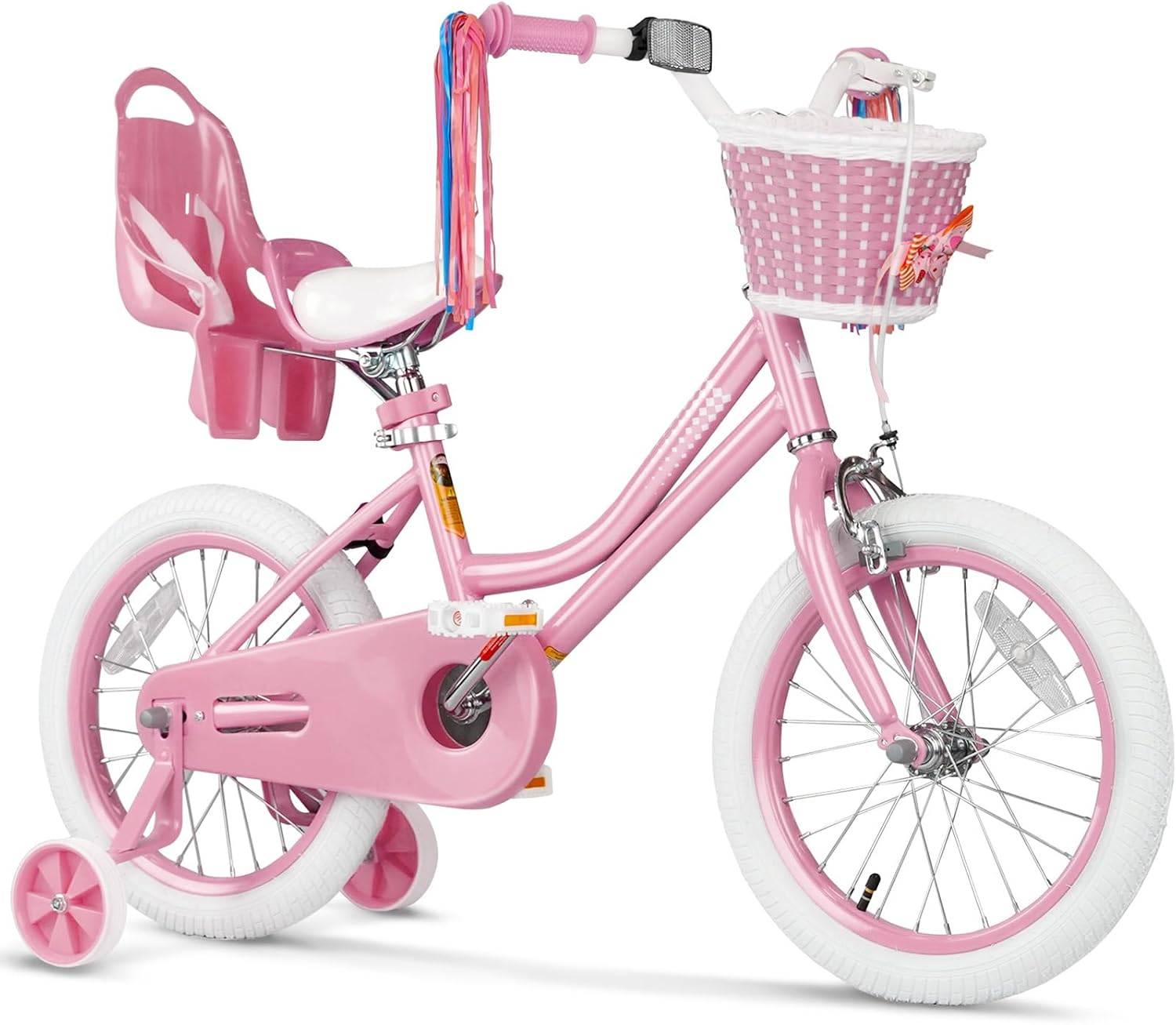 XJD Pink Girls' Bike – Kids 12/14/16 Inch Training Wheel Bicycle
A training-wheel bicycle available in 12, 14 and 16 Inch labels. It can inform a supported-learning comparison when one of those sizes fits, but it does not list a 20 Inch option.
- XJD Girls' Bike with Training Wheels, 12/14/16/20 Inch – Purple lists 12, 14, 16 and 20 Inch options.
- XJD Kids Bike for Girls – Pink, 12/14/16/20 Inch with Training Wheels also lists 12, 14, 16 and 20 Inch options.
- XJD Pink Girls' Bike – Kids 12/14/16 Inch Training Wheel Bicycle lists 12, 14 and 16 Inch options, but no 20 Inch option.
The wording in a product title is a catalog label, not evidence that the bicycle fits a particular child. Compare only sizes supported by the child's measurements, then verify stand-over clearance, reach, braking and control on the exact bicycle. No supplied option lists an 18, 24 or 26 Inch size; for riders whose fit check points there, these products are comparison points only, not equal-size substitutes.
A practical transition check
Before moving away from training wheels, look for repeatable control rather than a birthday or a fixed number of practice sessions. The child should willingly practice, look ahead, steer a predictable path, start and stop under control, and understand that feet can come down when needed.
Use a properly fitting bicycle helmet every time. It should sit level and be secured with its straps according to the helmet manufacturer's instructions. Supervise practice in a traffic-free space, and stop if fear, fatigue or poor control begins to replace useful repetition.
What to do next
- Measure standing height and inseam.
- Use the wheel-size table to identify a starting size, not a guaranteed fit.
- Test stand-over position, reach, steering and brake operation on that size.
- Choose balance-first practice if the child is ready to coast, or temporary training wheels if added support enables calm practice.
- Reassess regularly and begin the transition once supported riding is no longer building new control.
The decision is simple: kids do not need training wheels, but a correctly fitted training-wheel bike can be a useful temporary tool when it helps this particular child practice confidently and progress toward balancing.
Bikes for your next adventure
-
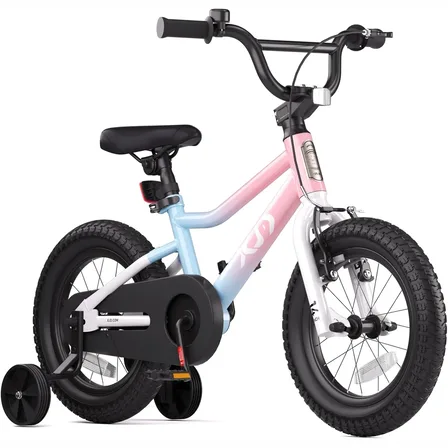
XJD Girls BMX Bike 12/14/16 Inch with Training Wheels – Pink Blue
The XJD Girls BMX Bike in Pink/Blue is built as a first pedal bike for kids roug…$99.99
$119.99 -

Blue XJD Girls Bike with Training Wheels – 12/14/16 Inch
If you're shopping for a first pedal bike for a daughter roughly 3 to 8 years ol…$149
$169 -
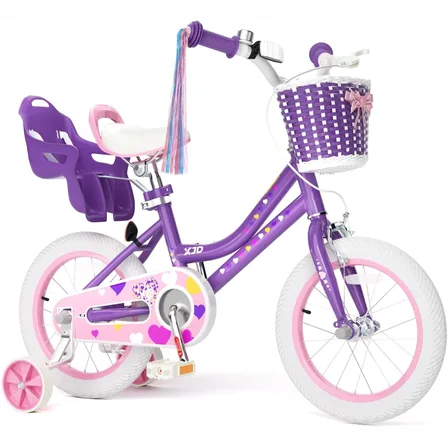
XJD Light Purple Girls Bike with Basket, Training Wheels, 12/14/16/20 Inch
The XJD Girls Bike with Basket in Light Purple is a single-speed training-wheel …$99.99
$119.99