

Can you baby wear while riding a bike
No—do not wear a baby in a sling, wrap or front/back carrier while riding a bicycle. A fall, sudden stop or collision can expose the baby to impact or crushing, while the carrier can affect your balance, movement and bike control.
Why baby wearing and cycling do not mix
A wearable carrier is designed for walking and everyday carrying, not for bicycle crashes or abrupt steering. It does not provide a bicycle-specific restraint or protective enclosure. Your body may also land on the child during a fall.
The baby’s position can interfere with your reach, your view of the road or your ability to move naturally while starting, stopping and turning. A loose strap or piece of fabric may also approach a wheel or another moving part. A bicycle helmet does not make baby wearing appropriate.
What to do instead
If you need to transport a child by bicycle, use only a purpose-designed child-carrying system that the bicycle and system manufacturers explicitly approve together. Check the exact manuals for minimum passenger requirements, installation, load limits, bicycle compatibility and maintenance. Do not guess about a mounting point or adapt a wearable carrier.
Before riding, compare all of the following:
- The child’s age, size, physical development and ability to meet every requirement in the carrying system’s manual.
- The bicycle manufacturer’s permitted accessories and load limits.
- The carrier or trailer manufacturer’s bicycle, axle, rack and brake compatibility requirements.
- Your local rules for child passengers, helmets and bicycle equipment.
- Your ability to start, steer, brake and stop with the added load in a traffic-free area.
If a manual is missing, the products are not clearly compatible, or the child does not meet every stated requirement, do not ride with the child. Ask a qualified bicycle mechanic to confirm installation and compatibility. For questions about whether a baby is developmentally ready for a particular system, consult the child’s healthcare professional.
Measure the actual bicycle rider
If the child will ride their own bicycle rather than travel as a passenger, measure standing height and inseam without shoes. Then check stand-over clearance, reach to the handlebar, access to the controls and the ability to operate the brakes. Have the child try the bicycle; do not buy an oversized model merely to allow room for growth.
The relevant XBikes starting points are 12-inch wheels for heights 34–40 inches (86–102 cm), generally ages 3–4, and 14-inch wheels for 37–45 inches (94–114 cm), generally ages 3–6. These figures are starting points only. A child who cannot stand over, steer, balance or reach and control the brakes needs a different fit regardless of age.
Where the supplied bicycle fits this question
The 24-Inch Purple XJD Beach Cruiser Bike with U-Brake is a 24-inch beach cruiser bicycle. Under the XBikes starting points, 24-inch wheels correspond to rider heights of 54–64 inches (137–163 cm), generally ages 10–14, subject to an individual fit check. It can therefore illustrate the difference between a youth bicycle and equipment intended to carry a baby; it is not evidence that baby wearing is acceptable and is not a substitute for a purpose-designed child transport system.
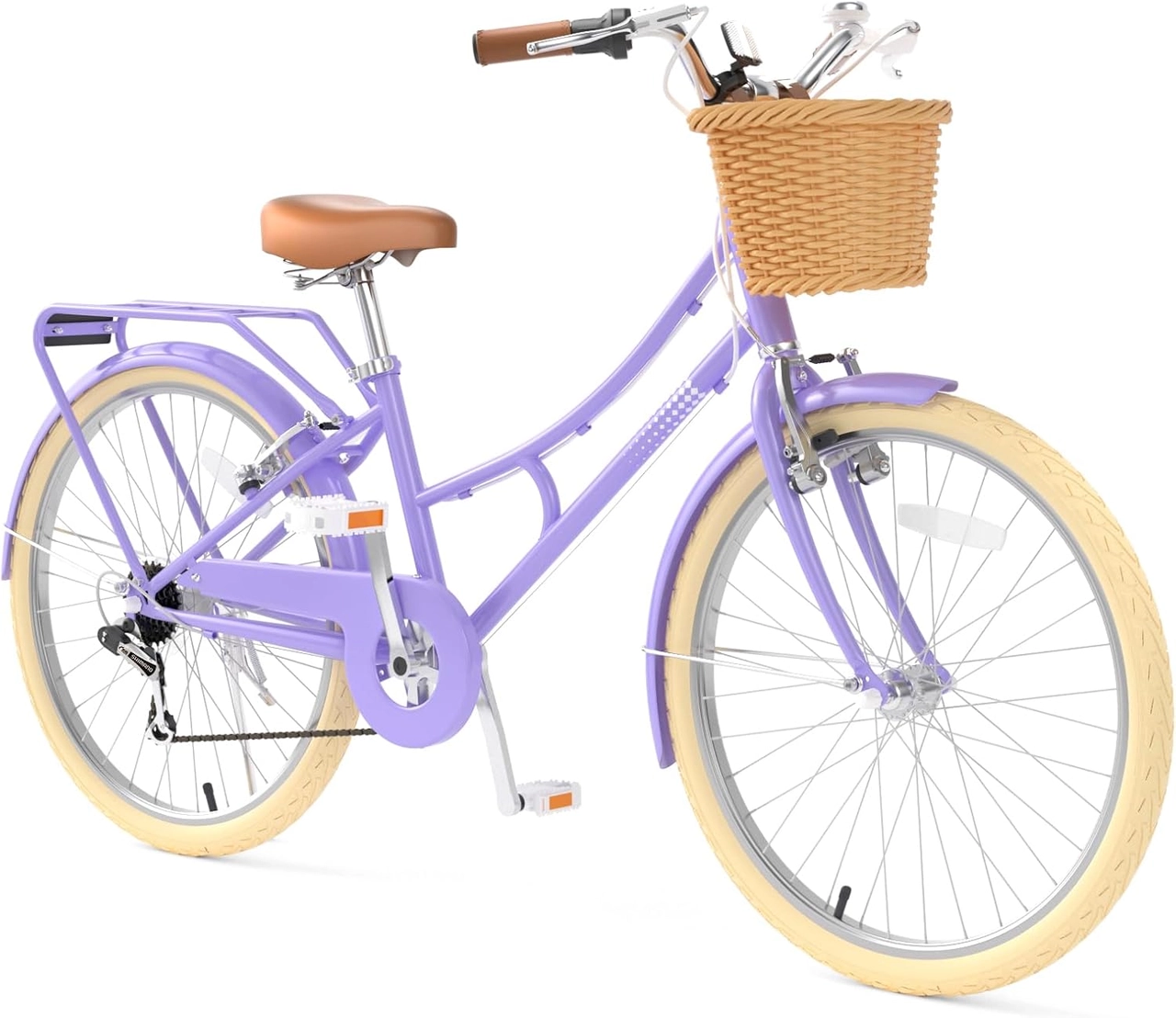
No supplied catalog product is identified as an infant carrier, child seat or trailer. The listed 24-inch bicycle is only a comparison point for an independently riding youth. Its catalog facts do not provide accessory compatibility, passenger capacity or load limits, so consult its exact manual or a qualified bicycle mechanic rather than assuming that a child-carrying accessory can be attached.
Helmet and pre-ride checks
Every bicycle rider should use a properly fitting bicycle helmet. It should sit level and its straps should be adjusted according to the helmet manufacturer’s instructions. A baby should never share an adult’s helmet, wear an improvised helmet arrangement or be placed in equipment contrary to its instructions.
For an independently riding child, confirm that the bicycle is the correct size and that the rider can mount, dismount, steer, stop and reach the brakes comfortably. Follow the bicycle’s manual for assembly and maintenance; where specifications or procedures are unavailable, use a qualified bicycle mechanic.
Your decision before the next ride
Leave the wearable baby carrier at home when cycling. Either travel another way or choose a bicycle-specific child transport setup only after confirming the child meets its requirements, every component is approved as compatible, installation follows the manuals, and local rules permit its use. If any one of those checks is unresolved, do not carry the baby on that ride.
Bikes for your next adventure
-

Kids Bike Helmet by XJD for Boys & Girls – Black, Blue, Green, Pink, Purple
The XJD Kids Bike Helmet covers a wide 2-to-8-year age range thanks to two head-…$59.99
-

Kids Bike Helmet by XJD for Girls – Pink
The XJD Kids Bike Helmet in Pink is a lightweight multi-sport helmet for girls r…$59.99
$99 -

XJD Kids Bike for Girls – Pink, 12/14/16/20 Inch with Training Wheels
The XJD Kids Bike for Girls in Pink is a training-wheel bike built to carry your…$139
$159