

Can you fit 3 kids in a bike trailer
You can carry three children only in a bike trailer explicitly designed and rated for three passengers. If its manual specifies one or two seats, never squeeze in a third child, place one in the cargo area, or improvise a harness. The children, their gear, the towing bicycle, and the rider must all remain within the manufacturers’ stated limits.
What to check before putting three children in a trailer
Start with the exact trailer model and its manual. A trailer that merely has enough floor space is not necessarily suitable for three passengers. Confirm that the manufacturer provides three designated seating positions, three correctly placed harnesses, and instructions for using all three positions together.
| Check | What to compare |
|---|---|
| Passenger capacity | The manual must expressly permit three children. |
| Load | Compare the combined weight of all children and carried gear with every applicable trailer limit. |
| Interior fit | Measure seated head clearance and check shoulder and hip room without crowding. |
| Harness fit | Each child needs the trailer’s intended seating position and properly adjusted restraint. |
| Towing compatibility | Confirm the hitch, bicycle, axle or attachment point, and trailer are approved to work together. |
Do not guess at load limits, hitch setup, assembly steps, maintenance intervals, or fastener torque. Follow the manuals for the exact trailer and bicycle, or ask a qualified bicycle mechanic to inspect the complete combination.
Measure the children as they will actually ride
Seat all three children in their assigned positions while the trailer is stationary and secured according to its instructions. Check that each child can sit normally without being pushed sideways, that heads remain within the protected cabin area, and that the cover or door closes without contacting them. Clothing and helmets can change the required space, so perform the check with normal riding equipment.
Each restraint should lie where the trailer manufacturer intends and adjust securely for that child. If the third child lacks a designated harness, blocks another restraint, sits in a storage compartment, or forces another passenger out of position, the answer is no—even if the door closes.
Check the towing bicycle and adult rider
Three passengers can substantially affect starting, turning, braking, and stopping. The adult should confirm that the bicycle provides comfortable reach and dependable brake control before attaching a loaded trailer. Practice with the trailer in a traffic-free area, beginning unloaded and adding only permitted load as directed by the manual.
A compatible hitch is essential. Do not assume compatibility from bicycle wheel size or appearance. If the bicycle or trailer documentation does not clearly cover the attachment, load, or configuration, have a qualified bicycle mechanic evaluate it before carrying children.
When individual kids’ bikes may be more relevant
The supplied XBikes products are not three-seat bike trailers, so they cannot solve the passenger-capacity question or substitute for a trailer rated for three. They are useful only as comparison points if one or more children may be ready to ride independently, reducing how many trailer seats the family needs.
 Pink XJD Beach Cruiser Bike, 24"/26", U-Brake
A 24 or 26 Inch beach cruiser comparison for a sufficiently sized rider, but the supplied facts do not establish trailer-hitch or towing compatibility.
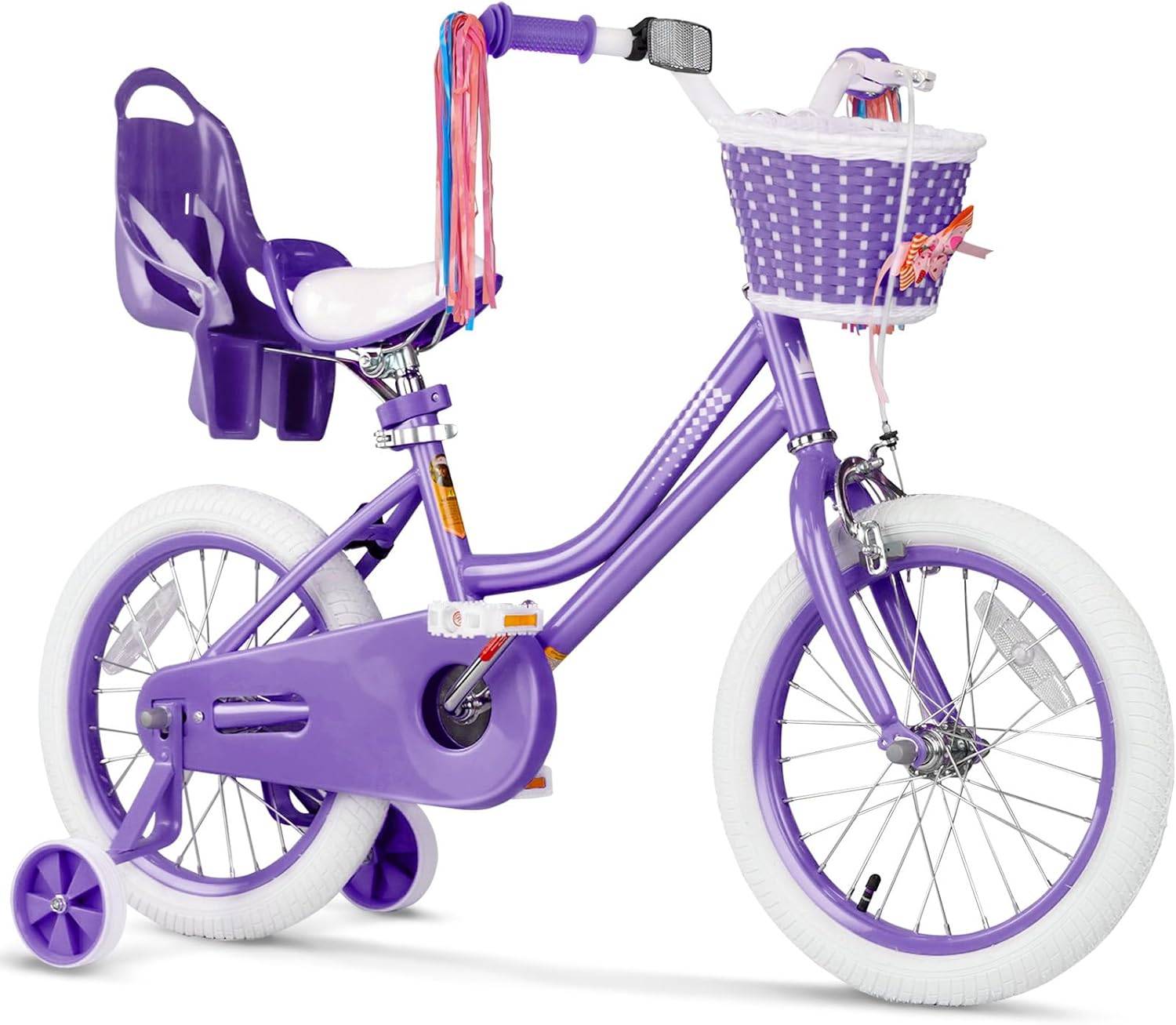 XJD Girls Bike for Kids Ages 3-8, 12/14/16 Inch with Training Wheels – Purple
Available in 12, 14, and 16 Inch labels for comparing an independently riding child’s measured fit; it is not a trailer or a three-passenger solution.
 Light Pink XJD Girls' Bicycle with Basket & Training Wheels
Its 12, 14, 16, and 20 Inch labels provide several independent-rider comparison points, but the product does not establish trailer capacity or towing compatibility.
The XJD Girls Bike for Kids Ages 3-8, 12/14/16 Inch with Training Wheels – Purple offers 12, 14, and 16 Inch size labels. The age wording is part of its catalog title, not proof of fit. XBikes’ starting points are 12 Inch for heights 34–40 in (86–102 cm), 14 Inch for 37–45 in (94–114 cm), and 16 Inch for 40–48 in (102–122 cm).
The Light Pink XJD Girls' Bicycle with Basket & Training Wheels is available in 12, 14, 16, and 20 Inch labels. The 20 Inch starting point is 48–60 in (122–152 cm). Its wider listed size range may help compare independently riding children of different heights, but it says nothing about trailer capacity or hitch compatibility.
The Pink XJD Beach Cruiser Bike, 24"/26", U-Brake has 24 and 26 Inch labels. XBikes places 24 Inch at 54–64 in (137–163 cm) and 26 Inch for riders over 60 in (153 cm). These are rider-fit starting points only; the supplied facts do not establish either size as suitable for towing a trailer.
Fit the independent rider, not a future growth estimate
If moving one child from the trailer to a bicycle is being considered, measure that child’s current height and inseam. Then check stand-over clearance, reach, brake control, and confidence on the actual bicycle. Do not buy an oversized bicycle for growth. A child who cannot comfortably control, start, stop, and brake should not be moved out of the trailer merely to make the seating plan work.
A properly fitting bicycle helmet should sit level and use its straps according to the helmet manufacturer’s instructions. Helmet fit does not compensate for an unsuitable bicycle or an overloaded or overcrowded trailer.
Make the three-child decision
- Find the trailer’s stated passenger count and confirm that it permits three.
- Add the measured passenger and gear loads, then compare them with the manual’s limits.
- Test all three designated seats for clearance and correct harness fit.
- Verify bicycle, hitch, and attachment compatibility from the exact manuals.
- If any answer is missing or fails, do not carry three; use another approved arrangement or fit a capable child to an appropriately sized individual bicycle.
The decision is simple: carry three only when the exact trailer, complete towing setup, measured load, and three individual seating positions all permit it—otherwise reduce the passenger count.
Bikes for your next adventure
-
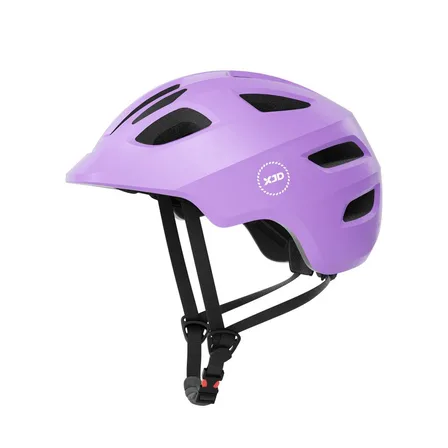
Girls' Bike Helmet from XJD – Purple
The XJD kids bike helmet in purple is a multi-sport helmet built for toddlers an…$59.99
$49 -
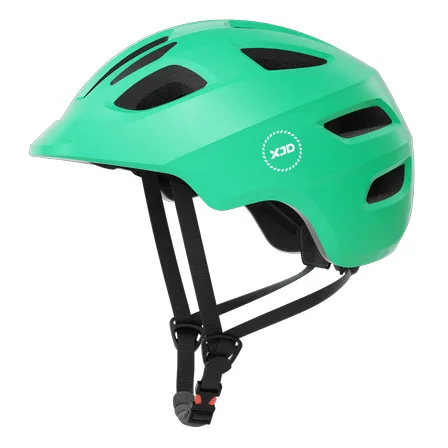
Green XJD Kids Bike Helmet for Boys & Girls
The Green XJD Kids Bike Helmet is a lightweight multi-sport helmet for toddlers …$59.99
$99 -

Kids Bike Helmet by XJD for Girls – Pink
The XJD Kids Bike Helmet in Pink is a lightweight multi-sport helmet for girls r…$59.99
$99