

Can you put a baby in a bike trailer
You should put a baby in a bike trailer only when the child meets every requirement in that trailer’s manual, can maintain the required seated posture and head control, and fits the harness and helmet correctly. Age alone is not enough.
What determines whether your baby is ready?
Start with the instructions for the exact trailer model and its child seat or insert. Check the manufacturer’s minimum developmental requirements, permitted riding modes, passenger limits and load limit. If the manual is missing or unclear, contact the manufacturer or ask a qualified bicycle mechanic before riding.
A baby should be able to remain stable in the required riding position without slumping or losing head control. If you are uncertain about developmental readiness, ask the child’s pediatrician. A newborn or young infant who cannot hold the required posture should not be carried merely because a harness or accessory appears to fit.
Do not assume that an infant insert makes cycling permissible. An accessory may be intended for strolling or another mode rather than bicycle towing. Both the trailer manual and accessory instructions must explicitly allow the planned use.
Measure and check the actual fit
Before the first ride, place the trailer on level ground while it is disconnected from the bicycle. Use the manual’s fitting sequence and check the child in the clothing and equipment they will wear.
- Current weight: Compare it with the trailer’s stated passenger and total load limits, including any second passenger or cargo.
- Seated height and head clearance: Confirm adequate space around the child’s head, including any helmet required by the instructions.
- Harness fit: The straps must route and adjust exactly as the manual describes, without the child slipping, slumping or reaching an unsafe position.
- Posture and control: Watch whether the child can stay upright and keep their head stable for the whole trial while stationary.
A bicycle helmet must fit properly, sit level and have its straps adjusted according to the helmet manufacturer’s instructions. Do not use a poorly fitting helmet to satisfy a trailer requirement, and do not guess about whether a helmet is required inside a particular trailer; follow that trailer’s manual.
Compare the trailer, bicycle and route
Read the towing bicycle and trailer instructions together. Confirm that the hitch is compatible with the bicycle and installed in the specified location. Follow the exact manuals for assembly, maintenance, tire pressure, load limits and fastener torque; if compatibility cannot be verified, use a qualified bicycle mechanic.
For an initial permitted ride, choose a short, calm route away from traffic, steep slopes, sharp turns and rough surfaces. Recheck the hitch, safety retention device, harness and closures before moving. Stop immediately if the child slumps, becomes distressed, or cannot maintain the required position.
Where the supplied kids’ bicycle fits
The Light Pink XJD Girls' Bicycle with Basket & Training Wheels is not a bike trailer, infant carrier or trailer accessory. Its supplied 12 Inch, 14 Inch, 16 Inch and 20 Inch options are relevant only as later-stage comparison points for a child moving to an independently ridden training-wheel bicycle. They do not establish that a baby is ready for trailer travel.
This catalog option helps separate two decisions: whether a baby currently meets a trailer manual’s passenger requirements, and whether an older child can later fit and control a bicycle of their own.

XBikes wheel-size starting points are 12 Inch for heights 34–40 in (86–102 cm) and ages 3–4; 14 Inch for 37–45 in (94–114 cm) and ages 3–6; 16 Inch for 40–48 in (102–122 cm) and ages 4–7; and 20 Inch for 48–60 in (122–152 cm) and ages 7–12. These ranges are starting points, not proof of fit or trailer readiness.
When that later bicycle stage arrives, measure the rider’s height and inseam and have the child try the bicycle. Check stand-over space, reach, brake control and current confidence. Do not buy an oversized bicycle merely for growth, and prioritize the individual fit over age.
Make the decision before riding
- Identify the exact trailer, accessory and towing-bicycle models.
- Read their manuals for permitted cycling use, developmental requirements, fit, compatibility and load limits.
- Measure the child’s current weight and seated clearance, then verify stable posture and correct harness fit.
- Fit any required helmet correctly and confirm that the trailer still provides the specified clearance.
- Ask the pediatrician about developmental readiness or a qualified mechanic about equipment compatibility whenever either point is uncertain.
If every requirement cannot be confirmed, do not put the baby in the bike trailer yet. Wait until the child is developmentally ready and fits the exact equipment as instructed, or choose a non-cycling transport option.
Bikes for your next adventure
-
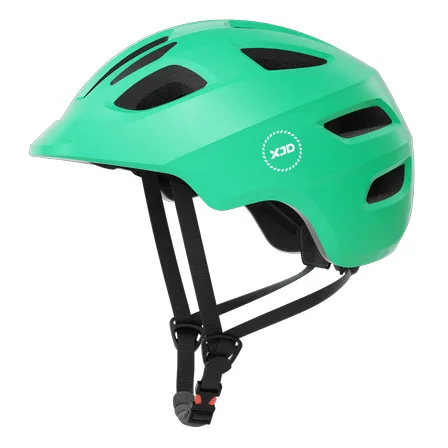
Green XJD Kids Bike Helmet for Boys & Girls
The Green XJD Kids Bike Helmet is a lightweight multi-sport helmet for toddlers …$59.99
$99 -
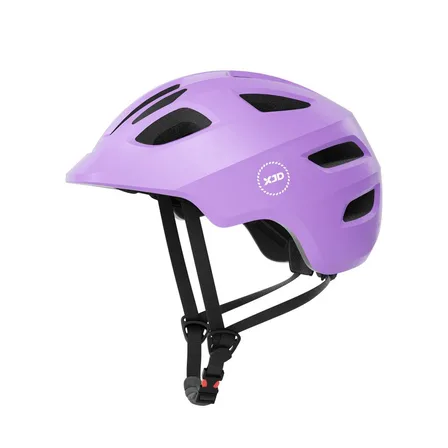
Girls' Bike Helmet from XJD – Purple
The XJD kids bike helmet in purple is a multi-sport helmet built for toddlers an…$59.99
$49 -

Kids Bike Helmet by XJD for Girls – Pink
The XJD Kids Bike Helmet in Pink is a lightweight multi-sport helmet for girls r…$59.99
$99