

Can you put a baby seat in a bike trailer
No—do not put a baby seat, infant car seat or bike-mounted child seat inside a bike trailer unless the trailer maker explicitly approves that exact setup.
Why an extra seat is usually the wrong solution
A trailer’s passenger compartment, harness and frame are designed to work as a system. An added seat can interfere with the harness, move the passenger’s weight, reduce head clearance or attach to points that were never intended to carry it. A seat that merely fits inside is not necessarily compatible.
Use only the trailer’s original seating or an infant insert, sling or adapter named as compatible in its manual. Do not improvise with straps, padding, drilled holes or unapproved brackets. A bike-mounted rear or front child seat is designed to attach to a compatible bicycle or rack—not to sit inside a trailer.
Check what “baby seat” means
Before buying anything, identify the proposed component. An infant car seat, bicycle child seat, trailer insert and supportive pad have different attachment and restraint purposes. Find the exact brand and model of both the trailer and the seat or insert, then check the trailer manufacturer’s current compatibility information and manual.
If the manual does not list the component, treat the combination as unapproved. Ask the manufacturer for written model-specific guidance or have a qualified bicycle mechanic inspect the equipment. A general claim that a part is “universal” does not override the trailer instructions.
What to measure and compare
| Check | What to compare |
|---|---|
| Passenger size | Measure the child’s current height and weight; compare both with the manual’s passenger and load limits. |
| Harness position | Check whether the original harness sits at the correct shoulder position and can be tightened as instructed without routing around another seat. |
| Head clearance | With the child seated as directed, check clearance above and around the head, including any properly fitted helmet required by the manual or local rules. |
| Seating readiness | Follow the trailer maker’s stated developmental and minimum-use requirements. If readiness is uncertain, ask the child’s healthcare professional. |
| Load calculation | Include the child, approved accessories and cargo when comparing the total with the stated trailer limit. |
| Bike connection | Confirm that the hitch and axle interface are approved for the exact towing bicycle. |
Do not guess at load limits, attachment procedures or fastener torque. Follow the exact manuals for the trailer, accessory and towing bicycle, or use a qualified bicycle mechanic.
Run a stationary fit check
- Park the bicycle and trailer on level ground and prevent both from rolling.
- Install only approved parts, following the manufacturer’s sequence and hardware instructions.
- Seat and buckle the child exactly as the trailer manual directs.
- Check harness contact, head clearance, leg room and whether clothing or padding obstructs the buckle.
- Verify that the passenger cannot reach the wheels and that no added item changes the approved seating position.
- Inspect the hitch, safety retention device, tires and all required closures before every ride as directed by the manual.
When a bicycle helmet is used, it must be the correct size, sit level and have its straps adjusted according to the helmet manufacturer’s instructions. A helmet does not make an unapproved seat-and-trailer combination acceptable.
Why the catalog bikes shown here are different
The Purple XJD Girls' Bike with Doll Seat & Basket and Pink Girls' 12/14/16" Bike by XJD – Basket & Doll Seat are Training Wheel Bikes offered in 12 Inch, 14 Inch and 16 Inch choices. Their doll seats help clarify an important distinction: a doll seat is not a passenger seat, infant carrier or trailer adapter. These bikes are relevant only as child-rider comparison points, not as solutions for carrying a baby in a trailer.
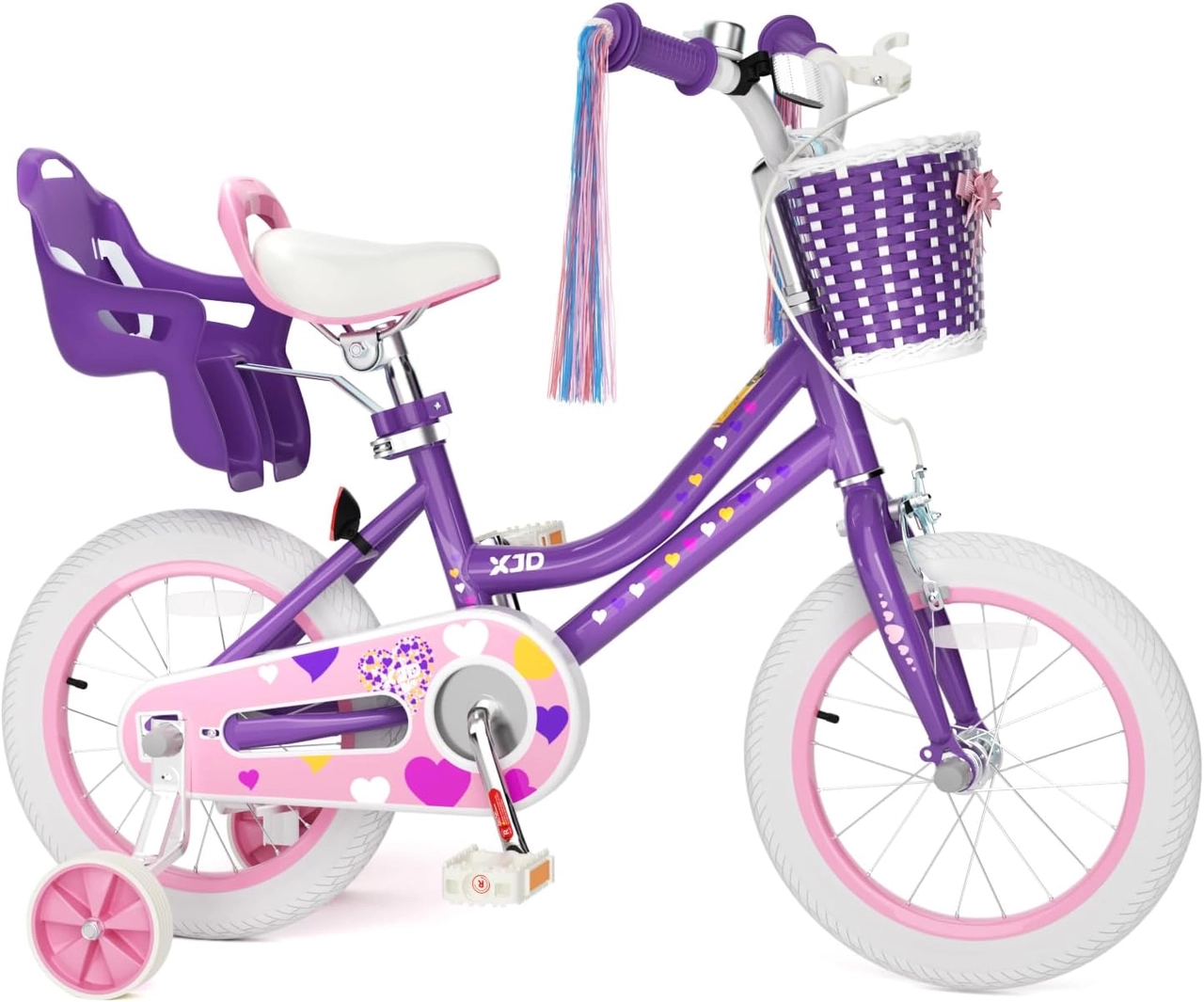 Purple XJD Girls' Bike with Doll Seat & Basket
A Training Wheel Bike offered in 12 Inch, 14 Inch and 16 Inch options. Its doll seat is for comparison only and is not evidence of compatibility with a baby, child seat or bike trailer.
 Pink Girls' 12/14/16" Bike by XJD – Basket & Doll Seat
Available as a 12 Inch, 14 Inch or 16 Inch Training Wheel Bike with a doll seat. It may illustrate the difference between a doll accessory and passenger equipment, but it is not a trailer solution.
If considering either bicycle for a child who will ride independently, start with measured fit rather than the doll-seat feature. XBikes lists 12 Inch for heights 34–40 in (86–102 cm), 14 Inch for 37–45 in (94–114 cm), and 16 Inch for 40–48 in (102–122 cm). Have the rider try the bicycle and check stand-over clearance, reach, brake control and confidence; do not size up merely for growth.
Your decision before the next ride
Use the baby seat only if the trailer manual explicitly identifies that exact seat or accessory as compatible and the child meets every stated passenger requirement. If either point is missing, leave the seat out and pause trailer use until the manufacturer or a qualified bicycle mechanic confirms an approved arrangement.
Bikes for your next adventure
-
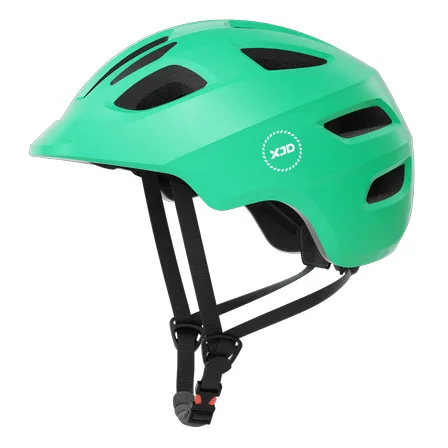
Green XJD Kids Bike Helmet for Boys & Girls
The Green XJD Kids Bike Helmet is a lightweight multi-sport helmet for toddlers …$59.99
$99 -
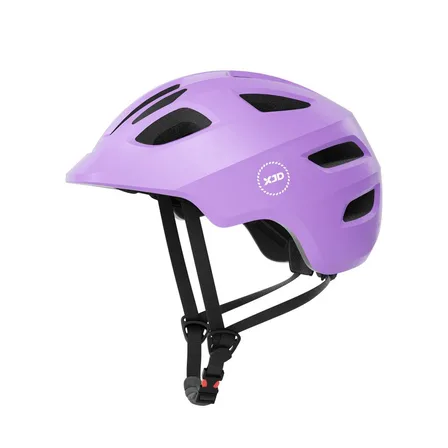
Girls' Bike Helmet from XJD – Purple
The XJD kids bike helmet in purple is a multi-sport helmet built for toddlers an…$59.99
$49 -

Kids Bike Helmet by XJD for Girls – Pink
The XJD Kids Bike Helmet in Pink is a lightweight multi-sport helmet for girls r…$59.99
$99