

Can you put an infant in a bike trailer
No—do not carry a baby younger than 12 months in a bike trailer. After 12 months, consider it only when the child can sit unsupported, has enough neck strength to support a properly fitted lightweight bicycle helmet, and meets the trailer manufacturer’s requirements.
Age alone does not make a trailer suitable
The American Academy of Pediatrics advises that infants younger than 12 months should not be carried on a bicycle. A trailer insert, car seat or extra padding does not override that guidance or automatically make a trailer suitable for a younger baby.
Once a child is at least 12 months old, check actual development rather than relying on a birthday. The child should sit well without support and hold their head steadily while wearing a lightweight helmet. If neck strength, posture or development is uncertain, pause and ask the child’s pediatrician before riding.
What to measure and compare
Read the exact trailer manual before putting the child inside. Trailer designs differ, so compare the child’s measurements and abilities with every stated requirement:
- Age: meet both the 12-month minimum guidance and any higher minimum in the manual.
- Weight and height: measure them now and keep them within the manufacturer’s limits.
- Seated posture: confirm the child can remain upright without slumping or losing head control.
- Helmet fit: measure head circumference using the helmet maker’s method. The helmet must sit level and be secured with its straps according to its instructions.
- Harness fit: check that the trailer’s restraint adjusts correctly for this child, following the manual exactly.
- Bicycle compatibility: verify that the towing bicycle, hitch and trailer are approved to work together.
Do not improvise a hitch, restraint or infant support. For compatibility, assembly, maintenance, load limits or torque values, follow the exact product manuals or use a qualified bicycle mechanic.
Check the complete setup before riding
Inspect the bicycle, hitch, trailer connection, restraint and tires as directed by their manufacturers. Confirm the helmet stays level rather than tipping backward or sliding over the eyes. Use all required straps and safety attachments; do not assume a short journey makes them optional.
Begin only after a stationary fit check. Then choose a quiet, low-risk area and ride cautiously at reduced speed. Allow more room for turning and stopping, remembering that carrying a passenger changes handling. Avoid busy roads and poor weather. Stop if the child slumps, becomes distressed, cannot keep the helmet positioned correctly or repeatedly loses head control.
These catalog bikes are not infant trailers
The supplied XBikes products are training-wheel bicycles in 12, 14 and 16 Inch sizes. They cannot carry an infant and are not substitutes for a child trailer. They are relevant only as later-stage comparison points when the child is old enough and developmentally ready to ride a bicycle independently.
The XJD Boys 12/14/16" Training Wheel Bike – Blue, Black XJD Kids Bike for Boys – 12, 14 & 16 Inch Sizes, and XJD Kids' Training Wheel Bike for Boys & Girls, 12/14/16 Inch – White each offer the same supplied size labels: 12 Inch, 14 Inch and 16 Inch. That makes them useful for comparing an eventual first-bike fit across those three wheel-size starting points—not for solving infant transport.
 XJD Boys 12/14/16" Training Wheel Bike – Blue
A later-stage training-wheel bicycle offered in 12, 14 and 16 Inch labels. It is relevant for future independent-rider fit comparisons, not for carrying an infant or replacing a bike trailer.
 Black XJD Kids Bike for Boys – 12, 14 & 16 Inch Sizes
This training-wheel bike provides 12, 14 and 16 Inch size labels for a later first-bike comparison. It has no supplied trailer function, so it is not relevant to infant transport.
 XJD Kids' Training Wheel Bike for Boys & Girls, 12/14/16 Inch – White
Offered with 12, 14 and 16 Inch labels, this training-wheel bicycle may be considered after a child is ready to ride independently. It is not an infant carrier or trailer substitute.
How to assess a later first bicycle
When the child eventually transitions from passenger to rider, measure standing height and inseam before comparing wheel sizes. The XBikes starting points are:
| Wheel size | Age starting point | Rider-height starting point |
|---|---|---|
| 12 Inch | 3–4 | 34–40 in / 86–102 cm |
| 14 Inch | 3–6 | 37–45 in / 94–114 cm |
| 16 Inch | 4–7 | 40–48 in / 102–122 cm |
These ranges overlap and are only starting points. Have the child try the bicycle. Check stand-over clearance, comfortable reach, reliable brake control and present confidence. Do not buy an oversized bicycle merely to allow room for growth. Any age wording in a catalog title is a label, not proof of fit.
Your decision today
If the baby is under 12 months, cannot sit unsupported, lacks the neck strength to hold a lightweight helmet, or does not meet the trailer manual’s limits, do not tow them. If every condition is satisfied, complete the manual-directed fit and compatibility checks before the first ride. The listed XBikes models matter later, when measured height and an individual riding fit—not infant-transport needs—point toward a 12, 14 or 16 Inch training-wheel bicycle.
Bikes for your next adventure
-
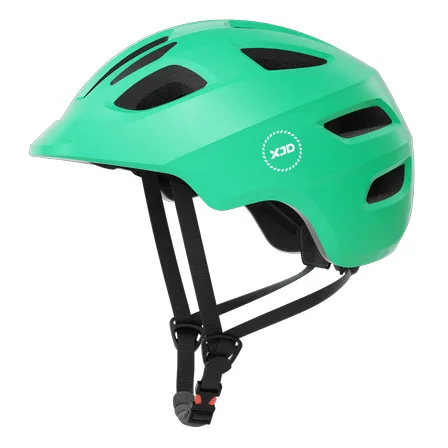
Green XJD Kids Bike Helmet for Boys & Girls
The Green XJD Kids Bike Helmet is a lightweight multi-sport helmet for toddlers …$59.99
$99 -
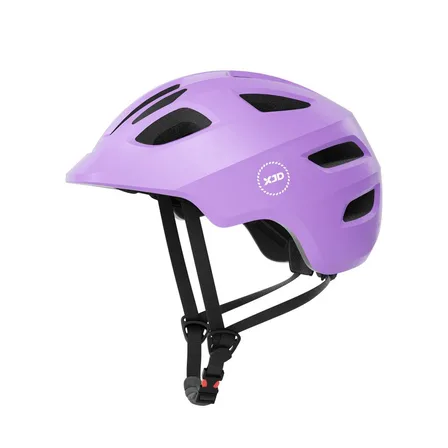
Girls' Bike Helmet from XJD – Purple
The XJD kids bike helmet in purple is a multi-sport helmet built for toddlers an…$59.99
$49 -

Kids Bike Helmet by XJD for Girls – Pink
The XJD Kids Bike Helmet in Pink is a lightweight multi-sport helmet for girls r…$59.99
$99