

Can you get a 25 inch bike
You may find a bike described as 25 inch, but XBikes does not list 25 Inch as a wheel-size category. Compare 24 Inch and 26 Inch, then choose by actual fit—not by rounding the number.
What “25 inch bike” could mean
First confirm what the 25-inch figure describes. Children’s bicycle sizes normally refer to the wheel-size label, while a measurement in a listing or conversation might instead describe part of the frame, the distance from the ground, or even the rider’s inseam. Those measurements are not interchangeable.
Ask the seller or check the exact product manual for the stated wheel size. If the bicycle itself is available, read its size marking and have the rider try it. Do not assume that a measurement close to 25 inches makes a 24 Inch or 26 Inch bicycle equivalent to a 25 inch bicycle.
Measure the rider before comparing sizes
Measure the child’s height without shoes, standing straight against a wall. Then measure inseam from the floor to the crotch using a firm, level object to represent the saddle area. Record both measurements rather than relying on age or clothing size.
Use the measured height as the first comparison with the XBikes starting points:
| Wheel-size label | Starting age range | Starting rider height |
|---|---|---|
| 24 Inch | Ages 10–14 | 54–64 in / 137–163 cm |
| 26 Inch | Youth and adults | Over 60 in / 153 cm |
The ranges overlap, so a rider above 60 inches is not automatically suited to every 26 Inch bike. Age is only a starting point. Body proportions, bicycle geometry and riding ability can change the result.
Resolve the choice with an individual fit check
Have the child try the exact bicycle. The American Academy of Pediatrics advises against buying an oversized bike merely so a child can grow into it. During the tryout, check all of the following:
- Stand-over: The rider should be able to straddle the bicycle appropriately rather than being forced against the frame.
- Reach: Seated in a normal riding position, the child should reach the handlebar without stretching or losing stable control.
- Brake access: The rider must be able to reach and operate the bicycle’s brakes confidently.
- Overall control: Starting, steering, stopping and getting off should feel manageable at the rider’s current confidence level.
If the 24 Inch starting range appears suitable but the bike feels cramped or difficult to control, do not select it from the chart alone. Likewise, do not move to 26 Inch when stand-over, reach or braking control is poor. Compare another model or ask a qualified bicycle mechanic to assess fit.
How the supplied XBikes products relate
The three supplied catalog options help show the smaller XBikes size labels available for comparison: each comes in 12 Inch, 14 Inch and 16 Inch. None is a 25 Inch bike, and none should be treated as a substitute for one. They are relevant only if measurement and a hands-on check show that the rider actually belongs in one of those smaller size ranges.
 Flower Pink XJD Girls Bike with Doll Seat & Basket
A Training Wheel Bike offered in 12 Inch, 14 Inch and 16 Inch sizes; it is a smaller-size comparison point and not a 25 Inch substitute.
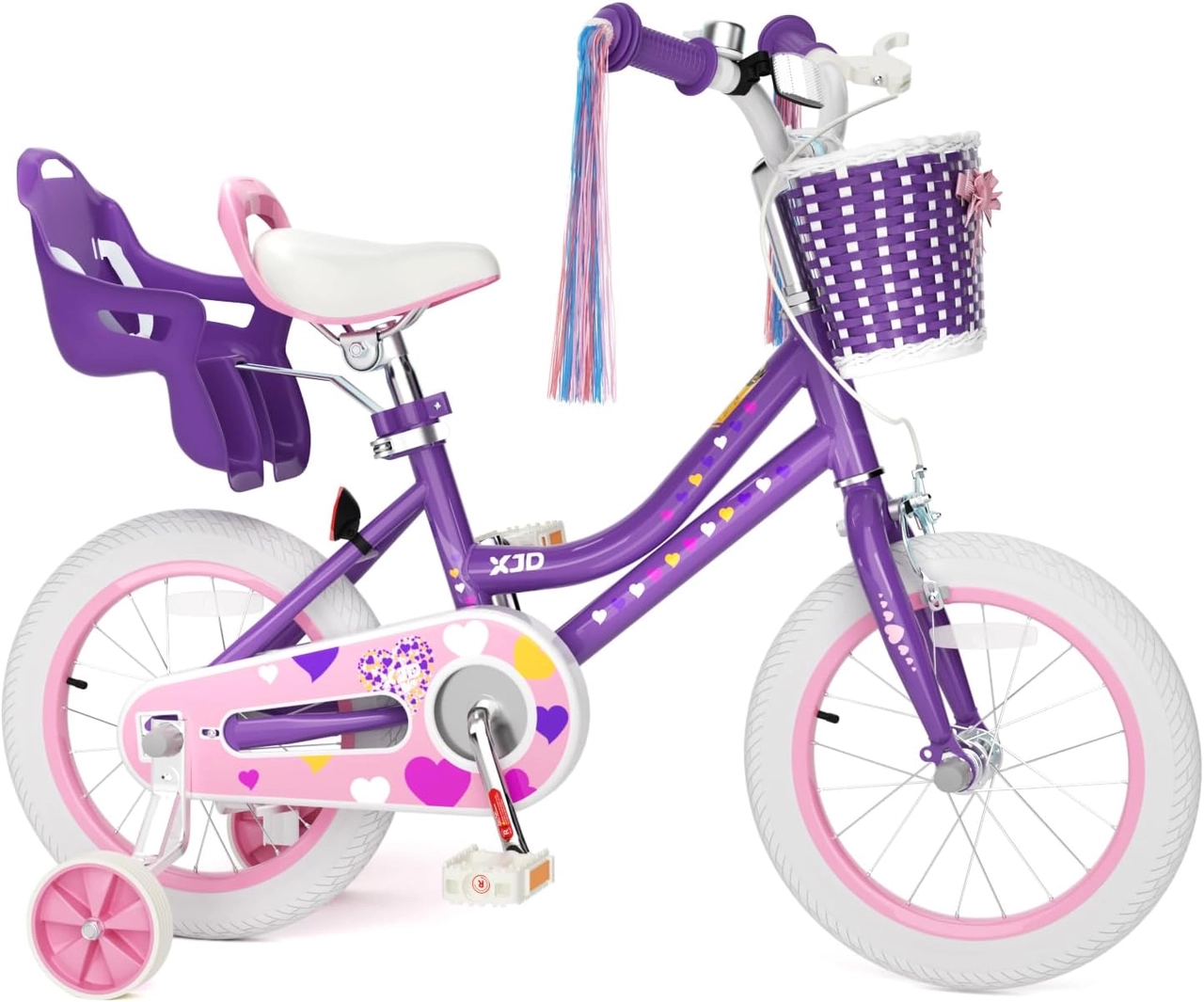 Purple XJD Girls' Bike with Doll Seat & Basket
Available as a Training Wheel Bike in 12 Inch, 14 Inch and 16 Inch labels. Its supplied sizes are relevant only when the rider fits those smaller ranges.
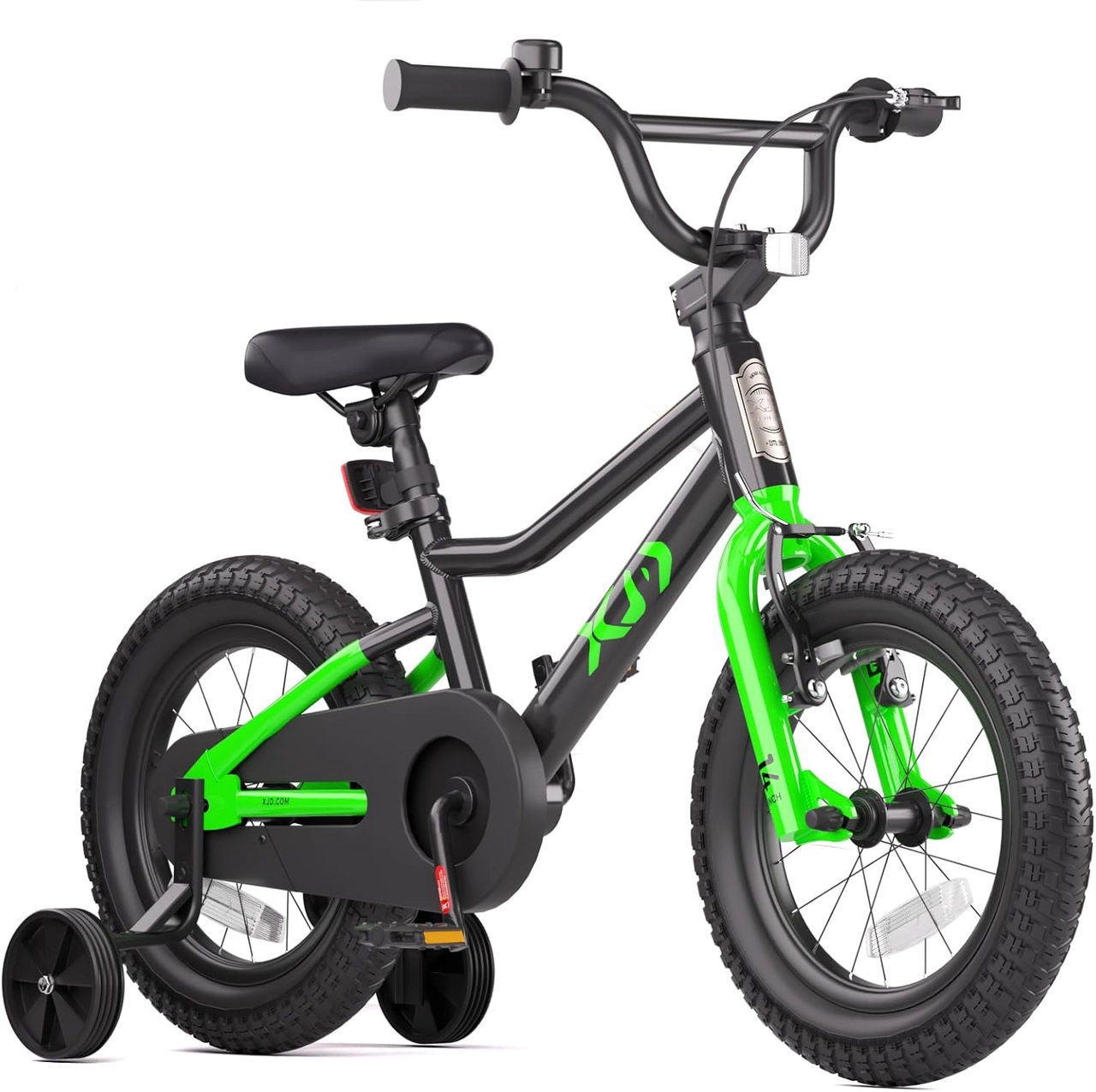 Black XJD Kids' BMX Bicycle with Training Wheels
This Kids' BMX Bike is offered in 12 Inch, 14 Inch and 16 Inch sizes, making it a smaller-wheel comparison rather than an alternative equivalent to 25 Inch.
The Flower Pink XJD Girls Bike with Doll Seat & Basket and Purple XJD Girls' Bike with Doll Seat & Basket are Training Wheel Bikes offered in 12 Inch, 14 Inch and 16 Inch labels. The Black XJD Kids' BMX Bicycle with Training Wheels is categorized as a Kids' BMX Bike and has the same three supplied size labels.
For context, XBikes places 12 Inch at ages 3–4 and heights 34–40 in / 86–102 cm; 14 Inch at ages 3–6 and 37–45 in / 94–114 cm; and 16 Inch at ages 4–7 and 40–48 in / 102–122 cm. These overlapping ranges are starting points, not proof of fit. Compare the individual rider’s height, inseam, reach, brake control and confidence.
Check safety and product details before riding
Use a bicycle helmet that fits properly, sits level and has its straps adjusted according to the helmet manufacturer’s instructions, as advised by the U.S. Consumer Product Safety Commission.
Before use, follow the exact bicycle manual for assembly, maintenance, load limits, compatibility and torque requirements. Those details are not supplied here, so they should not be guessed. If the manual is unavailable or any setup point is uncertain, use a qualified bicycle mechanic.
What to do next
- Confirm whether “25 inch” means wheel size rather than another measurement.
- Measure the rider’s height and inseam.
- Use 24 Inch and 26 Inch only as distinct XBikes comparison points.
- Try the exact bicycle and verify stand-over, reach, brake operation and confident control.
Choose the bicycle that fits now. If neither 24 Inch nor 26 Inch passes the hands-on checks, keep looking rather than buying an oversized bike or treating a nearby label as a 25 inch equivalent.
Bikes for your next adventure
-
Light Pink XJD Girls' Bicycle with Basket & Training Wheels
The Light Pink XJD Girls' Bicycle with Basket & Training Wheels is a retro-style…$109.99
$129.99 -

Kids Bike Helmet by XJD for Girls – Pink
The XJD Kids Bike Helmet in Pink is a lightweight multi-sport helmet for girls r…$59.99
$99 -

XJD Boys 12/14/16" Training Wheel Bike – Blue
The XJD Boys Bike in Blue is a training wheel bike for riders 71–122 cm tall—rou…$169
$199