

Can you have a 25 in bike
Yes, a bicycle may be described as a 25-inch bike, but do not choose it from that number alone. Confirm what “25 in” measures, then check the rider’s height, inseam, reach, brake control and confidence on the actual bicycle.
First, clarify what 25 inches describes
A seller might use 25 inches for a wheel, frame, stand-over measurement or another dimension. Those measurements are not interchangeable. Ask for the exact specification and consult the bicycle’s product information or manual before comparing it with a children’s wheel-size chart.
The supplied XBikes sizing standard does not include a 25-inch wheel category. Its adjacent listed wheel sizes are 24 Inch and 26 Inch, but neither should automatically be treated as equivalent to a bicycle labeled 25 inches. If the meaning of the label remains unclear, have a qualified bicycle mechanic identify the size.
Measure the rider before comparing sizes
Measure the child without shoes, using a wall and a level book to obtain standing height. For inseam, have the child stand naturally and measure from the floor to the crotch. Record both measurements rather than estimating from age or clothing size.
XBikes gives these nearby wheel-size starting points:
| Wheel size | Age starting point | Rider-height starting point |
|---|---|---|
| 24 Inch | Ages 10–14 | 54–64 in / 137–163 cm |
| 26 Inch | Youth and adults | Over 60 in / 153 cm |
The overlap shows why age alone cannot settle the choice. A rider around these boundaries still needs an individual fit check, and a “25 in” label cannot be placed between the rows unless it genuinely refers to wheel diameter.
Try the bicycle instead of buying for growth
Have the child try the exact bicycle. When standing over it, the rider needs appropriate clearance rather than contact with the frame. Seated, the child should be able to reach the handlebar without stretching, steer predictably and remain balanced while starting and stopping.
Ask the rider to operate each brake control comfortably and decisively. Check whether the child can maintain control at low speed, place a foot down when needed and dismount without struggling. Current confidence matters: a technically possible size may still be unsuitable if it makes the rider tense or unable to respond promptly.
Do not buy an oversized bicycle merely to allow room for growth. If stand-over clearance, reach or brake operation is doubtful, compare another size or seek an in-person fitting from a qualified bicycle mechanic.
How the supplied product helps with this question
The Purple XJD Girls' Bike with Doll Seat & Basket is listed as a Training Wheel Bike with 12 Inch, 14 Inch and 16 Inch SKU labels. Those choices can help illustrate that wheel-size labels are distinct fit categories, but they are much smaller than the adjacent 24 Inch and 26 Inch starting points relevant to interpreting a possible 25-inch wheel label.
Because no supplied catalog product has an exact 25 Inch SKU, this product is only a nearest-available catalog comparison point, not a substitute for the requested size. Its 12, 14 and 16 Inch versions are relevant only when the rider’s measurements and individual trial indicate one of those smaller categories.

When the 12, 14 or 16 Inch options are relevant
Compare the Purple XJD Girls' Bike with Doll Seat & Basket against the complete XBikes starting points for its available labels:
- 12 Inch: ages 3–4 and rider height 34–40 in / 86–102 cm.
- 14 Inch: ages 3–6 and rider height 37–45 in / 94–114 cm.
- 16 Inch: ages 4–7 and rider height 40–48 in / 102–122 cm.
These ranges overlap, so measured height narrows the comparison but does not finish it. Inseam, stand-over clearance, reach, brake control and confidence decide whether a particular version fits. The product title contains no age claim, and its Training Wheel Bikes category does not establish fit by itself.
If the intended rider is being considered for a true 25-inch wheel bicycle, these 12, 14 and 16 Inch versions are not equivalent alternatives. Return to the larger bicycle, verify its actual wheel and frame specifications, and perform the fit checks directly.
Complete the safety and setup checks
Use a bicycle helmet that fits properly, sits level and has straps adjusted according to the helmet manufacturer’s instructions. A helmet cannot correct a bicycle that is too large, too small or difficult for the child to control.
For assembly, adjustment, maintenance, load limits, compatibility and torque requirements, follow the exact bicycle manual. If the manual is missing, a specification is ambiguous or the controls cannot be adjusted to the rider, use a qualified bicycle mechanic rather than improvising.
Make the 25-inch decision
Before accepting “25 in bike” as the right choice, identify what the 25-inch measurement means, record the rider’s height and inseam, compare only the matching wheel-size standard, and arrange a real fit trial. Choose it only if the child has suitable stand-over clearance, comfortable reach, reliable brake control and confident handling; otherwise, test a different size.
Bikes for your next adventure
-
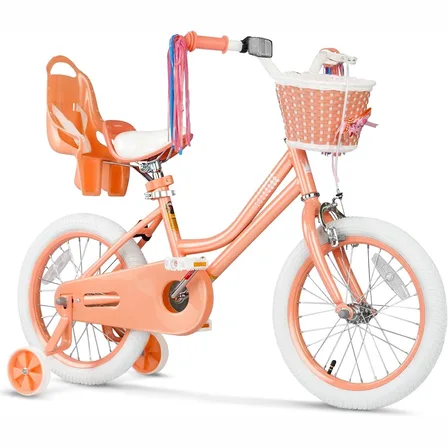
Girls 12/14/16 Inch Kids Bike by XJD with Training Wheels – Peach
The XJD Girls Bike in Peach is a training-wheel bike built for girls roughly 3 t…$149
$169 -
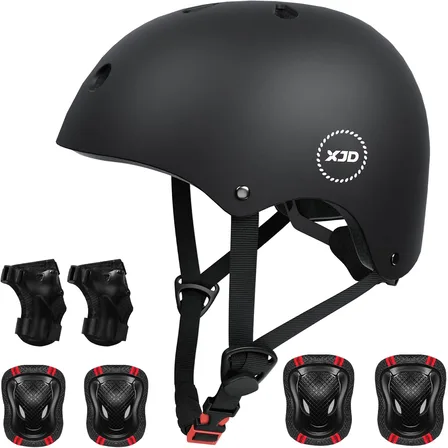
XJD Kids Helmet & Pad Set – Black, S/M/L
This XJD Kids Helmet & Pad Set in Black is designed for kids aged 3 to 8, pairin…$23.79
$27.99 -
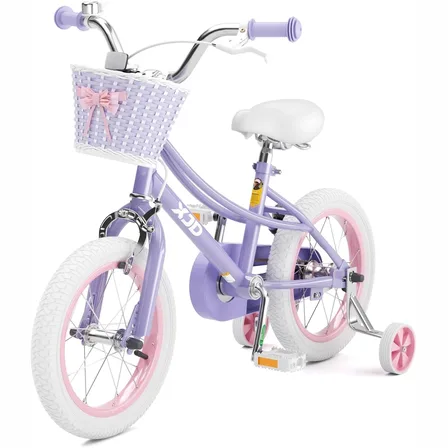
Girls' Training Wheel Bike by XJD with Basket – Purple
If you're shopping for a first bike for a girl roughly 3 to 12 years old (91–152…$75.99