

Do i need a 24 or 26 inch bike
Choose a 24-inch bike if the rider is 54–64 in (137–163 cm); consider a 26-inch bike above 60 in (153 cm), then confirm fit in person.
The short answer: 24 or 26 inch?
Measure the rider rather than choosing from age alone. XBikes uses 24-inch wheels as a starting point for ages 10–14 and heights of 54–64 in (137–163 cm). A 26-inch bike is a starting point for youth and adults over 60 in (153 cm).
The ranges overlap above 60 inches, so height cannot settle every case. In that overlap, choose according to stand-over room, reach to the handlebar and brakes, control during starts and stops, and the rider’s present confidence. Do not select an oversized 26-inch bike merely to allow room for growth.
| Wheel size | XBikes starting point | What still needs checking |
|---|---|---|
| 24 Inch | Ages 10–14; 54–64 in / 137–163 cm | Stand-over, reach, brake control and confidence |
| 26 Inch | Youth and adults over 60 in / 153 cm | Stand-over, reach, brake control and confidence |
Measure before comparing bikes
First measure the rider’s height without shoes, standing upright against a wall. Then measure inseam: with feet slightly apart, measure from the floor to the crotch. Record both measurements instead of relying on a remembered clothing size or an age estimate.
Height identifies the likely wheel-size range, while inseam helps you judge whether the rider can stand over a particular frame. Wheel diameter does not define the complete fit: two bikes with the same wheel label can have different frame shapes and riding positions.
- Compare measured height with the XBikes starting points above.
- Use inseam when checking stand-over room on the actual bicycle.
- Have the rider try both sizes if their height falls in the overlap.
- Reject either option if the rider cannot comfortably control it.
Run an individual fit check
With the bicycle stationary, have the rider straddle the frame with feet on the ground. There should be usable stand-over room rather than contact that makes mounting or stopping awkward. Next, place the rider in the normal seated position and check that the handlebar can be reached without an exaggerated stretch or a cramped posture.
The rider must also be able to reach and operate the brake controls reliably. Ask for several controlled starts, straight-line rides, turns and stops in a suitable traffic-free area. Watch for difficulty steering, hesitancy when stopping, or needing to lean the bicycle sharply just to put a foot down.
A bike is too large if its dimensions interfere with standing over it, reaching its controls or handling it confidently. A bike may be too small if the riding position is cramped or control is compromised. Exact adjustment and assembly instructions should come from that bicycle’s product manual; use a qualified bicycle mechanic if fit or setup remains uncertain.
How the available 24- and 26-inch options help
The Pink XJD Beach Cruiser Bike, 24"/26", U-Brake is directly relevant because its supplied catalog options include both “24 Inch” and “26 Inch.” That makes it possible to compare the two wheel-size labels within one product listing after measurements identify the likely range. The catalog also identifies it as a beach cruiser bike with a U-brake; it does not establish that either size will fit a particular rider.

Use those two options as candidates, not as proof of fit. If the rider measures 54–60 inches, begin with the 24-inch option. If the rider is over 64 inches, the XBikes starting points direct the comparison toward 26 inches. Between 60 and 64 inches, try both and let stand-over room, reach, brake operation and confident control decide.
What to do when neither feels right
Do not force a choice simply because the rider’s height appears in a published range. Frame geometry, body proportions and experience can change how a bicycle feels. If the 26-inch bicycle causes a stretch, awkward stops or uncertain handling, return to the 24-inch comparison. If the 24-inch bicycle feels cramped or restricts control, assess the 26-inch option carefully.
Do not try to solve a poor fit through improvised assembly or unverified adjustments. Follow the exact product manual for assembly, maintenance and permitted adjustments, or ask a qualified bicycle mechanic to inspect the setup.
Make the final choice
Before riding, add a properly fitted bicycle helmet. It should sit level, fit securely and have its straps used according to the helmet manufacturer’s instructions.
Choose 24 inches for a measured rider in the 54–64-inch starting range unless an in-person check shows poor fit. Consider 26 inches once the rider is over 60 inches, but buy it only when the rider can stand over the bike, reach and operate the brakes, steer, start and stop with current confidence. In the 60–64-inch overlap, try both sizes and choose the one the rider controls now—not the larger one hoped to fit later.
Bikes for your next adventure
-

XJD Pink Beach Cruiser for Girls – Rear Rack & V-Brake
The XJD Pink Beach Cruiser for girls is the step-up bike for riders who've outgr…$179.99
$209.99 -
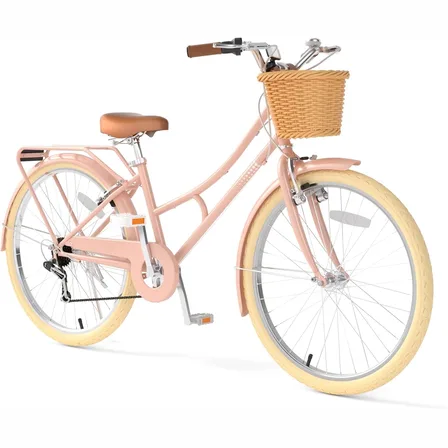
Pink XJD Beach Cruiser Bike, 24"/26", U-Brake
The XJD Pink Beach Cruiser Bike is a single-speed cruiser built for older kids a…$159.99
-
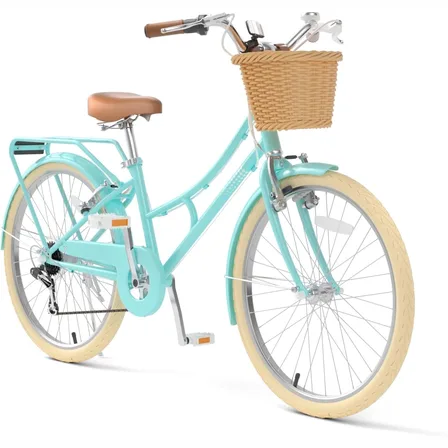
XJD Kids Beach Cruiser Bicycle, Rear Rack & V-Brakes, Mint Green
The XJD Beach Cruiser in Mint Green is a geared, multi-speed cruiser bike for ol…$179.99
$209.99