

Do little front mounted kids bike seat
A little front-mounted kids bike seat is relevant only if the seat, adult bicycle and child fit one another exactly. Before buying, measure the bicycle’s mounting area, check steering and pedalling clearance, confirm the child fits the seat’s stated limits, and follow both product manuals.
What to measure first
Identify the exact seat model and the adult bicycle that will carry it. Front-mounted designs can attach in different places, so a similar-looking bicycle is not proof of compatibility.
- Mounting area: Measure the location specified by the seat manufacturer, including tube dimensions and the clear space available around cables, controls and frame fittings.
- Steering clearance: Check whether the handlebar can turn through its usable range without the seat, child’s legs or mounting hardware interfering.
- Pedalling clearance: Make sure the rider can pedal and dismount without knees or feet striking the seat.
- Child fit: Compare the child’s current measurements with the seat maker’s fit and load limits. Do not estimate from age alone.
If the manual does not state that the seat and bicycle are compatible, ask the manufacturer or a qualified bicycle mechanic. Do not improvise brackets, torque settings or attachment procedures.
What to compare before choosing
Compare more than whether a clamp appears to fit. Review the seat manual for its permitted bicycle types, mounting requirements, child restraints, foot supports, load limit and installation checks. Then compare those requirements with the bicycle manual.
Also consider the adult rider’s position. A front seat changes the space available around the handlebar and top of the frame. The adult must still be able to steer, brake, start, stop and put a foot down with control. If the arrangement restricts any of those actions, that combination is not suitable.
Do a controlled fit check
- Install the seat exactly as its manual directs, using its specified hardware and settings.
- With no child aboard, check that the mount is secure and that steering, cables, brakes and pedals move without interference.
- Hold the bicycle stationary and confirm that the adult can mount, dismount and reach the controls naturally.
- Check the child’s restraints and foot containment according to the seat instructions.
- If anything shifts, rubs, obstructs control or remains uncertain, stop and have a qualified bicycle mechanic inspect it.
Maintenance intervals, fastener torque, replacement parts and maximum loads vary by product. Use the exact seat and bicycle manuals rather than a general online procedure.
Helmet and ride readiness
The child needs a properly fitting bicycle helmet that sits level, with straps adjusted according to the helmet manufacturer’s instructions. The adult rider should also use suitable protective equipment and choose conditions that match their present ability.
A mechanically compatible seat is not automatically a workable setup. Before carrying a child, the adult should be confident handling the bicycle’s altered balance and restricted cockpit space. If secure control cannot be maintained, choose a different compatible carrying arrangement.
How the supplied XBikes options relate
None of the supplied catalog products is identified as a front-mounted kids bike seat or as a bicycle approved to accept one. They therefore cannot establish seat compatibility. They are complete-bike comparison points for a child who may be ready to ride independently instead of being carried.
The Pink 12/14/16/20" XJD Girls Bike with Training Wheels & Basket offers catalog size labels of 12, 14, 16 and 20 Inch. The 26-Inch XJD Beach Cruiser Bike for Girls – Purple, V-Brake has 20, 24 and 26 Inch catalog options across its listed colours. The XJD 24-Inch Green Beach Cruiser Bike with U-Brake has listed 24- and 26-inch options. These choices help compare independent-rider wheel-size starting points; they are not front-seat substitutes or evidence that a seat will fit another bicycle.
 Pink 12/14/16/20" XJD Girls Bike with Training Wheels & Basket
A complete training-wheel bicycle offered in 12, 14, 16 and 20 Inch labels. It is relevant for comparing an independent-riding option, but it is not identified as a front-mounted child seat.
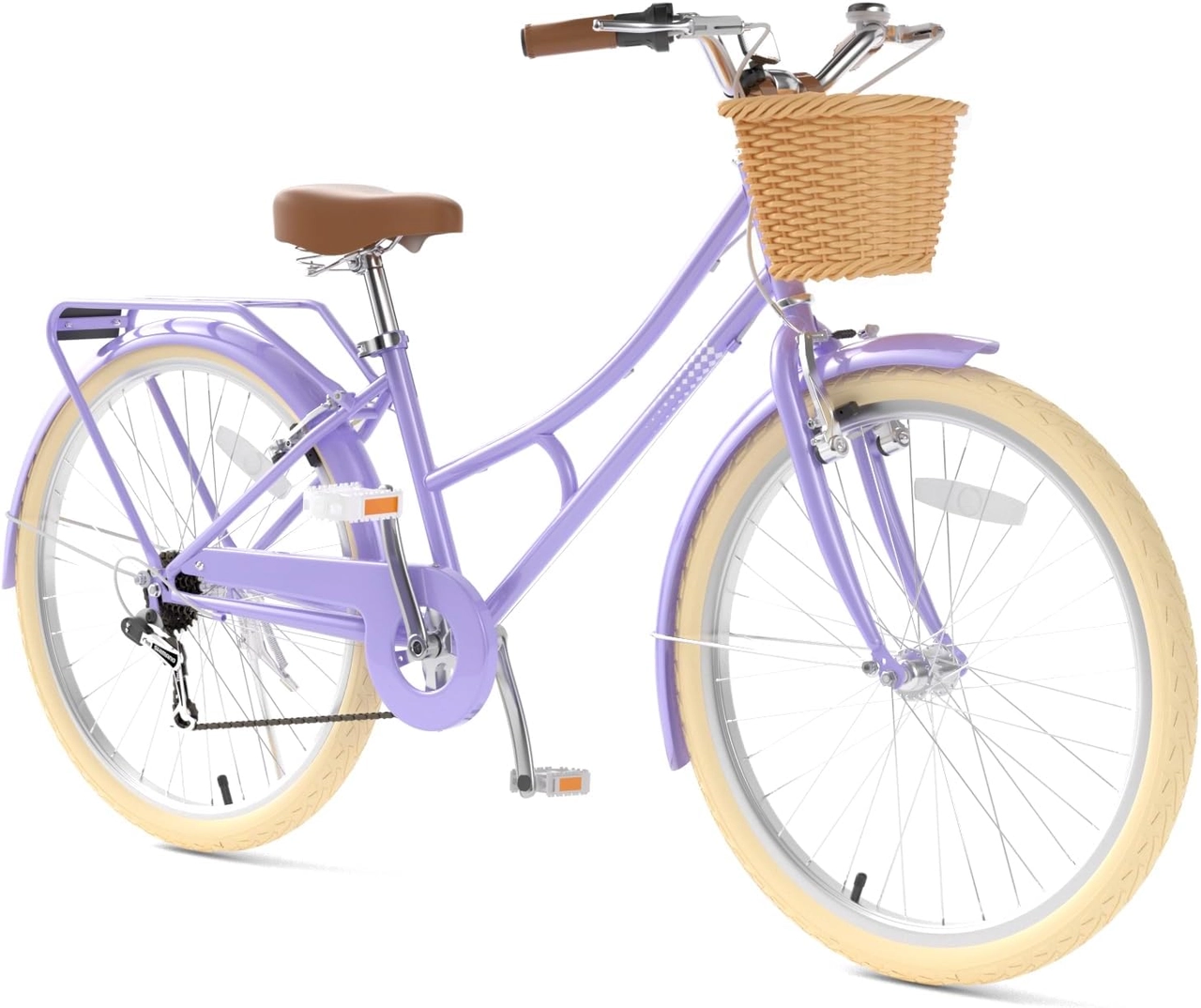 26-Inch XJD Beach Cruiser Bike for Girls – Purple, V-Brake
A complete beach cruiser with listed 20, 24 and 26 Inch options. It may inform an independent-rider size comparison but provides no evidence of front-seat compatibility.
 XJD 24-Inch Green Beach Cruiser Bike with U-Brake
A complete beach cruiser offered in listed 24- and 26-inch options. It is an independent-riding comparison point, not a front-mounted kids seat or proof that one can be installed.
If the child may ride independently
| Wheel size | XBikes starting point |
|---|---|
| 12 Inch | Ages 3–4; 34–40 in / 86–102 cm |
| 14 Inch | Ages 3–6; 37–45 in / 94–114 cm |
| 16 Inch | Ages 4–7; 40–48 in / 102–122 cm |
| 20 Inch | Ages 7–12; 48–60 in / 122–152 cm |
| 24 Inch | Ages 10–14; 54–64 in / 137–163 cm |
| 26 Inch | Youth and adults over 60 in / 153 cm |
These ranges are starting points, not guarantees. Measure the child’s height and inseam, then have the child try the bicycle. Check stand-over clearance, reach, brake control and current confidence. Do not buy an oversized bicycle merely to allow room for growth.
Your next decision
If you want to carry the child, locate the exact front-seat manual and compare its mounting and child-fit requirements with the adult bicycle before ordering. If the child is ready to ride, use the catalog bicycles only within their listed sizes, select a wheel-size starting point from measured height, and complete an individual fit check.
Bikes for your next adventure
-

Kids Bike Helmet by XJD for Boys & Girls – Black, Blue, Green, Pink, Purple
The XJD Kids Bike Helmet covers a wide 2-to-8-year age range thanks to two head-…$59.99
-

Kids Bike Helmet by XJD for Girls – Pink
The XJD Kids Bike Helmet in Pink is a lightweight multi-sport helmet for girls r…$59.99
$99 -

XJD Kids Bike for Girls – Pink, 12/14/16/20 Inch with Training Wheels
The XJD Kids Bike for Girls in Pink is a training-wheel bike built to carry your…$139
$159