

How a bicycle works for kids
A bicycle works for kids by turning pedal force into rear-wheel motion while steering, braking and balance keep the ride controlled. Correct fit lets a child operate each part confidently.
What happens when a child pedals
When the rider pushes a pedal, the crank turns. The bicycle’s drive system carries that rotation to the rear wheel, which pushes against the ground and moves the bicycle forward. The wheels rotate around their axles, while the tires provide contact with the riding surface.
The handlebars turn the front wheel to change direction. Brakes slow the rotating wheels when their controls are used. The rider also shifts body position and makes small steering corrections to keep the bicycle balanced. These actions overlap: a child must be able to pedal, look ahead, steer and stop without stretching or losing control.
Why fit affects how the bicycle works
A mechanically working bicycle may still be unsuitable for a particular child. Measure the child’s standing height and inseam, then have the child try the bicycle. Check that the child can stand over it, reach the handlebars without overextending, turn them comfortably and operate the brake controls securely.
Do not choose an oversized bicycle merely to allow room for growth. Age is only a starting point; measured height, inseam, reach, brake control and current confidence determine whether the child can actually use the bicycle.
| Wheel size | Age starting point | Rider-height starting point |
|---|---|---|
| 12 Inch | 3–4 | 34–40 in / 86–102 cm |
| 14 Inch | 3–6 | 37–45 in / 94–114 cm |
| 16 Inch | 4–7 | 40–48 in / 102–122 cm |
| 18 Inch | 5–9 | 43–52 in / 109–132 cm |
| 20 Inch | 7–12 | 48–60 in / 122–152 cm |
| 24 Inch | 10–14 | 54–64 in / 137–163 cm |
| 26 Inch | Youth and adults | Over 60 in / 153 cm |
What training wheels change
Training wheels add side support at low speed, so they can reduce how far the bicycle leans while a child practices pedaling and steering. They do not replace correct sizing, attentive supervision or learning to balance. The child must still reach the controls and stop the bicycle reliably.
The three supplied catalog options help illustrate how a child’s pedal bicycle can combine 12-, 14- or 16-inch sizing choices with training wheels. Compare their available size labels with the child’s measurements before considering color or title wording.
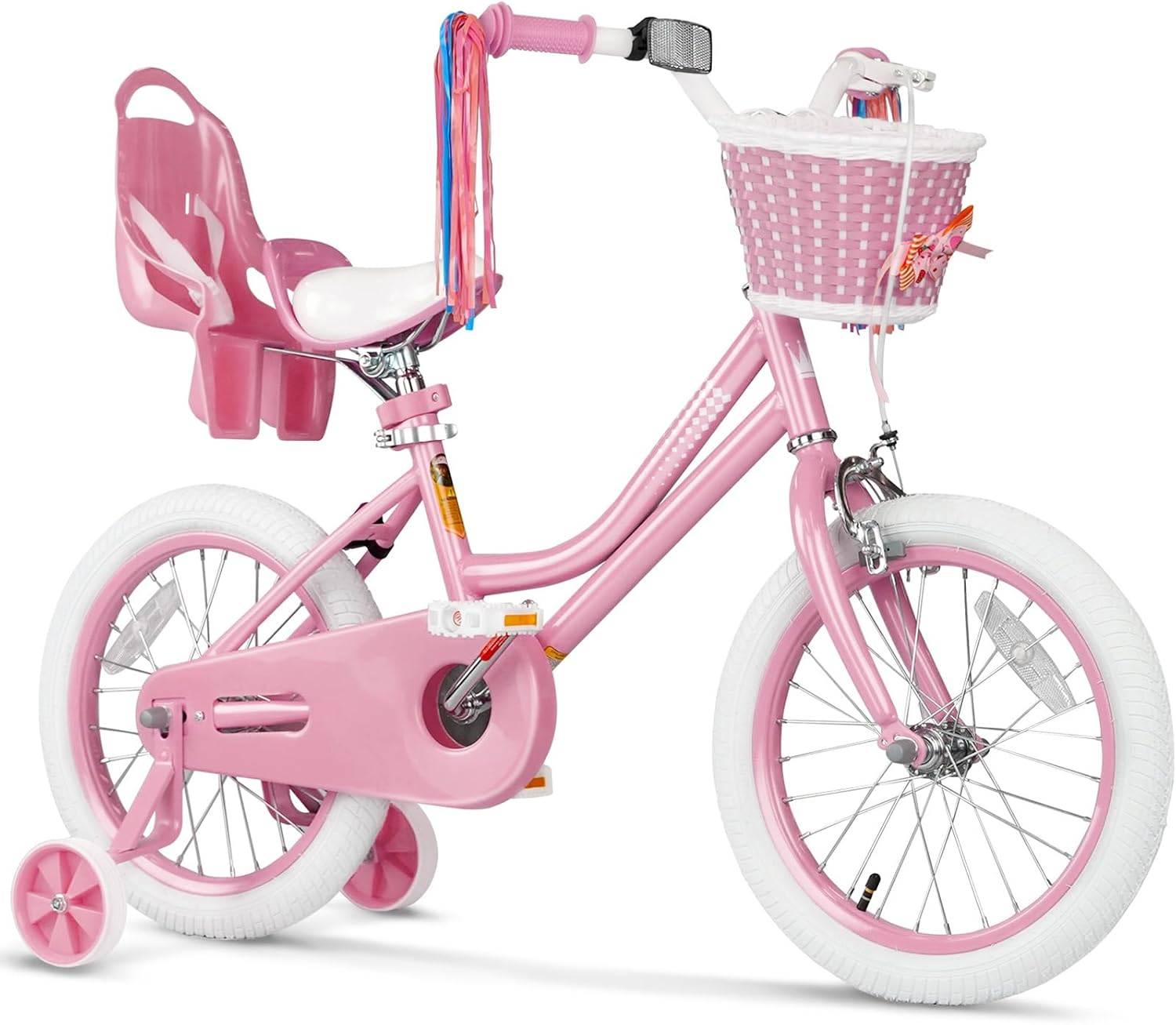 XJD Pink Girls' Bike – Kids 12/14/16 Inch Training Wheel Bicycle
A training-wheel bicycle offered in 12 Inch, 14 Inch and 16 Inch labels. It is relevant when the rider’s measurements and hands-on control check indicate one of those sizes.
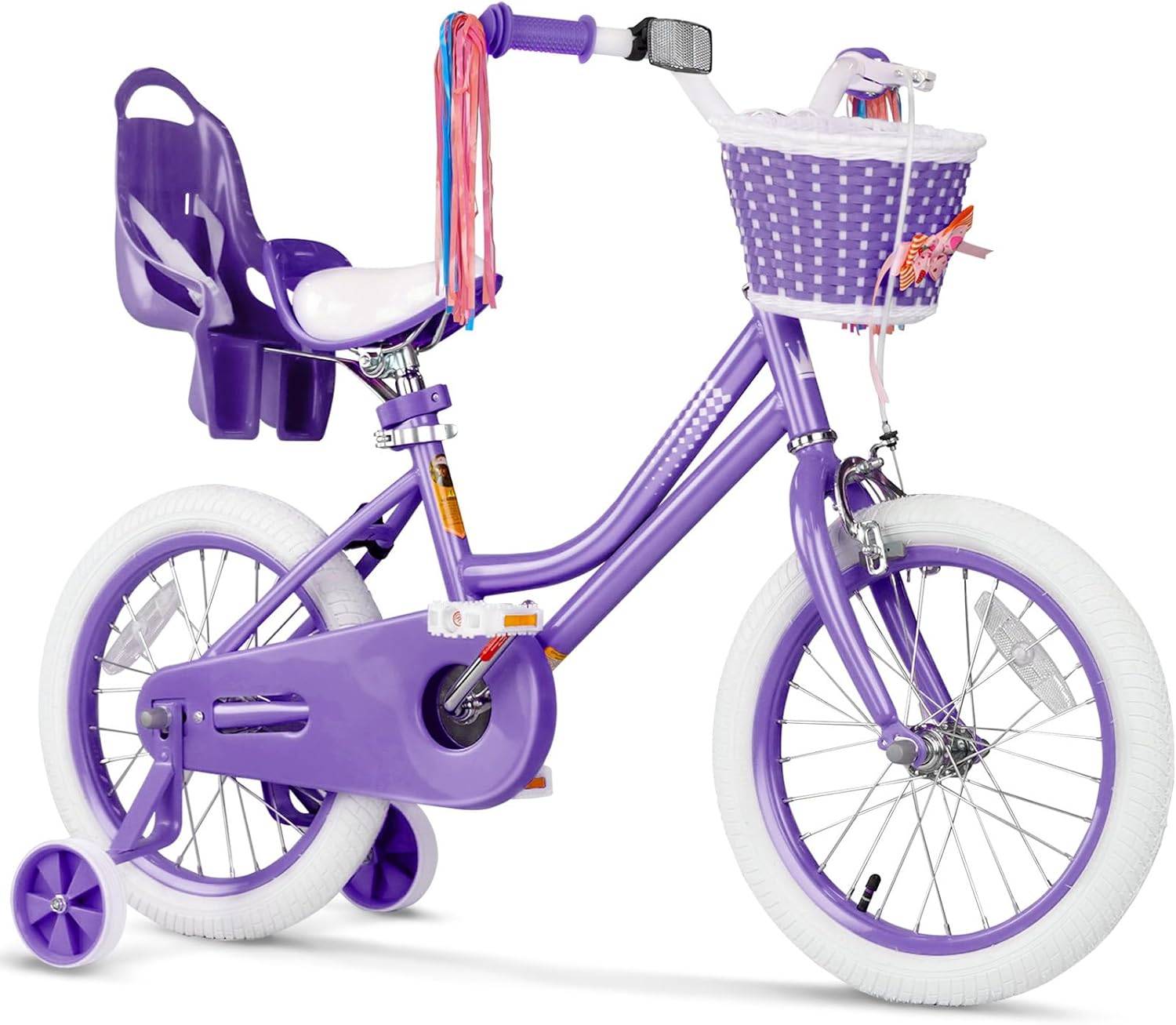 XJD Girls Bike for Kids Ages 3-8, 12/14/16 Inch with Training Wheels – Purple
A purple training-wheel bicycle with 12 Inch, 14 Inch and 16 Inch labels. The age wording is part of its catalog title; determine fit from measurements, reach, brake control and confidence.
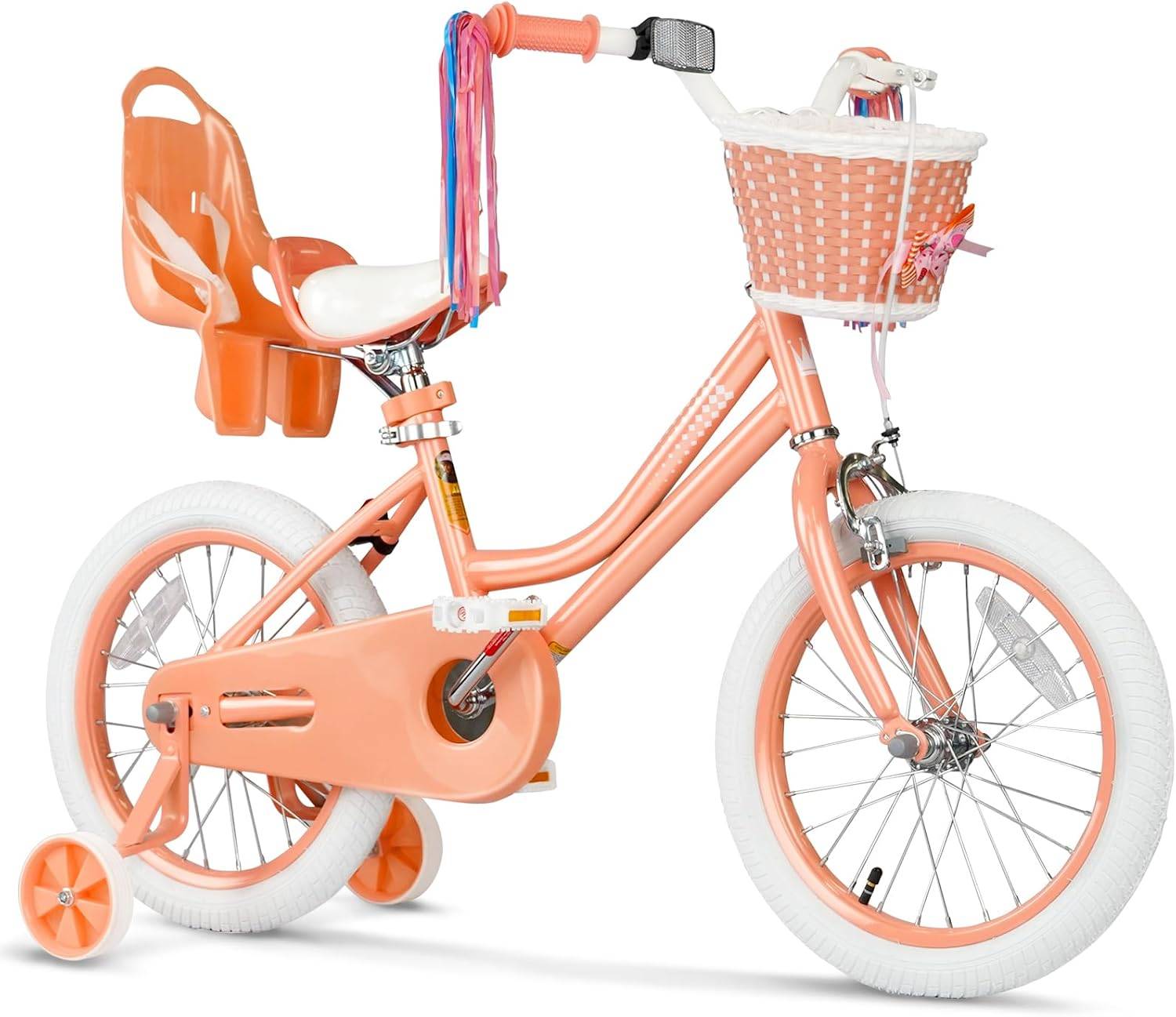 Girls 12/14/16 Inch Kids Bike by XJD with Training Wheels – Peach
A peach training-wheel bicycle available with 12 Inch, 14 Inch and 16 Inch labels. Compare those options with the XBikes height starting points, then confirm fit on the actual bicycle.
How the three catalog options compare
XJD Pink Girls' Bike – Kids 12/14/16 Inch Training Wheel Bicycle is categorized as a training-wheel bike and offers 12 Inch, 14 Inch and 16 Inch labels.
XJD Girls Bike for Kids Ages 3-8, 12/14/16 Inch with Training Wheels – Purple is also a training-wheel bike with 12 Inch, 14 Inch and 16 Inch labels. “Ages 3-8” is part of its catalog title, not proof that it fits every child in that span; use the XBikes size starting points and an individual fit check.
Girls 12/14/16 Inch Kids Bike by XJD with Training Wheels – Peach has the same supplied category and available wheel-size labels: 12 Inch, 14 Inch and 16 Inch. Based on the provided facts, the meaningful catalog differences are their exact titles and color wording. No supplied facts establish differences in brakes, weight, materials or other components.
These products are relevant only when the measured rider is considering a 12-, 14- or 16-inch training-wheel bicycle. If the fit check points to 18, 20, 24 or 26 inches, these are smaller comparison points, not substitutes for the indicated size.
Check control before the first ride
- Measure standing height and inseam, then use the table only to identify a starting wheel size.
- Have the child try that size and confirm comfortable stand-over clearance, handlebar reach and brake-control reach.
- Ask the child to demonstrate starting, steering and stopping in a quiet area with close adult supervision.
- Fit a bicycle helmet so it sits level, fits properly and uses its straps according to the helmet manufacturer’s instructions.
Assembly and adjustment affect how every part operates. Follow the exact bicycle manual for assembly, maintenance, compatibility, load limits and torque requirements. If the instructions are missing, unclear or the controls do not work smoothly, use a qualified bicycle mechanic rather than improvising.
The decision to make next
Measure first, select the wheel-size starting point, and then let the child prove comfortable reach, brake operation and control on the actual bicycle. Consider one of the three supplied training-wheel models only if its 12-, 14- or 16-inch option passes that fit check.
Bikes for your next adventure
-

Kids Bike Helmet by XJD for Boys & Girls – Black, Blue, Green, Pink, Purple
The XJD Kids Bike Helmet covers a wide 2-to-8-year age range thanks to two head-…$59.99
-

Kids Bike Helmet by XJD for Girls – Pink
The XJD Kids Bike Helmet in Pink is a lightweight multi-sport helmet for girls r…$59.99
$99 -

XJD Kids Bike for Girls – Pink, 12/14/16/20 Inch with Training Wheels
The XJD Kids Bike for Girls in Pink is a training-wheel bike built to carry your…$139
$159