

How bicycles work for kids
Kids’ bicycles work when a child pedals to turn the rear wheel, steers the front wheel to choose a direction, and uses the brakes to slow or stop.
How the bicycle moves and balances
Pedaling rotates the cranks. The bicycle’s drivetrain transfers that motion to the rear wheel, which pushes the bike forward. The handlebars turn the front wheel, while the rider’s body position and small steering corrections help keep the bicycle balanced.
Starting, balancing, steering and stopping are connected skills. A child needs enough leg room to pedal without feeling cramped, a comfortable reach to the handlebars, and reliable access to the brake controls. An oversized bicycle can make all three jobs harder, so extra growing room should not take priority over present control.
Measure the rider before comparing sizes
Measure the child’s standing height without shoes. Also measure inseam from the floor to the crotch while the child stands upright. Height provides a wheel-size starting point; inseam helps you assess stand-over clearance and whether the child can start and stop confidently.
| Wheel size | Starting age | Rider height |
|---|---|---|
| 12 Inch | 3–4 | 34–40 in / 86–102 cm |
| 14 Inch | 3–6 | 37–45 in / 94–114 cm |
| 16 Inch | 4–7 | 40–48 in / 102–122 cm |
| 18 Inch | 5–9 | 43–52 in / 109–132 cm |
| 20 Inch | 7–12 | 48–60 in / 122–152 cm |
| 24 Inch | 10–14 | 54–64 in / 137–163 cm |
| 26 Inch | Youth and adults | Over 60 in / 153 cm |
These ranges overlap because age does not determine body proportions or riding ability. Prioritize measured height, inseam, reach, brake control and current confidence. If measurements fall between sizes, compare both bicycles in person instead of automatically choosing the larger one.
Check whether the controls work for this child
Have the child try the bicycle. With the child standing over it, confirm that the frame does not prevent a comfortable, controlled stance. Seated, the rider should reach the handlebars without an extreme stretch or a cramped posture.
Ask the child to place their hands in the normal riding position and operate the brakes. They should be able to reach and use the controls without releasing their grip or straining. Then observe a slow start, a straight ride, a controlled turn and a deliberate stop in a traffic-free area. Difficulty with several of these tasks can indicate unsuitable fit, unfamiliar controls or a need for more practice.
What the supplied cruiser sizes help you compare
The XJD Kids Beach Cruiser Bicycle, Rear Rack & V-Brakes, Mint Green is listed in 20 Inch, 24 Inch and 26 Inch options. Those labels make it relevant when the measured rider falls near the corresponding XBikes height starting points. Its supplied facts also identify a rear rack and V-brakes, so the child’s brake reach and control should be checked on the actual bicycle. No load limit or rack-use instructions are supplied here; follow the exact product manual.
These particular catalog options help explain how the same bicycle listing can span distinct rider-height bands: compare the labeled wheel size with the measured child, then verify stand-over, reach and braking rather than treating the options as interchangeable.

The 20 Inch option is a starting point for riders 48–60 in / 122–152 cm; the 24 Inch option starts at 54–64 in / 137–163 cm; and the 26 Inch option is for youth and adults over 60 in / 153 cm. Overlap does not mean the sizes fit equally. If the child needs a 12, 14, 16 or 18 Inch bicycle, this product is only a larger-size comparison point and is not a substitute for the required wheel size.
Prepare the bicycle and helmet
Before riding, an adult should confirm that the bicycle is assembled and adjusted according to its exact manual. Check that the steering, wheels, pedals and brakes operate as intended. For any missing assembly step, torque value, maintenance interval, compatibility question or rack load limit, use the manual or ask a qualified bicycle mechanic rather than guessing.
A bicycle helmet must fit properly, sit level and have its straps adjusted according to the helmet manufacturer’s instructions. A helmet does not correct poor bicycle fit, so check the helmet and bicycle separately.
Make the final decision with a short ride
- Record the child’s height and inseam.
- Use the table to identify a starting wheel size.
- Have the child check stand-over clearance, handlebar reach and access to the brakes.
- Compare adjacent sizes only when the measurements overlap.
- Choose the bicycle on which the child can start, steer and stop with present confidence.
The practical answer to how bicycles work for kids is fit plus control: measure first, compare the appropriate size, and buy only after the child demonstrates a comfortable reach and controlled stop.
Bikes for your next adventure
-

XJD Boys 12/14/16" Training Wheel Bike – Blue
The XJD Boys Bike in Blue is a training wheel bike for riders 71–122 cm tall—rou…$169
$199 -
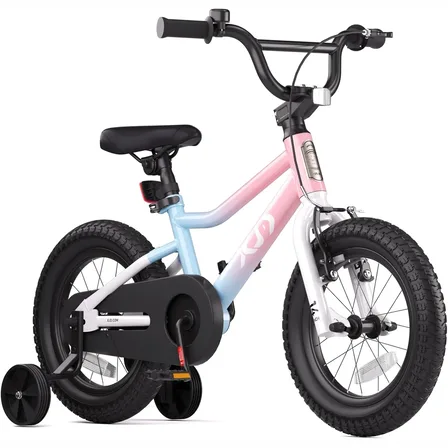
XJD Girls BMX Bike 12/14/16 Inch with Training Wheels – Pink Blue
The XJD Girls BMX Bike in Pink/Blue is built as a first pedal bike for kids roug…$99.99
$119.99 -
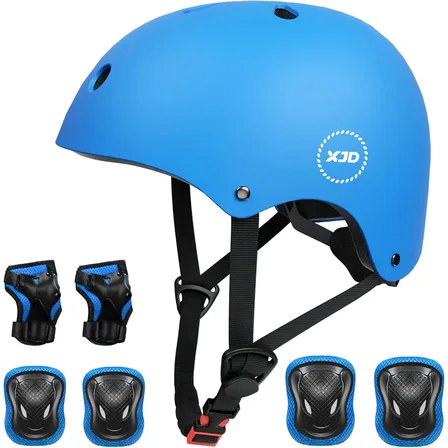
Blue XJD Helmet & Protective Gear Set for Kids, Sizes S/M
The Blue XJD Helmet & Protective Gear Set is made for kids roughly 3 to 8 years …$23.79