

How big is a 16 inch frame bike
A 16-inch kids’ bike usually means 16-inch wheels, not a 16-inch frame. It is a starting point for riders 40–48 in (102–122 cm) tall, typically ages 4–7, but the child must still try the bike.
What “16 inch” actually measures
On a children’s bike, “16 inch” normally identifies the wheel-size class. It does not tell you the physical height or length of the frame. Frame dimensions, saddle adjustment and handlebar position can differ between bikes with the same wheel label.
This distinction matters when comparing a product listing with a measurement taken at home. Do not measure the frame tube and expect it to be 16 inches. First confirm that the listing’s size label refers to the wheels, then use the rider checks below to decide whether the complete bike fits.
Measure the child before comparing sizes
- Measure standing height: Have the child stand without shoes, upright against a wall. Measure from the floor to the top of the head.
- Measure inseam: With feet slightly apart, measure from the floor to the crotch. This helps assess clearance over the bike and the child’s ability to reach the ground as intended by the manufacturer.
- Check the result: A measured height of 40–48 in (102–122 cm) places the rider in the XBikes 16-inch starting range.
Age is only a rough reference. Although 16-inch bikes start around ages 4–7, measured height, inseam, reach, brake control and current riding confidence take priority.
How large is it beside nearby wheel sizes?
| Wheel size | Rider-height starting point | Typical age |
|---|---|---|
| 14 Inch | 37–45 in / 94–114 cm | 3–6 |
| 16 Inch | 40–48 in / 102–122 cm | 4–7 |
| 18 Inch | 43–52 in / 109–132 cm | 5–9 |
The ranges overlap because two children of the same height may have different proportions and skill levels. A table can narrow the search, but it cannot establish fit by itself.
Perform the fit check on the actual bike
Have the child try the bicycle rather than buying an oversized model for future growth. With the bike held steady, check that the child can stand over it with appropriate clearance and can mount, start, steer and stop without being stretched or crowded.
While seated in a normal riding position, the child should reach the handlebars comfortably and operate the brakes with control. Watch for locked elbows, leaning excessively forward, difficulty turning the bars, or an inability to use the brakes confidently. These are reasons to compare another size or setup.
Use the exact product manual for permitted saddle and handlebar adjustments, assembly, maintenance, load limits and compatibility. If the manual is unavailable or the setup remains uncertain, use a qualified bicycle mechanic rather than improvising a procedure or adjustment limit.
How the supplied 16-inch options are relevant
The catalog includes two training-wheel bikes with selectable 12 Inch, 14 Inch and 16 Inch labels, so they let you compare the requested 16-inch class with two smaller listed sizes. They are relevant only when their 16 Inch SKU is selected and the individual fit check succeeds.
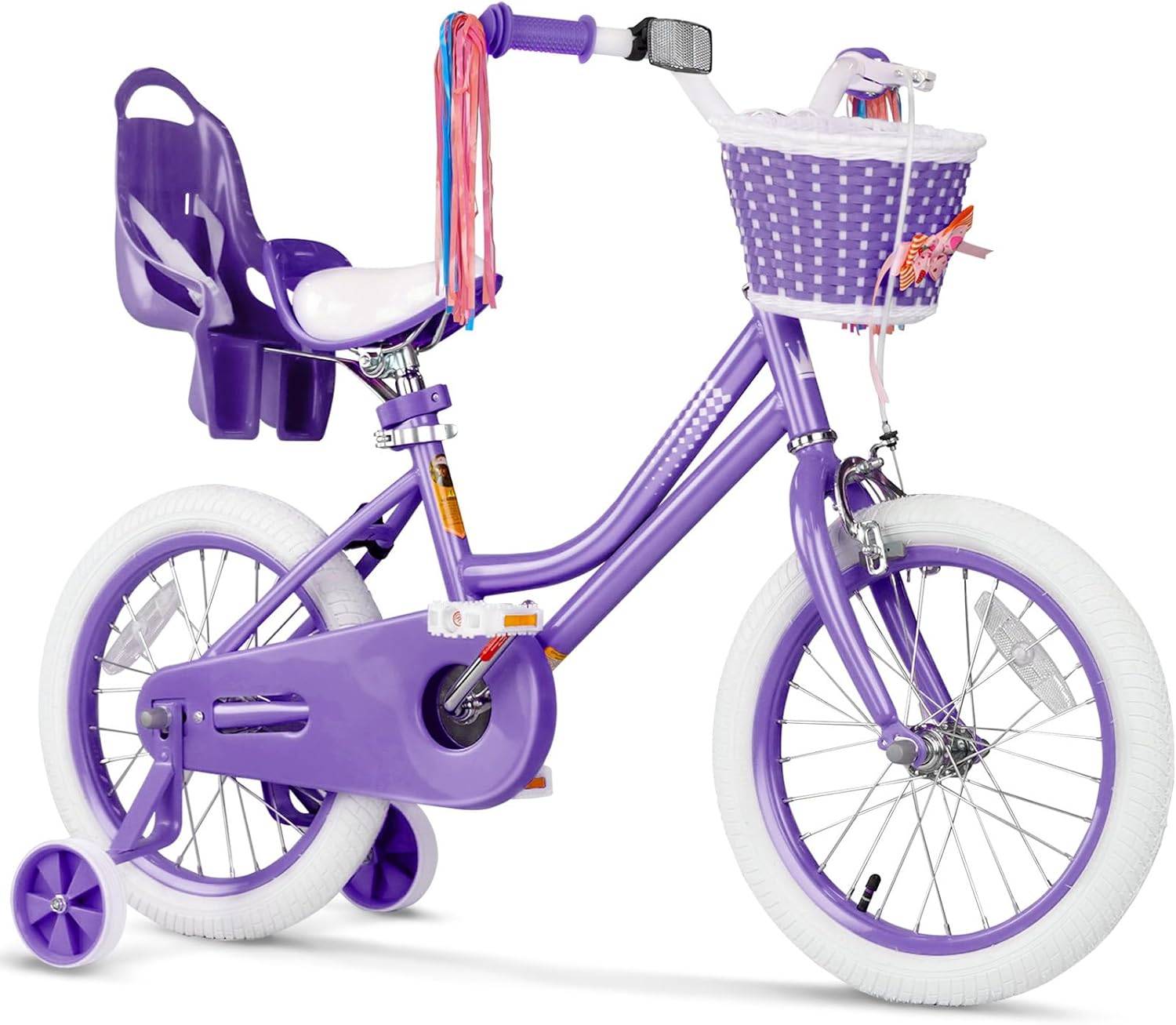 XJD Girls Bike for Kids Ages 3-8, 12/14/16 Inch with Training Wheels – Purple
Available with a 16 Inch SKU alongside 12 Inch and 14 Inch choices. This training-wheel bike is relevant for comparison only after checking the child’s measured height, inseam, reach, brake control and confidence.
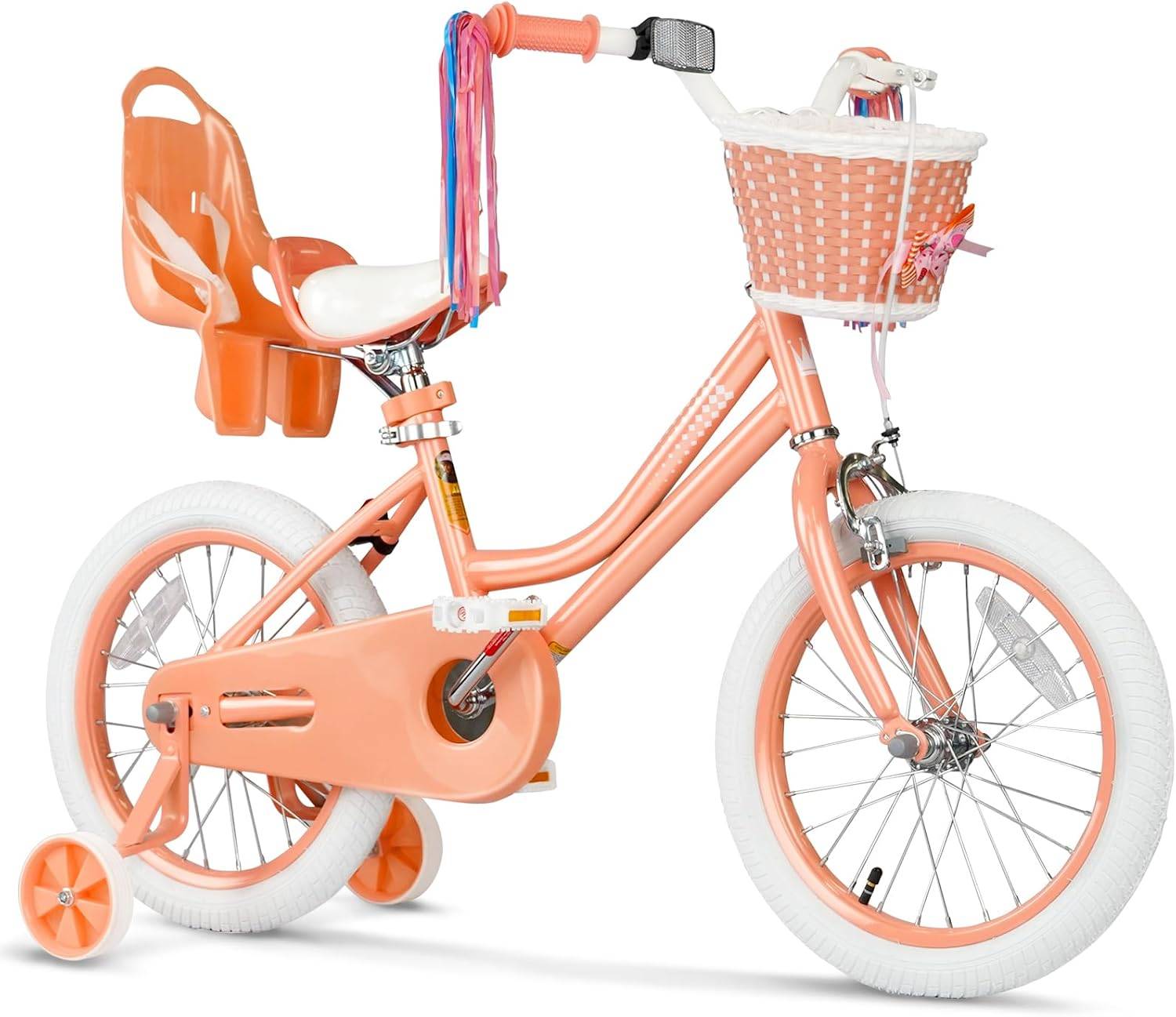 Girls 12/14/16 Inch Kids Bike by XJD with Training Wheels – Peach
Its supplied size labels include 12 Inch, 14 Inch and 16 Inch, and it is categorized as a training-wheel bike. The 16 Inch option is relevant when the rider passes an individual fit check.
XJD Girls Bike for Kids Ages 3-8, 12/14/16 Inch with Training Wheels – Purple is categorized as a training-wheel bike and is offered in 12 Inch, 14 Inch and 16 Inch SKU labels. The age wording in its title is a catalog label, not evidence that it fits a particular child.
Girls 12/14/16 Inch Kids Bike by XJD with Training Wheels – Peach is also categorized as a training-wheel bike with 12 Inch, 14 Inch and 16 Inch SKU labels. Select the 16 Inch option when assessing the size in this article; neither the color nor title establishes fit.
These products are relevant if training wheels suit the child’s current confidence. The supplied facts do not establish their frame dimensions, adjustment range, brake type, weight or other specifications, so consult the exact listing and product manual before deciding.
Make the final 16-inch decision
Choose the 16-inch class only when the child’s measured height is near the 40–48 in (102–122 cm) starting range and the actual bicycle passes the stand-over, reach, brake-control and confidence checks. Complete the setup with a properly fitting bicycle helmet worn level, with its straps adjusted according to the helmet manufacturer’s instructions. If the child cannot control the tried bike comfortably, compare another wheel size now instead of sizing up for growth.
Bikes for your next adventure
-

26-Inch XJD Beach Cruiser Bike for Girls – Purple, V-Brake
This XJD 26-inch purple beach cruiser is sized for big kids and teens — suggeste…$218.49
$229.99 -

Light Pink XJD Girls' Bicycle with Basket & Training Wheels
The Light Pink XJD Girls' Bicycle with Basket & Training Wheels is a retro-style…$109.99
$129.99 -
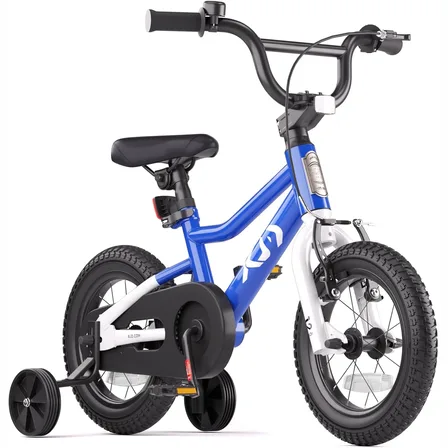
XJD Boys & Girls BMX Bike with Training Wheels, 12/14/16" – Blue
The XJD Boys & Girls BMX Bike in Blue is a first pedal bike for kids roughly age…$99.99
$119.99