

How big a bike for a 6 year old
A 6-year-old may fit a 14-, 16-, or 18-inch bike, but measured height and an in-person fit check should decide. Compare the child’s height with the XBikes ranges below, then confirm stand-over space, reach, brake control and confidence before buying.
Which wheel size should you check first?
For age six, the XBikes starting points overlap: a 14-inch bike covers 37–45 in (94–114 cm), a 16-inch bike covers 40–48 in (102–122 cm), and an 18-inch bike covers 43–52 in (109–132 cm). This overlap is normal. Age narrows the search, but it cannot identify the correct bike by itself.
| Wheel size | Starting age | Rider height |
|---|---|---|
| 12 Inch | 3–4 | 34–40 in / 86–102 cm |
| 14 Inch | 3–6 | 37–45 in / 94–114 cm |
| 16 Inch | 4–7 | 40–48 in / 102–122 cm |
| 18 Inch | 5–9 | 43–52 in / 109–132 cm |
| 20 Inch | 7–12 | 48–60 in / 122–152 cm |
| 24 Inch | 10–14 | 54–64 in / 137–163 cm |
| 26 Inch | Youth and adults | Over 60 in / 153 cm |
If the child is 44 in tall, for example, all three common age-six options overlap by height. The next step is therefore to try those candidate sizes rather than choosing the largest one automatically. A child outside the usual age band may still need a different size when measured height and actual control point that way.
Measure height and inseam before comparing bikes
Measure the child without shoes, standing straight against a wall. Record total height from the floor to the top of the head. Then measure inseam from the floor to the crotch while the child stands naturally. Height selects the wheel sizes worth trying; inseam helps you evaluate whether the child can stand over a particular frame comfortably.
Wheel size describes the wheels, not every frame dimension. Two bicycles with the same wheel label can differ in frame shape, saddle adjustment and reach. Because no frame measurements are supplied here, compare the child’s inseam with the exact bicycle and follow its product manual rather than assuming the wheel label guarantees clearance.
Perform the fit check with the child
The American Academy of Pediatrics advises having the child try the bicycle and avoiding an oversized bike bought solely for future growth. During the trial, check four things:
- Stand-over: The child should be able to straddle the frame without the frame interfering with a stable stance.
- Reach: The child should hold the handlebars without stretching, locking the elbows or losing a comfortable riding posture.
- Brake control: If the bike has hand controls, the child must be able to reach and operate them reliably while maintaining a secure grip.
- Confidence: Starting, steering, stopping and getting off should look controlled rather than hesitant or strained.
If a larger candidate compromises any of these checks, choose the smaller properly fitting option. Extra growing room does not compensate for poor present-day control.
How the supplied XBikes options help
The XJD Pink Girls' Bike – Kids 12/14/16 Inch Training Wheel Bicycle is listed under Training Wheel Bikes and has 12 Inch, 14 Inch and 16 Inch SKU labels. Those choices let you compare three nearby wheel sizes against the child’s measurement; for many six-year-olds, the 14- and 16-inch versions are the relevant starting comparisons.
These particular catalog options help answer the sizing question because their labeled sizes span the smaller XBikes height ranges and include two ranges that extend to age six. The 12-inch version is mainly a comparison point if the rider’s measured height is within 34–40 in (86–102 cm); its age starting point is 3–4, so age alone would not make it the expected choice for a six-year-old.

If the child measures 43–52 in (109–132 cm), an 18-inch bike also belongs in the fit comparison. The supplied product has no 18-inch SKU label, so its 14- and 16-inch versions are comparison options, not substitutes for an 18-inch bike when the individual fit check points to that size.
Training wheels do not determine frame fit
A training-wheel model may be relevant when the child is still developing balance confidence, but training wheels do not make an oversized or undersized frame fit correctly. First select a wheel-size candidate from measured height, then check stand-over, reach and control on that exact bicycle.
For assembly, adjustment, compatibility, load limits, maintenance and torque requirements, follow the exact product manual or use a qualified bicycle mechanic. Do not guess settings from another bicycle with the same wheel size.
Make the final size decision
Begin with the height range: try 14 inches at 37–45 in, 16 inches at 40–48 in, or 18 inches at 43–52 in. Where ranges overlap, choose only after the child demonstrates comfortable stand-over, natural reach, dependable brake control and current confidence.
Finish the setup with a properly fitting bicycle helmet. U.S. Consumer Product Safety Commission guidance says the helmet should sit level and its straps should be used according to the manufacturer’s instructions. For a 6-year-old, the right bike is the smallest suitable candidate that passes the complete fit-and-control check now—not the largest size the child may eventually grow into.
Bikes for your next adventure
-

26-Inch XJD Beach Cruiser Bike for Girls – Purple, V-Brake
This XJD 26-inch purple beach cruiser is sized for big kids and teens — suggeste…$218.49
$229.99 -

Light Pink XJD Girls' Bicycle with Basket & Training Wheels
The Light Pink XJD Girls' Bicycle with Basket & Training Wheels is a retro-style…$109.99
$129.99 -
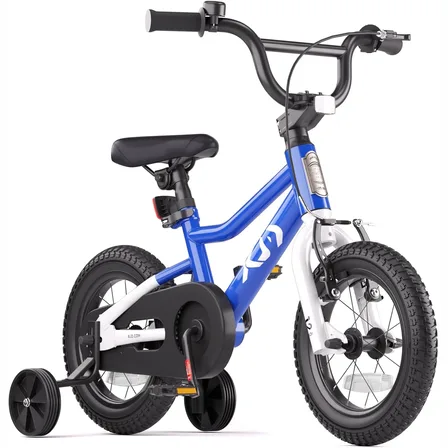
XJD Boys & Girls BMX Bike with Training Wheels, 12/14/16" – Blue
The XJD Boys & Girls BMX Bike in Blue is a first pedal bike for kids roughly age…$99.99
$119.99