

Can a 7 year old ride a 16 inch bike
Yes, a 7-year-old can ride a 16-inch bike if they are 40–48 inches (102–122 cm) tall and can comfortably stand over, reach and control it.
When a 16-inch bike is the right size
The XBikes starting range for a 16-inch bike is ages 4–7 and rider height 40–48 inches (102–122 cm). Because seven is the upper end of that age range, measure the child rather than deciding from age alone.
A seven-year-old near or below 48 inches may still fit a 16-inch bike. At 48 inches or taller, compare a 20-inch bike as well: its starting range is ages 7–12 and 48–60 inches (122–152 cm). These ranges narrow the choice, but they do not replace trying the bicycle.
Measure before comparing bikes
- Height: Have the child stand without shoes against a wall, looking straight ahead. Record the floor-to-head measurement.
- Inseam: With feet slightly apart, measure from the floor to the crotch. Use this when checking the bicycle’s stand-over space and available seat adjustment.
- Current bike: Note whether the child can start, stop, steer and put a foot down without leaning sharply or stretching.
Wheel size alone does not reveal frame shape, minimum seat position or reach. Compare the measurements with the exact bicycle’s specifications and manual. If those details are unavailable or the setup is uncertain, ask a qualified bicycle mechanic to perform the fit and assembly checks.
Do this hands-on fit check
Have the child try the bicycle while wearing the shoes they normally use for riding. Do not choose an oversized bike solely to leave room for growth.
- Stand-over: The child should be able to straddle the frame securely with both feet flat on the ground.
- Seated position: The saddle must adjust to a position that permits controlled pedalling and an easy foot-down response.
- Reach: The child should hold the handlebar without locking the elbows, leaning excessively forward or losing steering control.
- Brakes: If the bicycle has hand controls, the child must reach and operate them reliably. Confirm the exact controls on the specific product rather than assuming a brake type.
- Confidence: Ask for a slow start, turn and stop in a traffic-free practice area. Hesitation caused by size is a reason to reconsider the fit.
If the child cannot complete these checks comfortably, the 16-inch bike is not suitable even if their age and height fall within the starting range.
How the supplied 16-inch options help
All three supplied catalog bicycles offer a 16-inch SKU and are categorized as training-wheel bikes, so they are relevant options for comparing a 16-inch setup. Their other listed wheel sizes also help a parent compare adjacent choices, but the catalog information does not provide frame dimensions, brake details or adjustment ranges.
 XJD Kids Bike for Girls – Pink, 12/14/16/20 Inch with Training Wheels
Offers a 16-inch SKU and is the only supplied model also listing a 20-inch SKU, making it relevant for comparing the two XBikes size starting ranges.
 XJD Pink Girls' Bike – Kids 12/14/16 Inch Training Wheel Bicycle
Offers a 16-inch SKU within its listed 12-, 14- and 16-inch training-wheel options; confirm the child’s measurements, reach, brake control and confidence before choosing it.
 XJD Girls Bike for Kids Ages 3-8, 12/14/16 Inch with Training Wheels – Purple
Offers a 16-inch SKU with training wheels. The “Ages 3-8” wording is a catalog label, so it does not replace the XBikes height range or an individual fit check.
XJD Kids Bike for Girls – Pink, 12/14/16/20 Inch with Training Wheels lists 12-, 14-, 16- and 20-inch SKUs. It is the only supplied option that includes both the requested 16-inch size and a listed 20-inch comparison for a child at the boundary between those XBikes ranges.
XJD Pink Girls' Bike – Kids 12/14/16 Inch Training Wheel Bicycle lists 12-, 14- and 16-inch SKUs. Its 16-inch version matches the wheel size in question, but fit still depends on the child’s measurements and hands-on control.
XJD Girls Bike for Kids Ages 3-8, 12/14/16 Inch with Training Wheels – Purple also lists 12-, 14- and 16-inch SKUs. “Ages 3-8” is part of its catalog title, not proof that its 16-inch version fits any particular seven-year-old; use the XBikes 16-inch range and an individual fit check.
Training wheels may be relevant when the child is still developing balance confidence, but their presence does not correct a frame that is too large or too small. Follow the exact product manual for installation, adjustment, compatibility, maintenance and load limits, or use a qualified bicycle mechanic.
Make the final 16-inch decision
Before riding, use a bicycle helmet that fits properly, sits level and has straps adjusted according to its manufacturer’s instructions. Practice away from traffic while an adult checks starting, steering, braking and stopping control.
Choose the 16-inch bike only if the seven-year-old is within the 40–48-inch (102–122 cm) starting range and passes every stand-over, inseam, reach, brake-control and confidence check. If the child is 48 inches or taller, compare a 20-inch bike without assuming it will fit; if either size compromises control, do not buy for growth—try a different fit.
Bikes for your next adventure
-
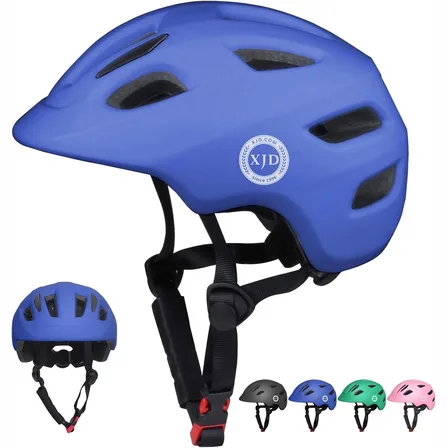
Blue XJD Kids' Bike Helmet, Adjustable Fit – Sizes XS & S
The Blue XJD Kids' Bike Helmet is a lightweight, adjustable helmet for toddlers …$20.39
-

XJD Girls Bike for Kids Ages 3-8, 12/14/16 Inch with Training Wheels – Purple
The XJD Girls Bike in Purple is a training-wheel bicycle for kids ages 3 to 8, f…$149
$169 -

Pink Girls' 12/14/16" Bike by XJD – Basket & Doll Seat
The XJD Pink Girls' Bike with Basket & Doll Seat is made for riders 71–122 cm ta…$75.99
$99.99