

How big is a 24 in bike
A 24-inch bike has nominal 24-inch wheels and typically fits riders 54–64 in (137–163 cm) tall, often ages 10–14, after an individual fit check.
What “24-inch bike” actually measures
The 24-inch label describes the bicycle’s wheel size, not its frame height, seat height, or overall length. Two 24-inch bikes can therefore feel different because their frame shapes, handlebar positions, and adjustment ranges may differ.
For comparison, a 24-inch wheel is about 4 inches larger in nominal diameter than a 20-inch wheel and 2 inches smaller than a 26-inch wheel. That difference matters, but wheel size alone cannot confirm whether a child can stand over, steer, stop, and handle the bicycle confidently.
Is a 24-inch bike the right size?
XBikes uses these wheel-size ranges as starting points. Measured rider height should take priority over age, and the bicycle still needs to be tried or carefully checked for the individual rider.
| Wheel label | Starting age | Rider height |
|---|---|---|
| 20 Inch | 7–12 | 48–60 in / 122–152 cm |
| 24 Inch | 10–14 | 54–64 in / 137–163 cm |
| 26 Inch | Youth and adults | Over 60 in / 153 cm |
The ranges overlap because height does not reveal leg length, arm length, coordination, or confidence. A shorter rider near 54 inches may still be more comfortable on a 20-inch bike, while a rider above 60 inches might compare both 24- and 26-inch options. Do not move up merely because of age or expected growth.
Measure the rider before comparing bikes
- Measure standing height: Have the child stand barefoot against a wall, looking straight ahead. Measure from the floor to the top of the head.
- Measure inseam: With feet slightly apart, place a firm, level book between the legs to represent the saddle area. Measure from the floor to the book’s top edge.
- Record both measurements: Use height to choose a starting wheel category and inseam to assess clearance on the actual bicycle.
Do not convert inseam into a guaranteed wheel size. Frame geometry varies, so compare the measurement with the exact bicycle and its manual rather than relying on a universal calculation.
Check the actual 24-inch bike
Have the child try the bicycle whenever possible. While straddling the frame with feet flat on the ground, the rider should have practical clearance rather than being pressed against the frame. Follow the exact product manual for its prescribed fit and adjustment limits.
Next, seat the rider in a normal riding position and check:
- Can the child reach the handlebars without stretching, locking the elbows, or losing a balanced posture?
- Can the child turn the bars both ways while remaining in control?
- Can the child comfortably reach and operate the supplied brake controls?
- Can the child start, stop, dismount, and place a foot down without panic or instability?
- Does the bike feel manageable at the rider’s current confidence level?
If the child cannot perform these checks, the bike is too large or otherwise unsuitable now, even if the age or height chart suggests 24 inches. Do not buy an oversized bicycle solely for the child to grow into.
How the supplied 24-inch options help
Both supplied catalog choices include the wheel size named in the title, so they are relevant as actual 24-inch comparison options rather than nearest-size substitutes. Their listed configurations also let you compare two beach cruiser catalog entries while keeping individual fit as the deciding factor.
 XJD Pink Beach Cruiser for Girls – Rear Rack & V-Brake
Available with a 24 Inch SKU label, alongside distinct 20 Inch and 26 Inch choices. Its supplied catalog facts also identify a rear rack and V-Brake; confirm individual fit and adjustments using the exact manual.
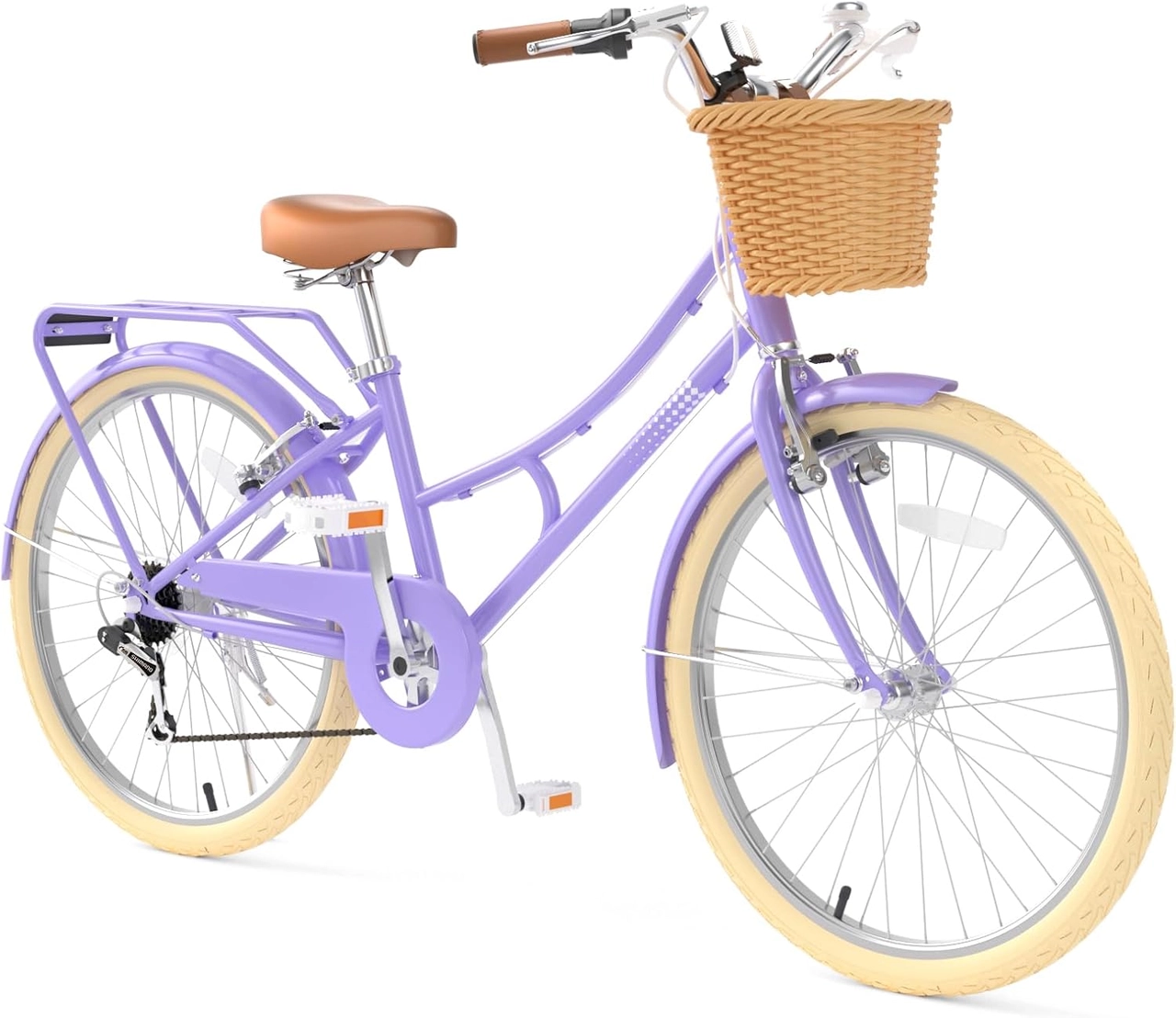 24-Inch Purple XJD Beach Cruiser Bike with U-Brake
Explicitly listed as a 24-inch beach cruiser with a U-Brake and a Default SKU label. It matches the requested wheel-size category, but the supplied facts do not establish rider fit or adjustment dimensions.
The XJD Pink Beach Cruiser for Girls – Rear Rack & V-Brake offers 20 Inch, 24 Inch, and 26 Inch SKU labels. Select the 24 Inch label when evaluating it for this question; the other labels are genuinely different wheel sizes, not equivalent versions of a 24-inch bike.
The 24-Inch Purple XJD Beach Cruiser Bike with U-Brake is explicitly identified as a 24-inch model and has a Default SKU label. The supplied facts distinguish its U-Brake wording from the V-Brake wording of the other option, but they do not provide dimensions, brake-reach measurements, weight, or adjustment ranges. Consult the exact manual or a qualified bicycle mechanic for those details.
Before the first ride
Use a properly fitting bicycle helmet. It should sit level and have its straps adjusted according to the helmet manufacturer’s instructions. Confirm that the bicycle is assembled and adjusted according to its exact product manual; if any assembly, compatibility, maintenance, load-limit, or torque detail is unclear, use a qualified bicycle mechanic.
The practical decision is simple: start with 24 inches for a rider measuring 54–64 inches tall, then choose it only if that specific bike passes the stand-over, reach, brake-control, handling, and confidence checks today.
Bikes for your next adventure
-

26-Inch XJD Beach Cruiser Bike for Girls – Purple, V-Brake
This XJD 26-inch purple beach cruiser is sized for big kids and teens — suggeste…$218.49
$229.99 -

Light Pink XJD Girls' Bicycle with Basket & Training Wheels
The Light Pink XJD Girls' Bicycle with Basket & Training Wheels is a retro-style…$109.99
$129.99 -
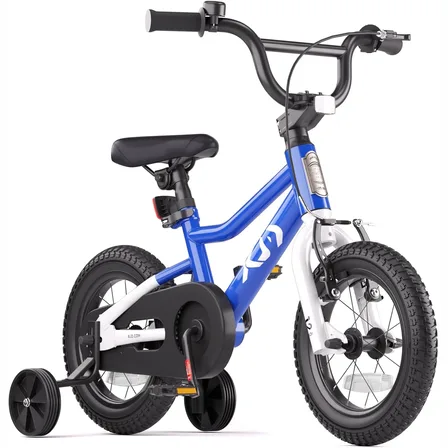
XJD Boys & Girls BMX Bike with Training Wheels, 12/14/16" – Blue
The XJD Boys & Girls BMX Bike in Blue is a first pedal bike for kids roughly age…$99.99
$119.99