

How big of a bike for 9 year old
For a 9-year-old, start by comparing 18-inch and 20-inch bikes, then choose by measured height, inseam, reach, brake control and confidence.
The useful starting point at age 9
An 18-inch bike is the XBikes starting point for ages 5–9 and heights of 43–52 inches (109–132 cm). A 20-inch bike is the starting point for ages 7–12 and heights of 48–60 inches (122–152 cm). Because those ranges overlap, age alone cannot decide between them.
If the child is 48–52 inches tall (122–132 cm), compare both sizes in person. Body proportions, skill and the particular bicycle can make one noticeably easier to control. Do not choose the larger option simply to leave growing room.
| Wheel size | XBikes age starting point | Rider-height starting point | Relevance at age 9 |
|---|---|---|---|
| 18 Inch | Ages 5–9 | 43–52 in / 109–132 cm | Compare for a shorter 9-year-old |
| 20 Inch | Ages 7–12 | 48–60 in / 122–152 cm | Compare for many riders this age |
| 24 Inch | Ages 10–14 | 54–64 in / 137–163 cm | Consider only when measurements and a real fit check support it |
| 26 Inch | Youth and adults | Over 60 in / 153 cm | Not an age-based default for a 9-year-old |
Measure before comparing bikes
Measure the child without shoes against a wall for height. For inseam, have the child stand straight with feet slightly apart, then measure from the floor to the crotch. Record both measurements rather than relying on a remembered clothing size.
Use height to identify likely wheel sizes from the table. Then use inseam during the physical fit check: the child needs practical clearance when standing over the bicycle. Wheel size is only a category label; frame shape and adjustment range can affect how a specific bike feels.
What the child should do on the bike
Have the child try the exact bicycle while wearing the shoes normally used for riding. A suitable candidate should let the rider mount and stop without struggling, stand over it with clearance, hold the handlebar without an uncomfortable stretch, and steer without shifting the body forward just to reach.
Check every brake control fitted to the bicycle. The child must be able to reach and operate it confidently while maintaining a secure grip and balanced riding position. Also watch for controlled starting, turning and stopping. If the rider appears tense, cannot manage the controls or has difficulty handling the bicycle at low speed, try another fit rather than expecting confidence to compensate for excess size.
How the supplied 20-inch options help
The supplied catalog contains two training-wheel bike options with 12-, 14-, 16- and 20-inch SKU labels. Their 20-inch versions are relevant comparison points for a 9-year-old within the 48–60 inch height starting range, particularly when current confidence makes a training-wheel category worth considering. Neither supplied product offers an 18- or 24-inch label, so they are not substitutes when the fit check points to either of those sizes.
 Girls' Training Wheel Bike by XJD, 12–20 Inch Wheels – Blue
Its 20-inch SKU label is relevant when a 9-year-old measures within the 48–60 inch starting range and passes an individual fit check. It is cataloged as a training-wheel bike and does not provide an 18- or 24-inch option.
 XJD Girls' Bike with Training Wheels, 12/14/16/20 Inch – Purple
This training-wheel bike includes a 20-inch SKU label that can be compared for riders measuring 48–60 inches. Its supplied sizes do not include 18 or 24 inches, so the fit result may point beyond this product.
Girls' Training Wheel Bike by XJD, 12–20 Inch Wheels – Blue and XJD Girls' Bike with Training Wheels, 12/14/16/20 Inch – Purple have the same supplied size-label choices: 12, 14, 16 and 20 inches. Based on the available facts, color and exact title distinguish them; no further fit, component or performance difference is established.
For this age, focus on each product's 20-inch option only if the child's measurement and trial support it. The smaller listed options correspond to younger or shorter XBikes starting ranges and should not be selected merely because the child is cautious.
Finish the fit and safety check
- Reject a bicycle that the child cannot comfortably stand over, reach or control.
- Do not buy an oversized bicycle for future growth.
- Confirm that adjustments remain within the limits stated in the exact product manual.
- For assembly, maintenance, compatibility, load limits or torque, follow that manual or use a qualified bicycle mechanic.
- Use a properly fitting bicycle helmet. It should sit level, with straps adjusted according to the helmet manufacturer's instructions.
Your next decision
Measure height and inseam now. Compare 18 and 20 inches if the child is in their overlapping range, and add 24 inches only when the height starting point and an individual trial justify it. Choose the bike on which this 9-year-old can stand over, reach the controls, brake, turn and stop with present-day confidence.
Bikes for your next adventure
-

26-Inch XJD Beach Cruiser Bike for Girls – Purple, V-Brake
This XJD 26-inch purple beach cruiser is sized for big kids and teens — suggeste…$218.49
$229.99 -

Light Pink XJD Girls' Bicycle with Basket & Training Wheels
The Light Pink XJD Girls' Bicycle with Basket & Training Wheels is a retro-style…$109.99
$129.99 -
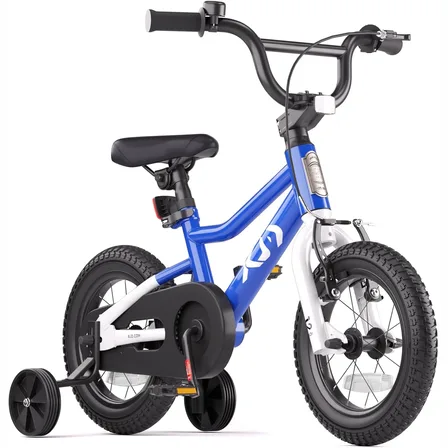
XJD Boys & Girls BMX Bike with Training Wheels, 12/14/16" – Blue
The XJD Boys & Girls BMX Bike in Blue is a first pedal bike for kids roughly age…$99.99
$119.99