

How big of a bike for a 11 year old
Most 11-year-olds should start by comparing 20-inch and 24-inch bikes: use 20 inches for a rider 48–60 inches tall, or 24 inches for 54–64 inches. Measure the child and confirm the fit before choosing.
Choose by height, not age alone
At age 11, a child can fall within more than one wheel-size range. The overlap does not mean the sizes fit equally; frame shape, leg length, reach, brake access and riding confidence determine which bicycle the child can control.
| Wheel size | XBikes starting range | What it means for an 11-year-old |
|---|---|---|
| 20 Inch | Ages 7–12; 48–60 in / 122–152 cm | Compare when the rider is within this height range, especially if a lower, easier-to-control setup is needed. |
| 24 Inch | Ages 10–14; 54–64 in / 137–163 cm | Compare when the rider is at least 54 inches tall and can comfortably manage the complete fit check. |
| 26 Inch | Youth and adults over 60 in / 153 cm | Consider only for a rider over 60 inches tall who can control the bike confidently. |
Do not move an 11-year-old to a larger bicycle merely to leave room for growth. A bike that is too large can make starting, stopping, steering and reaching the brakes harder.
Take two measurements first
- Height: Have the child stand barefoot against a wall, looking straight ahead. Measure from the floor to the top of the head, then compare that result with the ranges above.
- Inseam: With feet slightly apart, measure from the floor to the crotch. Use this measurement during an actual stand-over check; wheel diameter alone does not reveal frame clearance.
If height points to the overlap between 20-inch and 24-inch bikes, do not decide from the age label. Try both appropriate candidates and choose according to control, not anticipated growth.
Perform the fit check
Have the child try the bicycle while wearing the shoes normally used for riding. With the child straddling the frame, confirm there is comfortable clearance rather than contact. Seated, the rider should be able to hold the handlebar without stretching, twisting the torso or locking the elbows.
Next, ask the child to operate every brake control from the normal riding position. The controls must be reachable and usable without releasing the handlebar or straining the hands. Then check whether the rider can start, steer, turn and stop under control. Current confidence matters: a technically plausible size is still unsuitable if the child cannot manage it calmly.
If either size produces uncertain stand-over clearance, excessive reach or poor brake control, do not buy it for the child to grow into. Follow the exact product manual for adjustment and assembly, or have a qualified bicycle mechanic assess the setup.
How the supplied bikes help with comparison
The catalog choices below provide concrete 20-inch, 24-inch and 26-inch comparison points, plus smaller training-wheel models that show why a title or age assumption cannot replace checking the available size and the individual rider.
 XJD Kids Bike for Girls – Pink, 12/14/16/20 Inch with Training Wheels
The supplied 20-inch option matches the relevant XBikes 48–60-inch rider-height starting range, but the child must still pass stand-over, reach, brake-control and confidence checks.
 XJD Light Purple Girls Bike with Basket, Training Wheels, 12/14/16/20 Inch
Its supplied available SKU labels are 12, 14 and 16 inches, which are generally below the starting sizes relevant to an 11-year-old; the 20-inch wording appears only in the exact catalog title.
 XJD Kids Beach Cruiser Bicycle, Rear Rack & V-Brakes, Mint Green
Supplied in 20-, 24- and 26-inch labels, this model provides useful comparison points across the relevant height bands. Its rear rack and V-brakes do not determine whether the individual rider fits.
XJD Kids Bike for Girls – Pink, 12/14/16/20 Inch with Training Wheels has supplied size labels of 12, 14, 16 and 20 inches. For an 11-year-old, only its 20-inch option falls within the relevant age-and-height starting range, and it still requires the complete fit check.
XJD Light Purple Girls Bike with Basket, Training Wheels, 12/14/16/20 Inch has supplied available SKU labels of 12, 14 and 16 inches, despite “20 Inch” appearing in its exact catalog title. Those available sizes are below the usual XBikes starting sizes for an 11-year-old, so this product is generally not a relevant candidate for the question.
XJD Kids Beach Cruiser Bicycle, Rear Rack & V-Brakes, Mint Green has supplied 20-inch, 24-inch and 26-inch labels. It therefore allows comparison across the likely height bands, but the rear rack and V-brakes do not establish fit. Check stand-over clearance, reach and brake operation on the chosen size.
Make the final size decision
Start with the measured height: compare 20 inches at 48–60 inches tall, 24 inches at 54–64 inches, or 26 inches only above 60 inches. Where ranges overlap, select the bicycle the child can straddle, reach, steer and stop confidently today.
Before riding, provide a properly fitting bicycle helmet. It should sit level and its straps should be adjusted according to the helmet manufacturer’s instructions. For this 11-year-old, proceed only after both the body measurements and hands-on control check support the same size.
Bikes for your next adventure
-

26-Inch XJD Beach Cruiser Bike for Girls – Purple, V-Brake
This XJD 26-inch purple beach cruiser is sized for big kids and teens — suggeste…$218.49
$229.99 -

Light Pink XJD Girls' Bicycle with Basket & Training Wheels
The Light Pink XJD Girls' Bicycle with Basket & Training Wheels is a retro-style…$109.99
$129.99 -
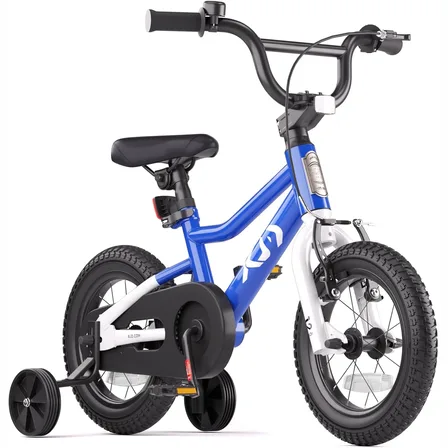
XJD Boys & Girls BMX Bike with Training Wheels, 12/14/16" – Blue
The XJD Boys & Girls BMX Bike in Blue is a first pedal bike for kids roughly age…$99.99
$119.99