

How big of bike for 6 year old
For a 6-year-old, compare 14-, 16- and 18-inch bikes, but choose by measured height and an in-person fit check—not age alone.
Which wheel size should you check first?
Measure the child’s height without shoes, then use the XBikes starting points below. Many 6-year-olds fall within more than one range, so the chart narrows the options rather than making the final decision.
| Wheel size | Starting age | Rider height |
|---|---|---|
| 14 Inch | 3–6 | 37–45 in / 94–114 cm |
| 16 Inch | 4–7 | 40–48 in / 102–122 cm |
| 18 Inch | 5–9 | 43–52 in / 109–132 cm |
| 20 Inch | 7–12 | 48–60 in / 122–152 cm |
A child measuring 40–45 inches overlaps the 14- and 16-inch starting ranges. At 43–48 inches, the 16- and 18-inch ranges overlap. Compare both applicable sizes in person and favor the bike the child can control now. If the child is 48 inches or taller, a 20-inch model enters the comparison, even though its age starting point is seven.
Measure height, inseam and reach
Height identifies likely wheel sizes. Inseam and reach reveal whether a particular frame actually fits, because two bikes with the same wheel size can position a rider differently.
- Measure standing height without shoes against a wall.
- Measure inseam from the floor to the crotch while the child stands straight with feet slightly apart.
- Have the child straddle the actual bicycle. There should be comfortable clearance rather than contact with the frame.
- Seat the child and check that the handlebar can be reached without an exaggerated stretch or locked elbows.
- Confirm that the child can operate the brakes confidently with the controls within easy reach.
Use the product manual for the exact adjustment limits and assembly instructions. If the correct setup is uncertain, ask a qualified bicycle mechanic rather than improvising a procedure or adjustment.
What a successful test ride looks like
Have the child try the bicycle in a clear, controlled area. They should be able to start, steer, look ahead, stop and get off without the bike pulling them off balance. Watch for tense shoulders, difficulty turning the handlebar, trouble reaching the brakes or an inability to stop predictably.
Current confidence matters. A newer or hesitant rider may control the smaller of two properly fitting options more easily, while a confident rider may be comfortable on the larger option if stand-over clearance, reach and brake control all remain sound. Never move up simply to create room for growth; an oversized bicycle can make starting, steering and stopping harder.
How the supplied bike helps with the comparison
The XJD Pink Girls' Bike – Kids 12/14/16 Inch Training Wheel Bicycle is a training-wheel bike offered in 12 Inch, 14 Inch and 16 Inch SKU labels. For a typical size comparison at age six, its 14- and 16-inch versions let you compare two relevant XBikes starting ranges. The 12-inch version starts at ages 3–4 and heights 34–40 inches / 86–102 cm, so it is generally relevant only when the measured child fits that smaller height range. This catalog option does not include an 18-inch or 20-inch label; if measurement points there, treat the listed versions as comparison points, not substitutes.
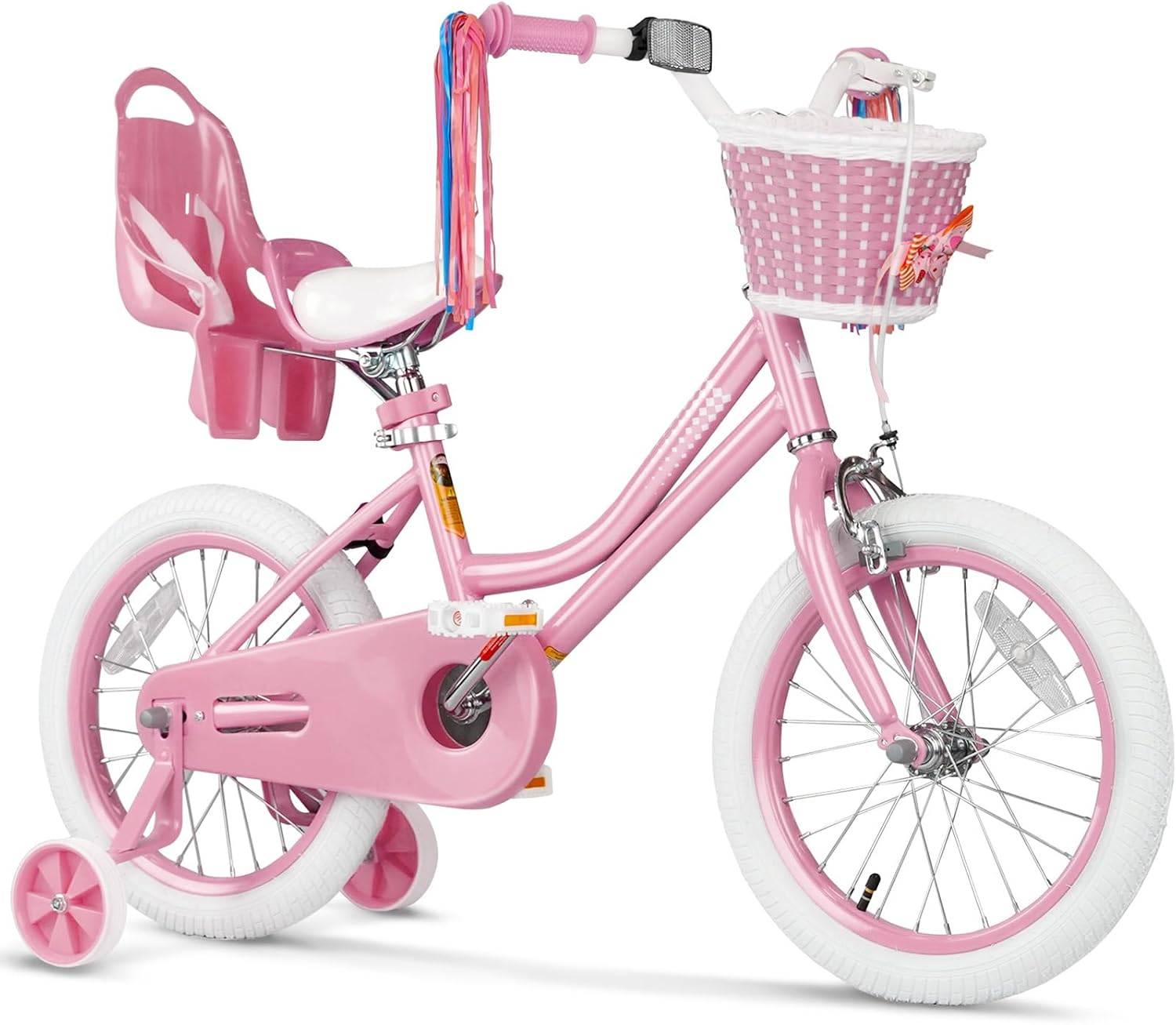
Training wheels may be relevant when the child still needs that type of support. They do not correct poor frame fit, excessive reach or inaccessible brake controls. Check the exact selected SKU on the child, and follow its product manual for assembly, adjustments, compatibility and limits that are not stated here.
Do not skip the helmet check
A bicycle helmet must fit the child properly, sit level on the head and use its straps according to the helmet manufacturer’s instructions. Check helmet fit separately from bike size; a well-fitting bicycle does not compensate for a loose, tilted or incorrectly fastened helmet.
Your next decision
Measure the child first, shortlist every wheel size whose height range includes that measurement, and arrange a real fit check. At age six, that will often mean comparing 14 versus 16 inches or 16 versus 18 inches. Choose only after the child demonstrates comfortable stand-over clearance, natural reach, reliable brake operation and confident control—then buy the size that fits today, not an oversized bike intended for later growth.
Bikes for your next adventure
-

26-Inch XJD Beach Cruiser Bike for Girls – Purple, V-Brake
This XJD 26-inch purple beach cruiser is sized for big kids and teens — suggeste…$218.49
$229.99 -

Light Pink XJD Girls' Bicycle with Basket & Training Wheels
The Light Pink XJD Girls' Bicycle with Basket & Training Wheels is a retro-style…$109.99
$129.99 -
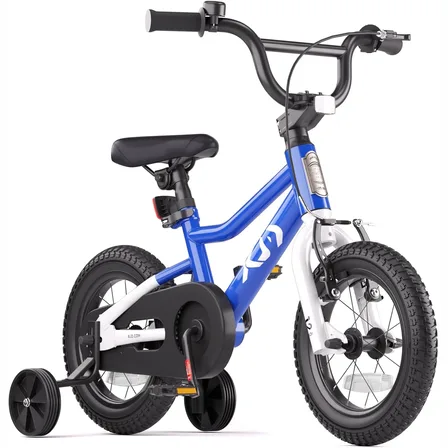
XJD Boys & Girls BMX Bike with Training Wheels, 12/14/16" – Blue
The XJD Boys & Girls BMX Bike in Blue is a first pedal bike for kids roughly age…$99.99
$119.99