

How high is a 24 inch bike
A 24-inch bike has wheels about 24 inches in diameter; that number is not the bike’s total height. For fit, measure the rider—not the bicycle—and compare height, inseam, reach, brake control and confidence.
What “24 inch” actually measures
The label refers to the nominal wheel size. It does not tell you the height of the saddle, handlebar or frame, and it cannot predict exactly how high the rider will sit. Those dimensions can differ between bicycle designs even when both are labeled 24 Inch.
Therefore, there is no single reliable answer in inches or centimeters for the total height of every 24-inch bike. Use the wheel label to identify the size class, then use the individual bicycle and rider for the real fit decision.
Who should start by trying a 24-inch bike?
The XBikes starting point for a 24 Inch bicycle is ages 10–14 and a rider height of 54–64 in (137–163 cm). Height is more useful than age because children of the same age can have different proportions, reach and riding ability.
| Wheel size | Starting rider height | Starting age |
|---|---|---|
| 20 Inch | 48–60 in / 122–152 cm | 7–12 |
| 24 Inch | 54–64 in / 137–163 cm | 10–14 |
| 26 Inch | Over 60 in / 153 cm | Youth and adults |
These ranges overlap intentionally: a height number narrows the search but does not settle the choice. Do not move a child to a larger bicycle merely because they fall near the top of an age band or because you want room for growth.
Measure before comparing bicycles
- Standing height: Have the rider stand straight without shoes against a wall. Measure from the floor to the top of the head.
- Inseam: With feet slightly apart, measure from the floor to the crotch. Use this measurement when checking clearance over the actual frame.
- Current confidence: Note whether the child starts, stops, turns and balances comfortably. A hesitant rider may need easier control rather than a larger wheel.
Use the measured standing height to compare with the XBikes range first. Keep the inseam available for the in-person stand-over check; wheel diameter alone does not reveal frame clearance.
Check how high the actual bike feels
Have the child try the bicycle. When standing over the frame, the rider needs suitable clearance rather than being pressed against it. Seated, they should be able to reach the handlebar without an uncomfortable stretch or a cramped posture.
Ask the child to hold the bicycle upright and operate each brake control. They should reach and use the controls reliably without shifting their hands into an insecure position. Also check that they can mount, start, steer, stop and dismount with control.
If the child cannot stand over the frame appropriately, reach the controls, or handle the bike confidently, that particular 24-inch model is too high or otherwise unsuitable now—even when the child’s height sits inside the starting range. Do not treat lowering a saddle as a remedy for every frame or reach mismatch.
How the supplied 24-inch options help
Both catalog options let you compare bicycles carrying the requested 24-inch size. XJD Pink Beach Cruiser for Girls – Rear Rack & V-Brake offers 20 Inch, 24 Inch and 26 Inch SKU labels, making it relevant when comparing adjacent size labels. 24-Inch Purple XJD Beach Cruiser Bike with U-Brake names the 24-inch size directly. Their catalog categories identify both as Beach Cruiser Bikes, but those facts do not establish identical frame height or fit.
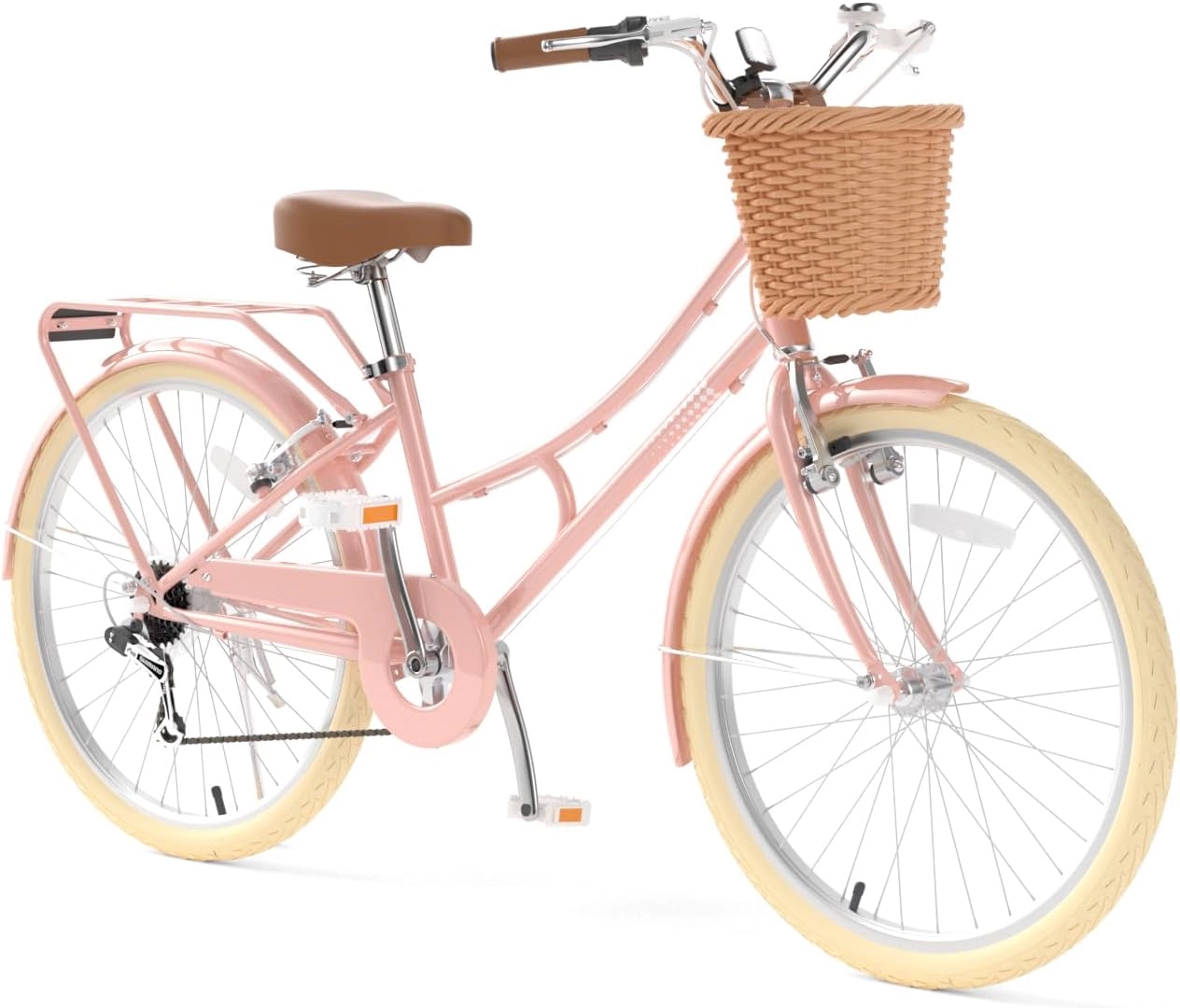 XJD Pink Beach Cruiser for Girls – Rear Rack & V-Brake
Available with 20 Inch, 24 Inch and 26 Inch SKU labels, this Beach Cruiser Bike helps compare adjacent size labels. Select the 24 Inch SKU for this question and still verify individual fit.
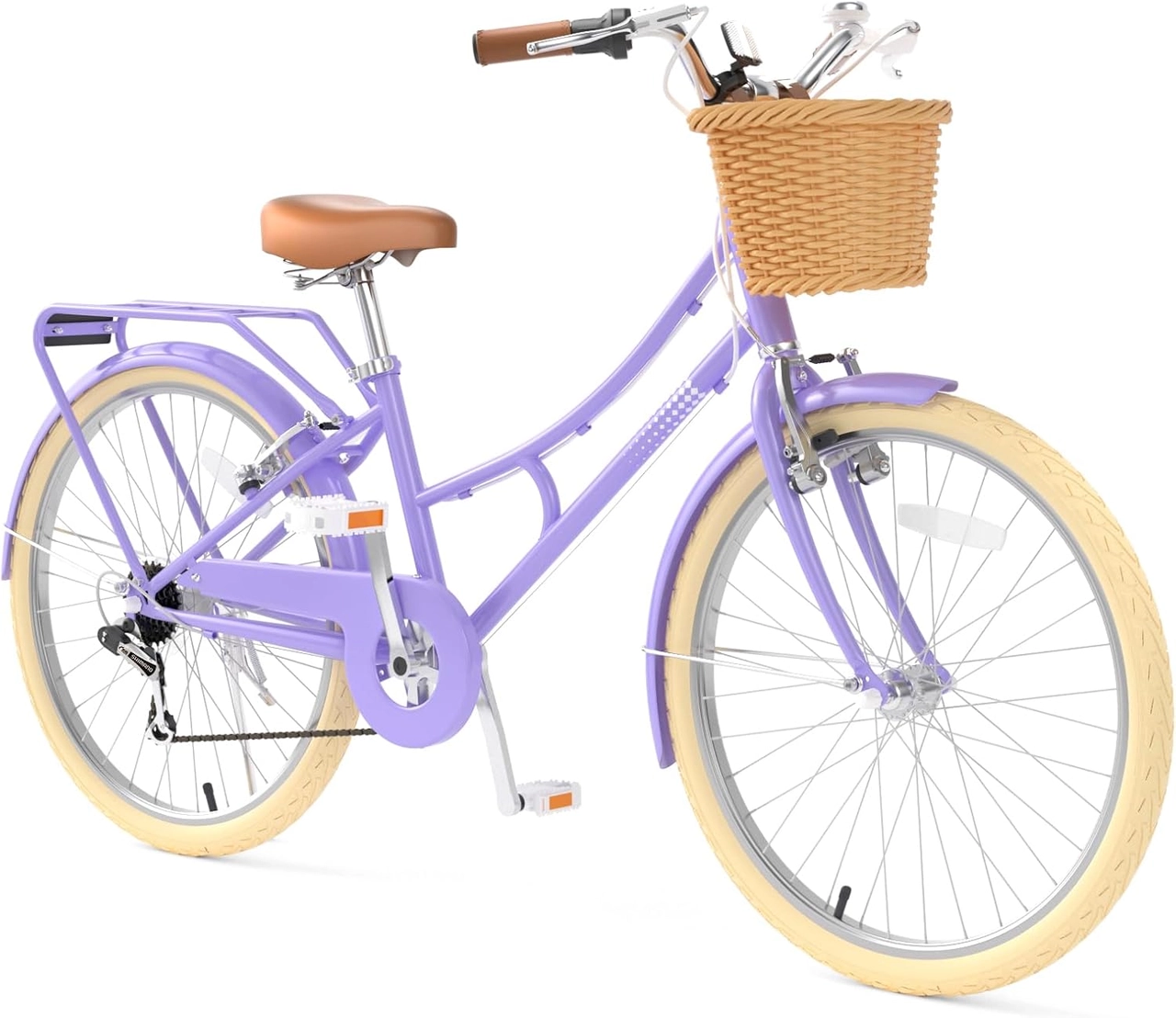 24-Inch Purple XJD Beach Cruiser Bike with U-Brake
This Beach Cruiser Bike names the requested 24-inch wheel size directly. Its supplied SKU label is Default, so confirm the displayed selection and check the rider’s stand-over, reach and control.
Select the 24 Inch SKU when considering the first product; do not assume its other size labels are equivalent. The second product has only a Default SKU label in the supplied catalog facts, so confirm that the exact displayed selection corresponds to the named 24-inch bicycle before ordering. Neither product title replaces an individual stand-over, reach and control check.
Make the final height decision
- Start with 24 Inch only if the measured rider height is reasonably aligned with 54–64 in (137–163 cm).
- Compare the rider’s inseam with the actual frame’s stand-over position.
- Require comfortable handlebar reach and reliable operation of the brake controls.
- Choose the bicycle the child can control now, not an oversized one intended for future growth.
- Fit a bicycle helmet so it sits level and its straps are used according to the manufacturer’s instructions.
For assembly, adjustment procedures, maintenance, compatibility, load limits or torque settings, follow the exact product manual or use a qualified bicycle mechanic. The practical answer is simple: treat 24 inches as the wheel diameter, measure the child’s height and inseam today, then approve the bicycle only after the child can stand over, reach and control that exact model.
Bikes for your next adventure
-

Kids Bike Helmet by XJD for Boys & Girls – Black, Blue, Green, Pink, Purple
The XJD Kids Bike Helmet covers a wide 2-to-8-year age range thanks to two head-…$59.99
-

Kids Bike Helmet by XJD for Girls – Pink
The XJD Kids Bike Helmet in Pink is a lightweight multi-sport helmet for girls r…$59.99
$99 -

XJD Kids Bike for Girls – Pink, 12/14/16/20 Inch with Training Wheels
The XJD Kids Bike for Girls in Pink is a training-wheel bike built to carry your…$139
$159