

How do kid trailer bike work
A kid trailer bike attaches behind an adult bicycle and lets the child sit, hold handlebars and pedal while the adult controls the route, balance and braking.
What a kid trailer bike actually does
Often called a trailer cycle or tag-along, this is a child-sized rear section that follows the towing bicycle. It typically has a saddle, handlebars, pedals and one wheel, but it is not ridden independently. A coupling allows it to pivot behind the adult bicycle as the adult starts, turns and stops.
The child should still participate: holding on, keeping feet correctly placed and following the adult rider’s instructions. Pedaling may help propel the combination, but the adult must ride as though responsible for the entire joined setup. The child does not choose a separate line through traffic or steer away from a hazard.
Check the two bicycles can work together
Before buying or attaching a trailer bike, identify the exact connection system. Some designs connect near the adult bicycle’s seat area, while others may require a compatible rack or dedicated hardware. Do not assume that a coupling fits every frame, seatpost, rack or bicycle type.
- Compare the towing-bicycle requirements in the trailer bike manual with the adult bicycle’s actual components and dimensions.
- Confirm all required adapters and retention parts are present and intended for that exact model.
- Check the manual’s rider and load limits rather than estimating from the child’s age.
- Follow the stated assembly, inspection and tightening instructions. If compatibility or torque is unclear, use a qualified bicycle mechanic.
The adult bicycle also needs predictable operation under the combined load. Brake condition, tire condition and the security of both bicycles’ parts should be checked according to their manuals before riding.
Measure the child instead of relying on age
Measure the child’s standing height and inseam, then perform an actual fit check on the trailer bike. The child should be able to sit securely, reach the handlebars without stretching, keep reliable contact with the pedals and remain composed when the joined bicycles lean, start or stop. Check that clothing and shoes cannot interfere with moving parts.
Age is only a starting point for ordinary bicycle wheel sizing. XBikes uses the following ranges for the catalog sizes relevant to the supplied comparison product:
| Wheel size | Starting age | Rider height |
|---|---|---|
| 12 Inch | 3–4 | 34–40 in / 86–102 cm |
| 14 Inch | 3–6 | 37–45 in / 94–114 cm |
| 16 Inch | 4–7 | 40–48 in / 102–122 cm |
These ranges describe bicycle wheel-size starting points, not universal trailer-bike fit rules. Prioritize measured height, inseam, reach, control and current confidence. As HealthyChildren advises for bicycles, let the child try the fit and do not choose an oversized cycle merely to allow room for growth.
Compare a trailer bike with the supplied catalog option
The Purple XJD Girls' Bike with Doll Seat & Basket is categorized as a Training Wheel Bike and is offered with 12 Inch, 14 Inch and 16 Inch SKU labels. It is relevant as a comparison when deciding whether the child needs a bicycle for independent practice or a trailer bike that remains attached behind an adult. It is not identified in the supplied catalog facts as a trailer bike, so it should not be treated as one or as a compatible attachment.
These catalog options help answer the title by showing the practical alternative: a child choosing among standalone training-wheel bicycle sizes rather than riding a coupled trailer cycle.

Compare the child’s measured height with the listed starting ranges, then verify stand-over clearance, reach, brake control where applicable and confidence on the actual bicycle. The presence of training wheels does not make an oversized frame fit correctly.
Prepare for the first ride
- Fit both riders with bicycle helmets. Each helmet should sit level and use its straps according to the helmet manufacturer’s instructions.
- Inspect the coupling and every retention feature exactly as the trailer bike manual directs.
- Choose a flat, open area away from traffic for the first starts, turns and stops.
- Explain that the child must stay seated as directed, hold the bars, keep feet controlled and avoid sudden body movements.
- Begin slowly and practice clear verbal cues before attempting a longer route.
The adult should expect the combination to be longer and to respond differently from a solo bicycle. Allow extra space, avoid tight gaps and stop if the child becomes anxious, cannot maintain position or interferes with control.
Decide whether it suits this child
A trailer bike is relevant when the child fits its stated limits, can remain stable and attentive, and the coupling is explicitly compatible with the adult bicycle. It is not the right choice when the fit is uncertain, required hardware is missing, the child cannot reliably hold position, or either bicycle has a mechanical problem.
Next, measure the child, identify the adult bicycle’s connection points, and compare both sets of measurements with the exact trailer bike manual. If those checks pass, arrange a controlled fit trial; if the goal is independent riding, compare a correctly fitted standalone training-wheel bike instead.
Bikes for your next adventure
-

Kids Bike Helmet by XJD for Girls – Pink
The XJD Kids Bike Helmet in Pink is a lightweight multi-sport helmet for girls r…$59.99
$99 -

Blue XJD Kids Bike Helmet for Boys & Girls
The Blue XJD Kids Bike Helmet is a lightweight, adjustable multi-sport helmet fo…$59.99
$99 -
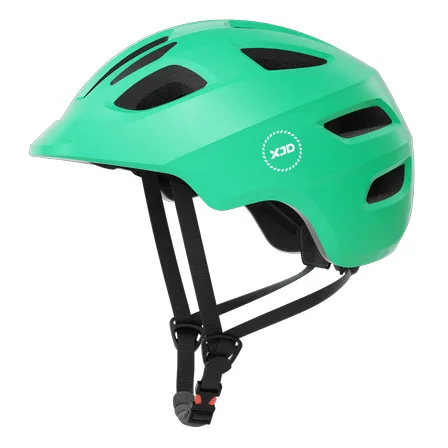
Green XJD Kids Bike Helmet for Boys & Girls
The Green XJD Kids Bike Helmet is a lightweight multi-sport helmet for toddlers …$59.99
$99