

How do u teach a child to ride a bike
Teach a child to ride a bike by checking the fit first, practising balance and braking in a flat traffic-free area, then adding pedalling only when the child feels in control.
Measure the rider before choosing the bike
Measure the child’s height and inseam while they are wearing the shoes they will ride in. Height gives you a wheel-size starting point; inseam helps you judge whether the child can stand over the bicycle comfortably.
Have the child try the actual bike. They should be able to mount and stop without struggling, reach the handlebar without stretching, steer confidently and operate the brakes with their hands in a normal riding position. Do not choose an oversized bicycle simply to allow room for growth. Age is only a starting clue; measured fit and present confidence matter more.
| Wheel size | Starting age | Rider height |
|---|---|---|
| 12 Inch | 3–4 | 34–40 in / 86–102 cm |
| 14 Inch | 3–6 | 37–45 in / 94–114 cm |
| 16 Inch | 4–7 | 40–48 in / 102–122 cm |
| 18 Inch | 5–9 | 43–52 in / 109–132 cm |
| 20 Inch | 7–12 | 48–60 in / 122–152 cm |
| 24 Inch | 10–14 | 54–64 in / 137–163 cm |
| 26 Inch | Youth and adults | Over 60 in / 153 cm |
Prepare the child and riding area
Choose a broad, flat, traffic-free surface with plenty of clear stopping space. Avoid beginning on a hill: speed can build before the child understands steering or braking. Use closed-toe shoes and clothing that cannot catch in moving parts.
A bicycle helmet must fit properly, sit level and have its straps adjusted according to the helmet manufacturer’s instructions. Before riding, confirm that the bicycle is assembled and operating as its exact product manual describes. If anything is loose, damaged or unclear, use a qualified bicycle mechanic rather than improvising a repair or adjustment.
Teach control in a simple sequence
- Start with stopping. While stationary, let the child practise holding the handlebar, using the brakes and placing a foot down. Explain that looking ahead helps them travel where they intend to go.
- Build balance. Let the child move at a manageable pace and practise brief glides while keeping their eyes forward. Stay close enough to assist, but avoid pulling the handlebar because that takes steering control away from the rider.
- Add steering. Use wide, gentle turns between visible markers. Stop the session if the child becomes tense or cannot consistently control direction.
- Add pedalling. Once gliding, steering and stopping look controlled, have the child begin with one pedal positioned for a confident first push. Practise short starts and deliberate stops rather than long rides.
- Reduce help gradually. Move from steadying the child briefly to walking alongside without holding. Tell them before releasing support so the lesson remains predictable.
Decide whether training wheels help
Training wheels can give a hesitant beginner time to learn pedalling and basic steering, but they do not replace the balance needed for two-wheel riding. If you use them, follow the bicycle’s exact manual for installation and adjustment. Progress toward independent balance when the child can start, steer and stop calmly.
The Pink 12/14/16/20" XJD Girls Bike with Training Wheels & Basket is directly relevant when training wheels suit the learning plan; its supplied size labels are 12, 14, 16 and 20 Inch. Compare the measured rider with the corresponding XBikes starting point, then verify stand-over clearance, reach and brake control on the actual bicycle.
How the supplied bikes compare
These catalog options help answer the teaching question by showing one training-wheel model across smaller sizes and two larger beach-cruiser choices for riders who may already be beyond early beginner sizing. Their labels narrow the comparison, but none replaces an individual fit check.
 Pink 12/14/16/20" XJD Girls Bike with Training Wheels & Basket
A training-wheel model offered in supplied 12, 14, 16 and 20 Inch labels. It is relevant when the measured rider fits one of those starting points and training wheels support the planned learning stage.
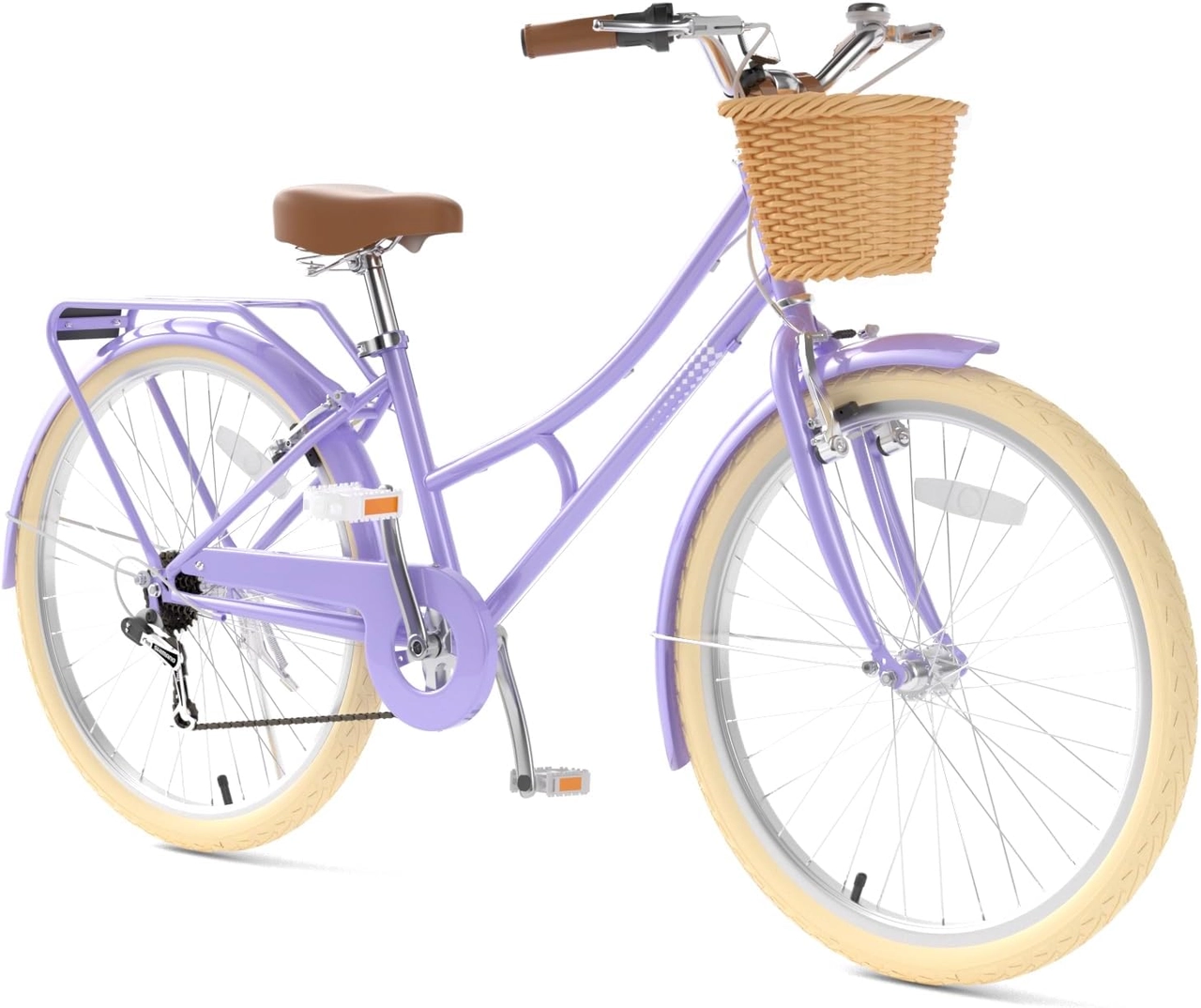 26-Inch XJD Beach Cruiser Bike for Girls – Purple, V-Brake
A beach cruiser with supplied 20, 24 and 26 Inch size-and-color labels. It is a comparison for larger riders whose measurements, reach, stand-over position and brake control suit the selected option.
 XJD 24-Inch Green Beach Cruiser Bike with U-Brake
A beach cruiser offered in supplied 24 and 26 Inch size-and-color labels. Consider it only for a rider whose measured height points toward those larger sizes and who controls the actual bicycle comfortably.
The 26-Inch XJD Beach Cruiser Bike for Girls – Purple, V-Brake has supplied labels for 20, 24 and 26 Inch options in listed colors, including Purple / 26 Inch. The 20 Inch label starts at 48–60 in, the 24 Inch label at 54–64 in, and 26 Inch above 60 in. Choose among them by measurement and actual control, not by the 26-Inch wording alone.
The XJD 24-Inch Green Beach Cruiser Bike with U-Brake has supplied labels for Green / 24 Inch, Pink / 24 Inch and Pink / 26 Inch. It is relevant only when the rider’s measurements point toward those larger sizes and the child can comfortably stand over, reach, steer and brake on the chosen bike.
Know when to pause or move forward
Pause and recheck the setup if the child cannot place a foot down promptly, must stretch for the handlebar or brakes, repeatedly loses steering control, or becomes frightened. A smaller suitable bicycle, a simpler exercise or another short session may be the right next step.
Move forward when the child can look ahead, start without being pulled, follow a gentle line and stop on request. Measure the rider now, shortlist the matching wheel-size label, confirm the fit on the actual bike, and begin with stopping and balance before asking for independent pedalling.
Bikes for your next adventure
-

Kids Bike Helmet by XJD for Boys & Girls – Black, Blue, Green, Pink, Purple
The XJD Kids Bike Helmet covers a wide 2-to-8-year age range thanks to two head-…$59.99
-

Kids Bike Helmet by XJD for Girls – Pink
The XJD Kids Bike Helmet in Pink is a lightweight multi-sport helmet for girls r…$59.99
$99 -

XJD Kids Bike for Girls – Pink, 12/14/16/20 Inch with Training Wheels
The XJD Kids Bike for Girls in Pink is a training-wheel bike built to carry your…$139
$159