

How far can a kid bike in four hours
A child can bike only as far as their comfortable moving pace, usable riding time and return energy allow. For example, averaging 5 mph for three riding hours within a four-hour outing equals 15 miles—not 20. Measure a shorter ride first instead of choosing a universal mileage.
Calculate four hours as elapsed time
Four hours outside rarely means four hours of pedaling. Subtract snack, water, toilet, navigation and rest stops. Then multiply the remaining riding time by the child’s average moving speed:
Expected distance = average moving speed × planned moving time.
Use the speed recorded during a recent, comfortable family ride on similar terrain. Do not use an adult’s pace, a brief sprint or the speed from a downhill section. If no reliable record exists, take a 30- to 60-minute practice ride and note distance, moving time, stops and how the child feels afterward.
A short test cannot prove that the same pace will continue for four hours. Treat its projection as an upper estimate, then shorten the planned route to preserve energy for the return.
Measure the factors that change the answer
Record conditions that will match the longer outing. These comparisons are more useful than age alone:
- Distance and moving time: separate pedaling time from total elapsed time.
- Terrain: compare hills, loose surfaces and repeated starts with the intended route.
- Effort: the child should be able to speak, steer steadily and respond to instructions.
- Recovery: note whether a short stop restores comfortable riding or fatigue continues.
- Bike control: check starting, stopping, turning and brake reach before adding distance.
- Conditions: wind, heat, cold and carrying extra items can change a familiar pace.
Do not extend the outing simply because the child covered the first half quickly. Excitement can hide early fatigue, while the return may include headwind, climbing or lower attention.
Choose a route that can shrink
An out-and-back route requires enough energy to reverse course, so set the turnaround using time and the child’s condition—not a distant landmark. A loop near home, a park circuit or a route with several safe exit points makes the distance adjustable.
Schedule checks before the child looks exhausted. Turn back or end the ride if steering becomes inconsistent, braking deteriorates, the child cannot follow directions, discomfort persists, or confidence drops. Four hours is a time window, not a target that must be completed.
Bike fit affects sustainable distance
A poorly fitting bicycle can reduce control and make even a modest route tiring. Measure the rider’s height and inseam, then have the child try the bicycle. Check stand-over clearance, reach, brake control and present confidence. Do not buy an oversized bicycle merely for future growth.
XBikes uses these starting points for the wheel sizes offered by the supplied products:
| Wheel size | Starting age | Rider height |
|---|---|---|
| 12 Inch | 3–4 | 34–40 in / 86–102 cm |
| 14 Inch | 3–6 | 37–45 in / 94–114 cm |
| 16 Inch | 4–7 | 40–48 in / 102–122 cm |
These ranges are starting points, not proof of fit or four-hour capability. When ranges overlap, measured fit and control decide; age does not. Training wheels also do not establish endurance or correct sizing.
How the catalog options relate
The XJD Girls BMX Bike 12/14/16 Inch with Training Wheels – Pink Blue and the XJD Boys & Girls BMX Bike with Training Wheels, 12/14/16" – Blue are both Kids’ BMX Bikes offered with 12 Inch, 14 Inch and 16 Inch SKU labels. They help compare the available wheel-size starting points for a measured child, but their catalog facts do not establish speed, range or suitability for a four-hour ride. Select a size only after an individual fit check.
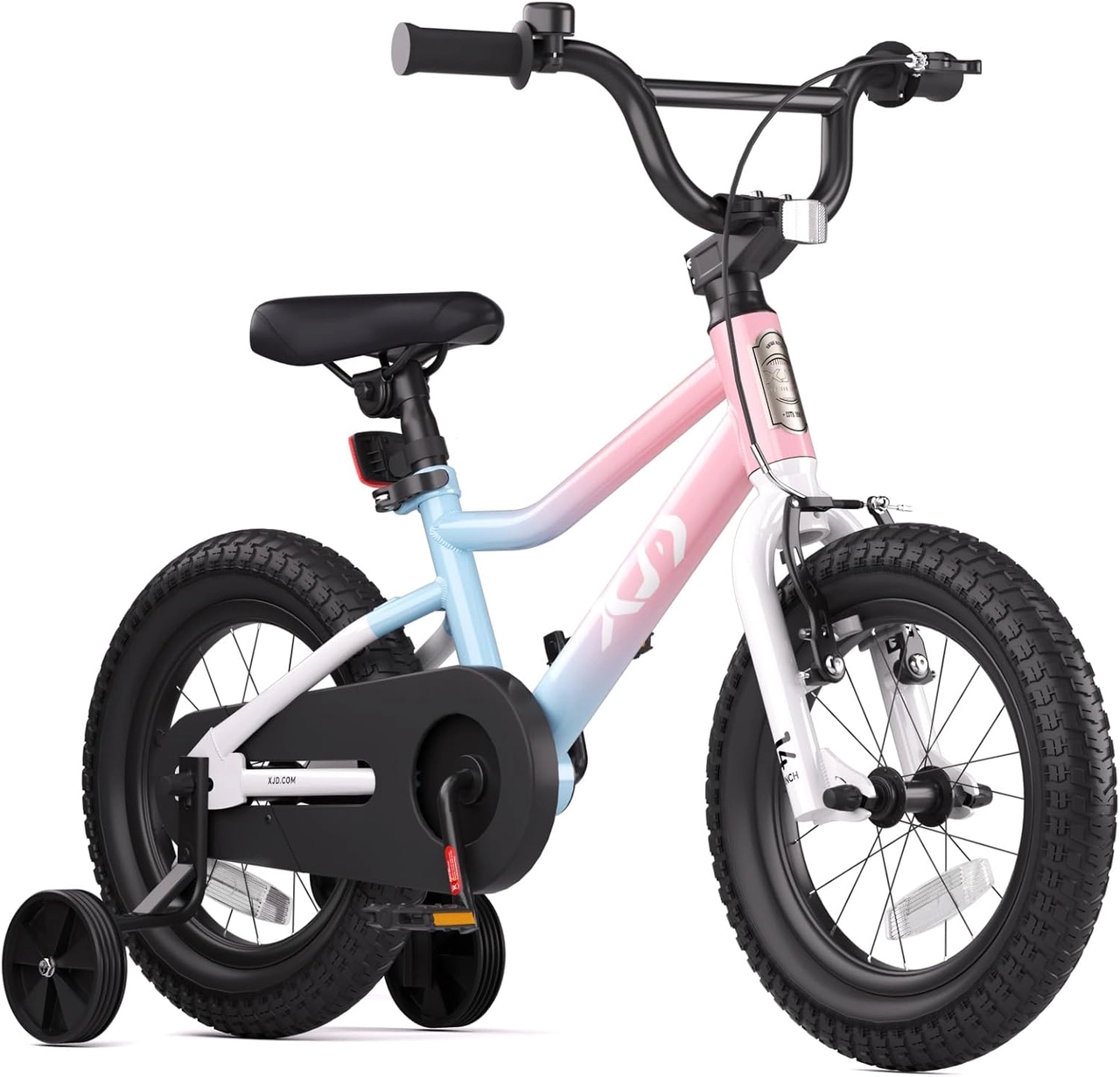 XJD Girls BMX Bike 12/14/16 Inch with Training Wheels – Pink Blue
A Kids’ BMX Bike offered in 12 Inch, 14 Inch and 16 Inch labels with training wheels. It is relevant for fit comparisons within those supplied sizes, but its facts do not establish four-hour range or endurance.
 XJD Boys & Girls BMX Bike with Training Wheels, 12/14/16" – Blue
A blue Kids’ BMX Bike with training wheels and 12 Inch, 14 Inch and 16 Inch labels. Compare the child’s measured fit with those size starting points; the catalog facts do not specify distance capability.
The meaningful supplied comparison is title and color wording; both list the same three wheel-size choices and training wheels. No supplied fact distinguishes their weight, materials, brakes, load limits, assembly or maintenance. Follow the exact product manual for those details, or ask a qualified bicycle mechanic.
If the child’s measured fit indicates 18 Inch, 20 Inch, 24 Inch or 26 Inch, neither supplied product offers that exact size. In that case, these are nearest-size catalog comparison points only, not substitutes; another wheel size is not equivalent.
Make the go-or-shorten decision
Before departure, fit a bicycle helmet so it sits level and its straps are adjusted according to the helmet manufacturer’s instructions. Carry suitable water and food, account for weather and traffic, and ensure an adult can end the outing or arrange pickup if needed.
Use the practice ride’s moving speed, subtract realistic breaks from four hours, and calculate a conservative route with an early turnaround. Proceed only if the bicycle fits, control remains reliable and the child finishes the trial comfortably; otherwise shorten the distance or divide the outing into smaller rides.
Bikes for your next adventure
-
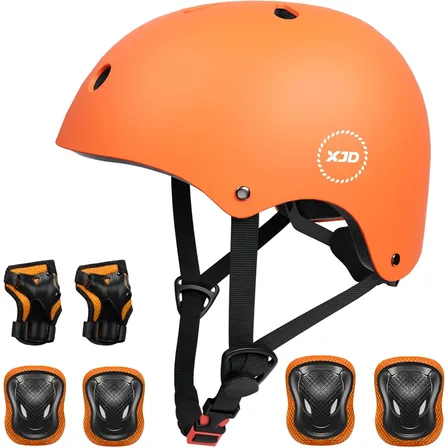
Orange Kids Helmet & Pad Set by XJD – Sizes S & M
The Orange XJD Kids Helmet & Pad Set is built for children around 3 to 8 years o…$24.64
-
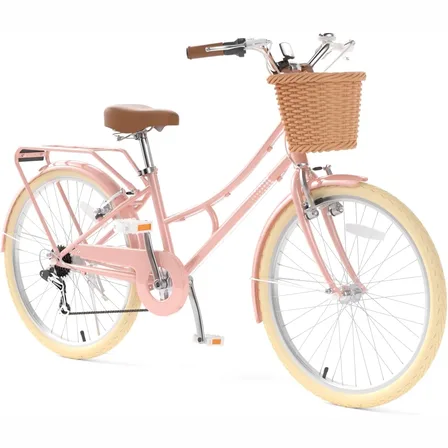
XJD Pink Beach Cruiser for Girls – Rear Rack & V-Brake
The XJD Pink Beach Cruiser for girls is the step-up bike for riders who've outgr…$179.99
$209.99 -
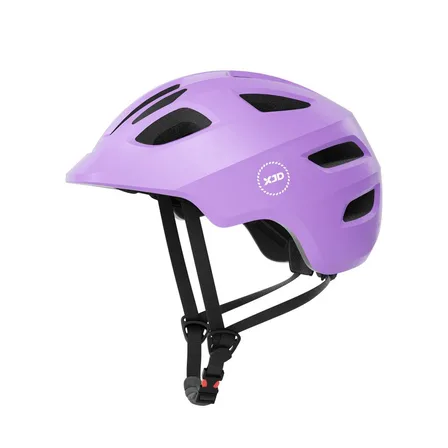
Girls' Bike Helmet from XJD – Purple
The XJD kids bike helmet in purple is a multi-sport helmet built for toddlers an…$59.99
$49