

How early can a kid learn to ride a bike
A child can often start learning to ride at age 3 or 4, but readiness and fit matter more than a birthday. Start when the child can follow simple directions, control the bicycle, and practise willingly on a correctly fitted 12- or 14-inch bike.
What “early” means for your child
The XBikes starting point for a 12-inch bicycle is ages 3–4 and a rider height of 34–40 inches (86–102 cm). A 14-inch bicycle starts at ages 3–6 and 37–45 inches (94–114 cm). These ranges overlap because children of the same age can differ substantially in size, coordination and confidence.
Age therefore narrows the search; it does not decide the size. A younger child who fits, listens and wants to practise may be ready, while an older child who cannot comfortably control the bicycle may need more time or a different fit.
Measure before choosing a wheel size
Measure the child’s height without shoes and record the inseam from the floor to the crotch. Then have the child try the actual bicycle. The inseam helps you assess stand-over clearance, but use the bicycle’s manual for its exact adjustment limits rather than applying an invented universal number.
| Wheel size | XBikes age starting point | Rider height |
|---|---|---|
| 12 Inch | 3–4 | 34–40 in / 86–102 cm |
| 14 Inch | 3–6 | 37–45 in / 94–114 cm |
| 16 Inch | 4–7 | 40–48 in / 102–122 cm |
| 18 Inch | 5–9 | 43–52 in / 109–132 cm |
| 20 Inch | 7–12 | 48–60 in / 122–152 cm |
| 24 Inch | 10–14 | 54–64 in / 137–163 cm |
| 26 Inch | Youth and adults | Over 60 in / 153 cm |
Do not move up merely because the child is near a range boundary. HealthyChildren guidance recommends having the child try the bicycle and avoiding an oversized model bought for future growth.
Use a hands-on fit check
With an adult stabilising the bicycle, check four things before practice:
- Stand-over: the child can straddle the frame comfortably rather than being forced onto tiptoes by an oversized bicycle.
- Reach: the child can hold the handlebars without stretching, locking the elbows or leaning excessively.
- Brake control: the child can reach and operate the fitted controls reliably. Do not assume that reaching the handlebar means reaching a brake lever well.
- Confidence: the child can mount, look ahead, steer and stop without panic while closely supervised.
If any check fails, compare another bicycle or size. Do not treat a smaller child’s difficulty as something they simply have to grow into while riding.
How the supplied bicycles compare
The supplied catalog options make the early-learning decision concrete: two offer currently listed 12-, 14- and 16-inch choices, while the cruiser begins at 20 inches and helps show when the child has moved beyond the earliest size ranges.
 XJD Light Purple Girls Bike with Basket, Training Wheels, 12/14/16/20 Inch
A training-wheel bicycle with supplied 12, 14 and 16 Inch SKU labels, making it relevant for comparing early-learning sizes after measuring the child and completing a hands-on fit check.
 XJD Kids Beach Cruiser Bicycle, Rear Rack & V-Brakes, Mint Green
A beach cruiser with supplied 20, 24 and 26 Inch labels. Its smallest size starts at the 7–12 XBikes range, so it is not generally relevant to the earliest learners.
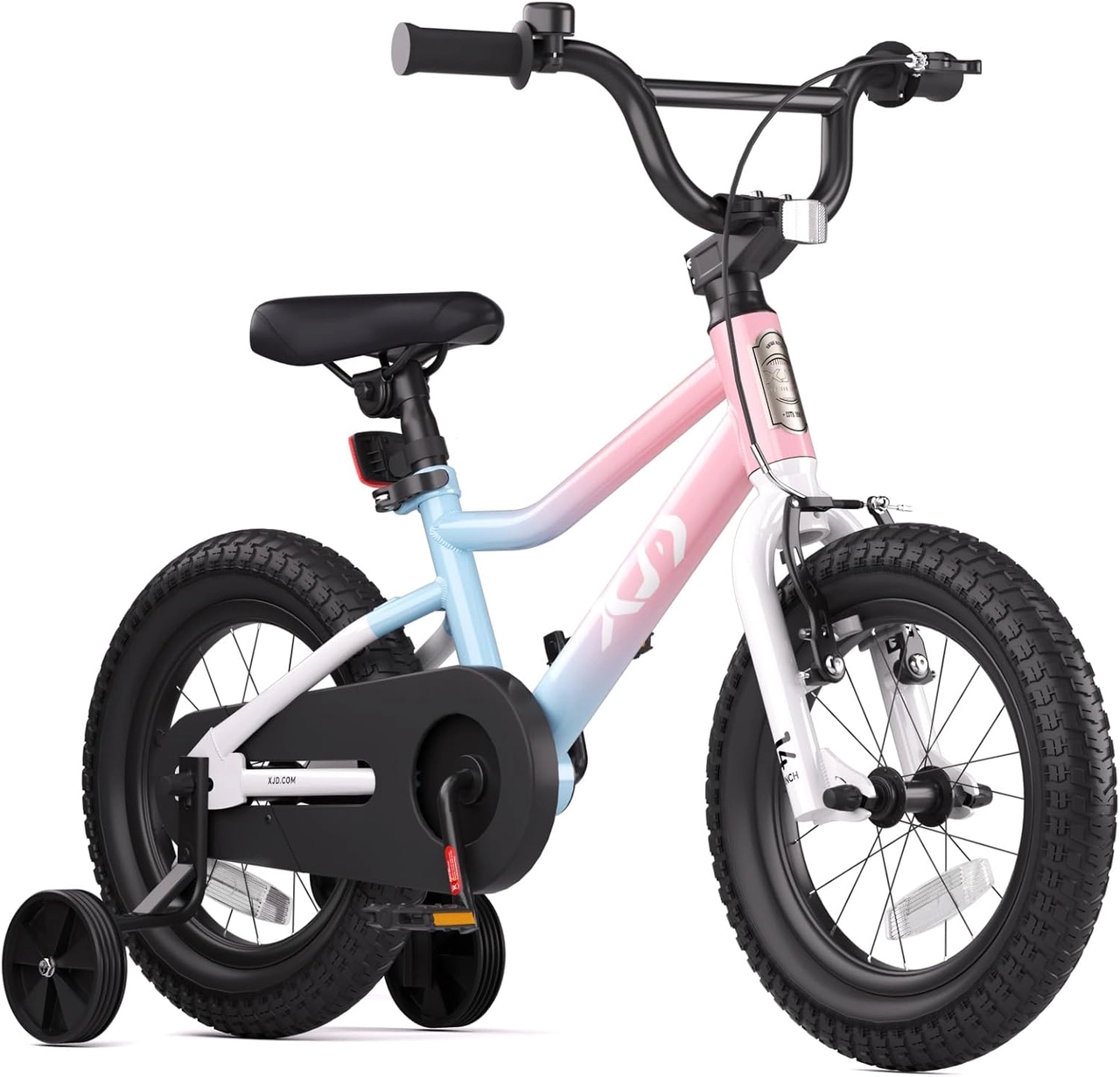 XJD Girls BMX Bike 12/14/16 Inch with Training Wheels – Pink Blue
A kids’ BMX bicycle with training wheels and supplied 12, 14 and 16 Inch labels. It provides early-size comparison options, but age alone cannot establish the correct fit.
XJD Light Purple Girls Bike with Basket, Training Wheels, 12/14/16/20 Inch is categorized as a training-wheel bike. Its currently supplied SKU labels are 12 Inch, 14 Inch and 16 Inch, so compare the child’s measurements and control at each relevant size instead of relying on the sizes embedded in the title.
XJD Girls BMX Bike 12/14/16 Inch with Training Wheels – Pink Blue is categorized as a kids’ BMX bike and likewise has supplied 12 Inch, 14 Inch and 16 Inch SKU labels. Those sizes cover several starting points, but the exact bicycle still requires a stand-over, reach and brake-control check.
XJD Kids Beach Cruiser Bicycle, Rear Rack & V-Brakes, Mint Green is categorized as a beach cruiser bike, with supplied 20 Inch, 24 Inch and 26 Inch labels. Its smallest listed option starts at the XBikes 7–12, 48–60 inch range, so it is generally not an early-learning match for a typical 3- or 4-year-old. It becomes relevant only when the rider’s measurements and hands-on control fit the larger size.
Make the first sessions manageable
Choose a flat area away from traffic and obstacles. Keep sessions short enough that frustration and fatigue do not replace attention. An adult should stay close, explain one task at a time, and practise controlled starts, looking ahead, steering and stopping.
A bicycle helmet must fit properly, sit level and have its straps adjusted according to the helmet manufacturer’s instructions, consistent with U.S. Consumer Product Safety Commission guidance. Follow the exact bicycle manual for assembly, adjustments, maintenance, compatibility and load limits; use a qualified bicycle mechanic when the instructions or condition of the bicycle are uncertain.
Decide what to do next
If your child is around 3 or 4, first measure height and inseam, then try a 12-inch and—only if the height range and hands-on checks support it—a 14-inch bicycle. Choose the size the child can straddle, reach, control and stop confidently today; if neither fits, wait or compare another correctly sized bicycle rather than buying one to grow into.
Bikes for your next adventure
-

Blue XJD Girls Bike with Training Wheels – 12/14/16 Inch
If you're shopping for a first pedal bike for a daughter roughly 3 to 8 years ol…$149
$169 -

XJD Kids Bike for Girls – Pink, 12/14/16/20 Inch with Training Wheels
The XJD Kids Bike for Girls in Pink is a training-wheel bike built to carry your…$139
$159 -
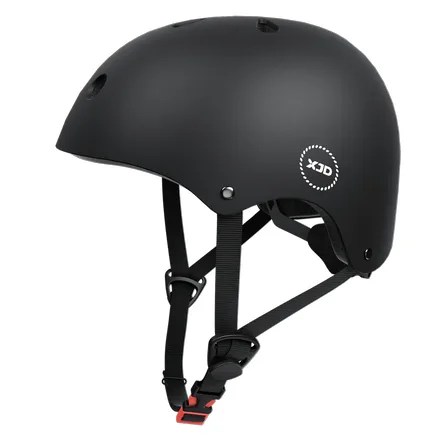
7-in-1 Kids Helmet & Protective Gear Set from XJD – Black or Blue
If you're outfitting one kid (or a couple of siblings) for biking, scootering, o…$59.99