

How many inch bike for 12 year old
For a 12-year-old, start with a 20-inch or 24-inch bike, then choose by measured height and fit. XBikes places 20-inch bikes at 48–60 in (122–152 cm) and 24-inch bikes at 54–64 in (137–163 cm). Riders over 60 in (153 cm) may need a 26-inch bike. Age alone cannot confirm the right size.
Measure before choosing the wheel size
Measure the child’s height without shoes, standing straight against a wall. Also measure inseam from the floor to the crotch. Height gives you a starting wheel-size range; inseam helps you judge whether the child can stand over the actual frame comfortably.
Then compare those measurements with the geometry and adjustment range of the specific bicycle. Wheel size is only a category: two bikes with the same wheel diameter can have different frame shapes, stand-over clearance and reach.
| Wheel size | XBikes starting range | Meaning for a 12-year-old |
|---|---|---|
| 20 Inch | Ages 7–12; 48–60 in / 122–152 cm | A starting point for a rider within this height range |
| 24 Inch | Ages 10–14; 54–64 in / 137–163 cm | A starting point for many taller 12-year-olds |
| 26 Inch | Youth and adults over 60 in / 153 cm | Worth trying when the rider is over this height |
The ranges overlap intentionally. A child measuring 56 in, for example, falls within both the 20-inch and 24-inch starting ranges. The correct decision comes from trying the actual bikes rather than automatically choosing the larger wheels.
Check the child on the actual bicycle
Have the rider try each candidate with ordinary riding shoes. The child should have suitable clearance when standing over the frame and should be able to start, stop and steer without struggling. Check that the riding position does not force an uncomfortable stretch.
Ask the child to place both hands in the normal riding position and operate the brakes. They must be able to reach and control them confidently. Also watch a slow start, a controlled stop and a gentle turn. Current confidence matters: a size that looks reasonable on a chart can still be too difficult to handle.
Do not buy an oversized bicycle solely to allow room for growth. If the child cannot stand over it appropriately, reach the controls or manage its movement now, move to a better-fitting option. Follow the exact product manual for adjustments and assembly, or ask a qualified bicycle mechanic when setup is uncertain.
How the supplied 20-inch options help
The supplied catalog contains two training-wheel bike listings that can help families compare a 20-inch option with the child’s measurements and control needs. They are relevant only if their listed size and training-wheel format suit the rider after an individual fit check.
 XJD Light Purple Girls Bike with Basket, Training Wheels, 12/14/16/20 Inch
This Training Wheel Bike has supplied 12 Inch, 14 Inch and 16 Inch SKU labels only. It offers smaller comparison points, but no available 20-, 24- or 26-inch size in the supplied facts.
 Pink 12/14/16/20" XJD Girls Bike with Training Wheels & Basket
This Training Wheel Bike includes a supplied 20 Inch SKU label, making it relevant for comparison when a rider measures 48–60 in (122–152 cm), provided the individual fit and control checks succeed.
XJD Light Purple Girls Bike with Basket, Training Wheels, 12/14/16/20 Inch is categorized as a Training Wheel Bike, but its supplied available SKU labels are only 12 Inch, 14 Inch and 16 Inch. Therefore, it does not provide an available 20-inch comparison in the supplied catalog facts and its listed sizes fall below the usual XBikes starting points for a 12-year-old.
Pink 12/14/16/20" XJD Girls Bike with Training Wheels & Basket is also categorized as a Training Wheel Bike and has supplied available SKU labels of 12 Inch, 14 Inch, 16 Inch and 20 Inch. Its 20 Inch SKU is the relevant comparison for a 12-year-old measuring within 48–60 in (122–152 cm), subject to the full fit and control check.
Neither supplied product has a 24-inch or 26-inch SKU label. For a rider whose measurements and handling indicate one of those sizes, these products are smaller comparison points, not equal substitutes.
Decide between 20, 24 and 26 inches
- Consider 20 inches when height is 48–60 in (122–152 cm) and the child can comfortably stand over, reach, steer and brake on the specific bike.
- Compare 24 inches when height is 54–64 in (137–163 cm), especially if a 20-inch bike feels cramped, while still requiring secure control.
- Try 26 inches when the rider is over 60 in (153 cm), but reject it if stand-over, reach or handling is unsuitable.
If height sits in an overlap, compare both sizes in person. Choose the bicycle on which the child demonstrates the better combination of clearance, natural reach, brake operation and calm low-speed control—not the one with the largest wheels.
Complete the fit and safety check
- Measure height and inseam.
- Use the XBikes ranges to shortlist 20, 24 or 26 inches.
- Have the child stand over and ride each actual candidate.
- Confirm comfortable reach, reliable brake control and confident starting, stopping and turning.
- Use a properly fitting bicycle helmet. It should sit level, with its straps used according to the helmet manufacturer’s instructions.
For a 12-year-old, measure first: select 20 inches only when the rider fits and controls it well, compare 24 inches in the overlapping or taller range, and try 26 inches only above 60 in (153 cm). If the supplied 20-inch training-wheel option does not match those checks, choose neither supplied product and continue the fit search.
Bikes for your next adventure
-
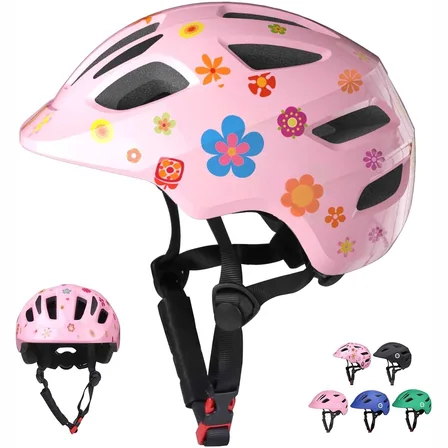
XJD Kids Bike Helmet for Girls, Pink Flowers, Adjustable (XS–S)
The XJD Kids Bike Helmet in Pink Flowers is an adjustable toddler-and-kids helme…$21.24
$24.99 -

Kids Bike Helmet by XJD for Boys & Girls – Black, Blue, Green, Pink, Purple
The XJD Kids Bike Helmet covers a wide 2-to-8-year age range thanks to two head-…$59.99
-

Kids Bike Helmet by XJD for Girls – Pink
The XJD Kids Bike Helmet in Pink is a lightweight multi-sport helmet for girls r…$59.99
$99