

How many inch bike for 6 year old
Most 6-year-olds start with a 16-inch bike, but height and fit decide: compare a measured rider height with the chart, then test stand-over, reach and brakes.
The short answer: usually 16 inches
For a 6-year-old, a 16-inch wheel bike is the most likely starting point. The XBikes guide places 16-inch bikes at ages 4–7 and rider heights of 40–48 in (102–122 cm). A child near either edge of that height range may need a different size.
Consider 14 inches when the child is 37–45 in (94–114 cm), especially if the smaller bike provides noticeably better control and confidence. Compare 18 inches when the child is 43–52 in (109–132 cm), particularly if 16 inches feels cramped. Age identifies sizes to try; it does not confirm the fit.
Measure before choosing
Measure the child without shoes, standing straight against a wall. Record total height. Also measure inseam from the floor to the crotch while the child stands with feet slightly apart. Use height to select likely wheel sizes, then use inseam during an actual stand-over check.
| Wheel size | XBikes age starting point | Rider height |
|---|---|---|
| 14 Inch | Ages 3–6 | 37–45 in / 94–114 cm |
| 16 Inch | Ages 4–7 | 40–48 in / 102–122 cm |
| 18 Inch | Ages 5–9 | 43–52 in / 109–132 cm |
| 20 Inch | Ages 7–12 | 48–60 in / 122–152 cm |
These ranges overlap because children of the same age differ in height, proportions and skill. Do not average the measurements or automatically choose the larger option. Use each range only to narrow the bikes the child should try.
Check the bike with the child on it
Have the child try the exact bicycle. The American Academy of Pediatrics advises against buying an oversized bike merely for future growth. During the fit check, confirm that the child can:
- stand over the frame with stable footing rather than balancing on tiptoes;
- sit in a controlled position and reach the handlebar without an uncomfortable stretch;
- turn the handlebar while remaining balanced;
- reach and operate the brakes confidently; and
- start, stop and dismount without the bicycle overwhelming them.
A smaller, controllable bike is preferable to a larger bike that the child will supposedly grow into. Current confidence matters too: two children with identical measurements may handle different sizes differently.
How the supplied XBikes options compare
The three catalog options provide 14- and 16-inch choices for comparing the two most likely sizes around age six. One also has a 20-inch SKU, but that size should be considered only when the child's measured height and individual fit support it—not because it appears in the same product listing.
 XJD Boys & Girls BMX Bike with Training Wheels, 12/14/16" – Blue
Offers 12 Inch, 14 Inch and 16 Inch versions. For a six-year-old, the 14- and 16-inch SKU labels provide the most relevant sizes to compare through an individual fit check.
 Girls' Training Wheel Bike by XJD with Basket – Purple
Offers 14 Inch, 16 Inch and 20 Inch versions. Compare 14 and 16 inches first; consider the 20-inch option only when measured height and hands-on fit support that larger size.
 Flower Pink XJD Girls Bike with Doll Seat & Basket
Offers 12 Inch, 14 Inch and 16 Inch versions. Its 14- and 16-inch options are relevant comparison points for age six, while the 12-inch option represents a smaller starting range.
XJD Boys & Girls BMX Bike with Training Wheels, 12/14/16" – Blue is listed in Kids' BMX Bikes with 12 Inch, 14 Inch and 16 Inch SKU labels. For this question, its 14- and 16-inch versions are the relevant comparison points.
Girls' Training Wheel Bike by XJD with Basket – Purple is listed in Training Wheel Bikes with 14 Inch, 16 Inch and 20 Inch options. Compare 14 and 16 inches first for most six-year-olds. Its 20-inch option begins at 48 in (122 cm) in the XBikes guide and still requires a successful fit check.
Flower Pink XJD Girls Bike with Doll Seat & Basket is listed in Training Wheel Bikes with 12 Inch, 14 Inch and 16 Inch options. The 14- and 16-inch versions are pertinent here; 12 inches starts at ages 3–4 and heights of 34–40 in (86–102 cm), so it is generally a smaller-size reference rather than the default for age six.
No supplied product has an 18-inch SKU. If the measurements and test ride point to 18 inches, these products are nearest-size comparison points, not substitutes for an 18-inch bicycle.
Do the final safety and setup checks
Once a size passes the fit test, check that the exact configuration allows comfortable brake reach and confident control. Follow the product manual for assembly, adjustments, maintenance, compatibility, load limits and torque. If any instruction is missing or unclear, use a qualified bicycle mechanic rather than guessing.
Add a properly fitted bicycle helmet. It should sit level and its straps should be adjusted according to the helmet manufacturer's instructions. Recheck fit as the child grows and whenever control becomes awkward.
What to do next
- Measure the child's height and inseam.
- Use 16 inches as the first trial size if height is 40–48 in (102–122 cm).
- Compare 14 inches below or near that range, or 18 inches when height and fit make 16 inches cramped.
- Choose only after the child demonstrates comfortable stand-over, reach, braking, starting and stopping.
For a 6-year-old, begin by trying 16 inches—but buy the size the child can control today, even when that means selecting 14 inches or looking beyond these supplied products for an 18-inch bike.
Bikes for your next adventure
-
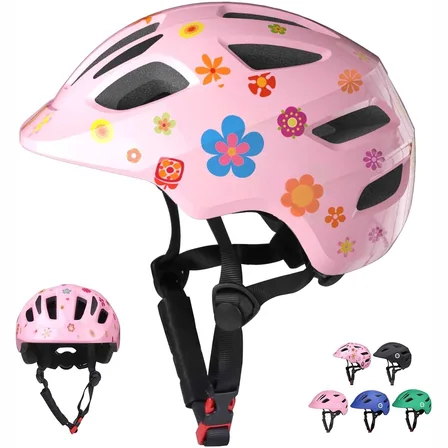
XJD Kids Bike Helmet for Girls, Pink Flowers, Adjustable (XS–S)
The XJD Kids Bike Helmet in Pink Flowers is an adjustable toddler-and-kids helme…$21.24
$24.99 -

Kids Bike Helmet by XJD for Boys & Girls – Black, Blue, Green, Pink, Purple
The XJD Kids Bike Helmet covers a wide 2-to-8-year age range thanks to two head-…$59.99
-

Kids Bike Helmet by XJD for Girls – Pink
The XJD Kids Bike Helmet in Pink is a lightweight multi-sport helmet for girls r…$59.99
$99